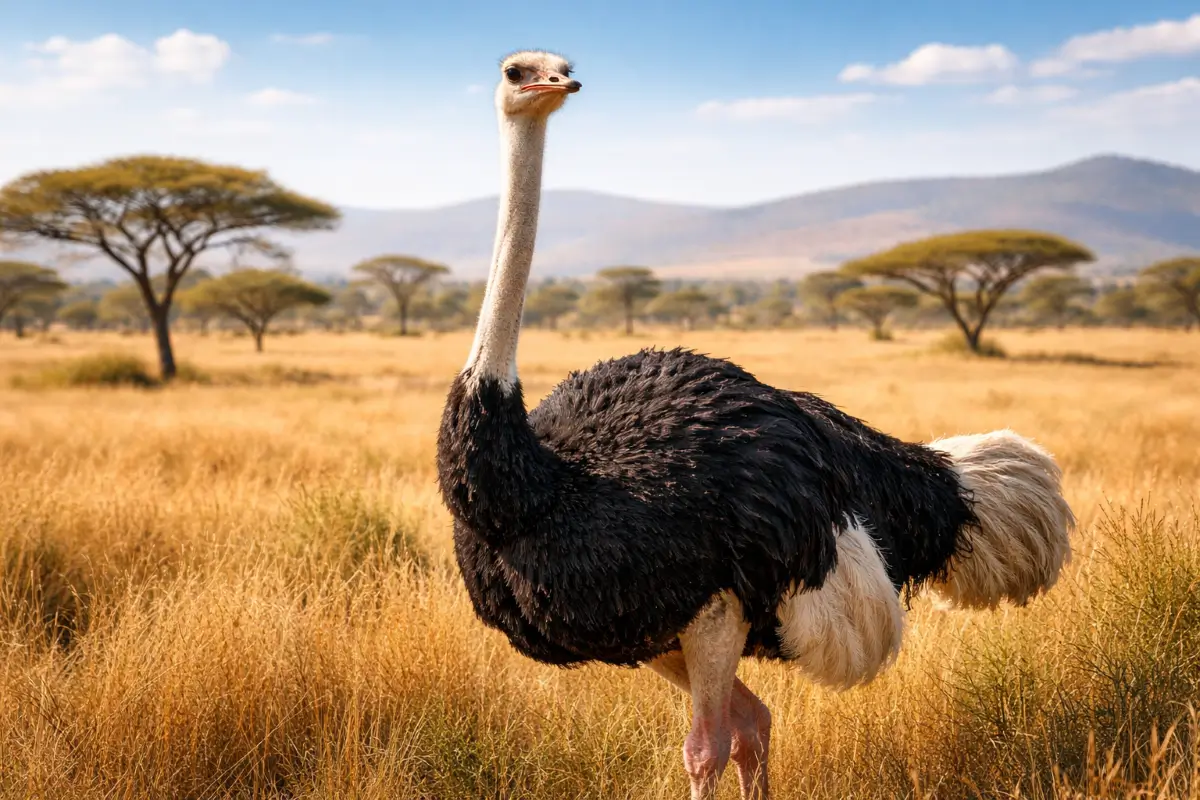
Ostriches are often described as the largest living birds on Earth. That statement is accurate, but it barely captures their significance.
For some, ostriches are fascinating wildlife. For others, they represent a serious agricultural opportunity. In practice, they are both. Native to Africa, ostriches evolved in open and demanding environments where survival depended on efficiency, awareness, and resilience.
An adult ostrich can reach speeds of up to 70 km/h (43 mph), making it the fastest bird on land. This is not just an impressive statistic. It reflects how their entire anatomy is built for movement across wide, exposed landscapes. In fact, controlled ostrich racing events in certain regions demonstrate how powerful and manageable these birds can be under proper supervision.
Beyond their physical traits, ostriches hold growing economic value. Their meat is lean and often compared to beef in taste, yet lower in fat. Their eggs are the largest produced by any living bird. Their leather remains highly valued in premium markets. Because of this combination, ostrich farming has expanded steadily beyond Africa into Europe, Australia, and the Americas.
However, raising ostriches is not as simple as their size might suggest. Behavior, nutrition, space requirements, and health management all demand planning. Misunderstanding these fundamentals can quickly turn a promising idea into a costly mistake.
This guide provides a clear and practical overview of ostriches, from biology and natural behavior to farming fundamentals and profitability considerations. The aim is not academic depth for its own sake, but usable knowledge.
Let’s begin with the fundamentals.
Table of Contents
What Is an Ostrich?
An ostrich is more than just a large bird. Its size, anatomy, and evolutionary background directly shape how it should be understood and managed. Before discussing farming or productivity, it is important to understand what makes this species biologically distinct.
Physical Characteristics
The ostrich (Struthio camelus) is the largest living bird species and the only surviving member of its genus. Unlike most birds, it cannot fly. Instead, it belongs to a group of flightless birds known as ratites, alongside emus, rheas, and cassowaries.
Adult males can grow up to 2.7 meters (9 feet) tall and exceed 150 kilograms (330 pounds). Long legs generate exceptional stride length, while a two-toed foot structure improves balance and propulsion. This design allows sustained high-speed running across open terrain.
Biological Adaptations
Large eyes enhance predator detection in wide landscapes. A specialized digestive system enables efficient processing of fibrous plant material. Overall body composition supports endurance and tolerance to heat. These traits were shaped by survival in semi-arid African environments.
Farming Implications
For farmers, these characteristics have direct implications. Strong fencing, adequate space, and thoughtful handling systems are essential. Ostriches are not oversized chickens. Their scale and speed require infrastructure designed with their biology in mind.
From a classification standpoint, ostriches belong to the order Struthioniformes. While only one species exists today, variation within the species still matters in practical farming contexts.
Ostrich Species Explained
Although there is only one living ostrich species, genetic and regional variation still plays a meaningful role in farming decisions. Understanding these distinctions helps farmers choose appropriate breeding lines and manage expectations regarding performance.
Scientific Classification
Scientifically, there is only one living ostrich species: Struthio camelus. However, geographic variation has led to the identification of several subspecies based on neck coloration, body size, and regional distribution.
Historically referenced groups include:
- North African (Red-necked) ostrich
- Southern ostrich
- Masai ostrich
- Somali ostrich
Subspecies and Regional Differences
Regional background can influence practical outcomes on a farm. Differences may appear in:
- Growth rate
- Temperament
- Climate adaptability
- Egg production patterns
- Feed efficiency
The African Black in Commercial Farming
Most commercial farms today raise the African Black ostrich, a domesticated hybrid developed primarily in South Africa. This bird was selectively bred for calmer behavior and more consistent production performance, making it better suited to structured farming systems.
The ostrich’s genetics often matter more than beginners expect. Bird selection at the start can influence results for years.greater long-term impact than many new farmers initially realize.
Ostrich Habitat, Lifespan & Behavior
Habitat, longevity, and behavior are closely connected in ostriches. These factors influence everything from enclosure design to breeding strategy. Understanding how ostriches live in natural conditions provides clear guidance for farm management.
Natural Habitat
Ostriches are native to Africa and are naturally adapted to open landscapes such as savannas, semi-arid plains, and lightly wooded grasslands.
Unlike forest-dwelling birds, ostriches rely on visibility rather than concealment. When threatened, they are more likely to run than hide. Speed is their primary defense.
Lifespan and Productive Years
Ostriches can live 30 to 40 years, with productive breeding years concentrated in the first half of that period. Under proper management, breeding birds can remain productive for many years, making long-term planning essential.
Social Structure and Behavior
Ostriches are social animals. In the wild, they form loose groups that increase collective awareness. On farms, dominance behavior, especially among males, can influence feeding access and breeding success.
Practical Farming Considerations
From an environmental perspective, ostriches are relatively efficient compared to many traditional livestock species. Their tolerance to heat and ability to utilize fibrous feed make them suitable for dry regions. This is one reason ostrich farming is often discussed in climate-adaptive agriculture.
Key management considerations include:
- Providing sufficient open space per bird
- Minimizing sudden disturbances
- Designing fencing capable of handling impact
- Managing group composition carefully during breeding season
Ostrich Diet and Nutrition
Nutrition is one of the most decisive factors in ostrich farming. Growth rate, egg production, immune strength, and overall profitability are directly linked to feed quality and feeding strategy. Understanding how ostriches digest food is essential before designing a feeding program.
Natural Diet in the Wild
In natural conditions, ostriches primarily consume plant-based materials. Their diet typically includes grasses, seeds, leaves, roots, and occasionally small insects. Unlike ruminants, ostriches do not chew cud, but their digestive system is highly efficient at breaking down fibrous material.
Ostriches have a well-developed hindgut fermentation system. Microbial activity in the large intestine helps extract nutrients from plant fiber. This allows them to survive in dry environments where nutrient density may be low.
However, survival-level nutrition is not the same as production-level nutrition. A bird that survives in the wild does not necessarily perform optimally on a farm.
Digestive Efficiency and Feed Conversion
The ostrich digestive tract is designed for bulk intake and gradual nutrient extraction. Compared to many poultry species, ostriches can utilize higher fiber levels. This offers flexibility in feed formulation, particularly in regions where grain prices fluctuate.
For farmers, the key is balancing:
- Energy
- Protein
- Fiber
- Minerals and vitamins
Excess energy can lead to rapid weight gain and leg problems. Insufficient protein can slow growth and reduce egg production. Mineral imbalances may contribute to skeletal issues, especially in fast-growing juveniles.
Understanding feed conversion efficiency is critical. While ostriches can utilize fibrous feeds, optimized rations significantly improve growth performance and reduce long-term costs.
Feeding Strategies in Commercial Farming
Commercial feeding programs typically differ based on age group:
- Starter phase (chicks)
- Grower phase (juveniles)
- Finisher phase (meat production)
- Breeder phase (egg production)
Each stage requires adjusted protein levels and mineral ratios. For example, chicks require higher protein to support rapid early growth, while breeding birds need balanced calcium levels to maintain egg shell quality.
Water access is equally important. Although ostriches tolerate dry climates, consistent clean water supply improves digestion and overall health.
From a cost perspective, feed often represents the largest operational expense in ostrich farming. Small improvements in ration efficiency can have a measurable impact on profitability.
In real-world operations, feeding is not just about keeping birds full. It is about aligning nutrition with production goals.
Ostrich Eggs: Size, Nutrition & Value
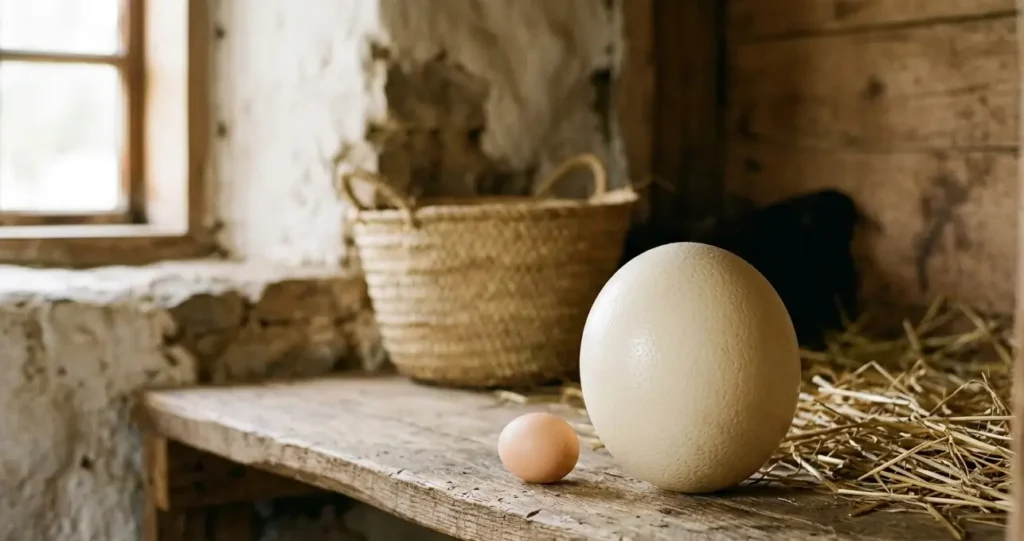
Ostrich eggs are often the first feature that attracts attention. Their size alone makes them remarkable. However, beyond visual impact, they carry nutritional and commercial significance that should not be overlooked.
Physical Characteristics
An average ostrich egg weighs between 1.2 and 1.8 kilograms (2.6–4 pounds). In volume, a single egg is roughly equivalent to 20–24 chicken eggs. The shell is thick, durable, and ivory-colored, designed to protect the developing chick in exposed nesting environments.
Shell strength plays a biological role in the wild, but on farms it has practical implications. Thick shells reduce breakage during handling and transport. At the same time, proper calcium balance in breeder diets is essential to maintain shell quality.
Nutritional Profile
From a nutritional standpoint, ostrich eggs are similar to chicken eggs but differ slightly in fat and cholesterol composition. They are high in:
- High-quality protein
- Essential amino acids
- Vitamins such as B12 and riboflavin
- Minerals including iron and phosphorus
Because of their size, ostrich eggs are often marketed in specialty food segments. A single egg can serve multiple people, making it more of a shared culinary product than an individual portion.
Commercial and Breeding Value
In farming systems, egg value extends beyond food markets. Fertile eggs represent the foundation of flock expansion and genetic progress. Hatchability rates, shell quality, and fertility management directly influence long-term productivity.
Breeding females can lay 40 to 60 eggs per year under proper management conditions. However, actual performance depends on nutrition, stress levels, genetics, and seasonal factors.
For producers, the economic importance of eggs operates at two levels:
- Direct sale for consumption
- Incubation for chick production
In structured operations, reproductive performance often determines overall system efficiency. Poor fertility or low hatchability can significantly increase cost per chick.
From a production standpoint, ostrich eggs are not just large curiosities. They are both a nutritional product and a central production asset.
Ostrich Meat: Nutrition, Taste & Comparison
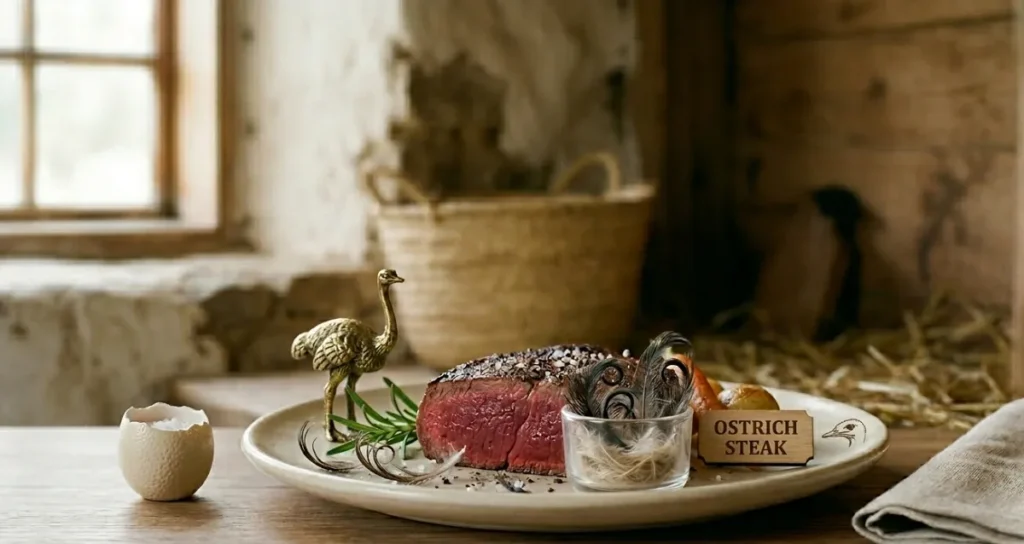
Ostrich meat has gained attention as an alternative red meat, particularly among health-conscious consumers and specialty markets. While it is technically poultry, its color, texture, and culinary use resemble beef more than chicken.
Nutritional Characteristics
Ostrich meat is known for being lean while still rich in protein. Compared to many cuts of beef, it typically contains:
- Lower total fat
- Lower saturated fat
- Comparable protein levels
- Higher iron content than many poultry meats
Because of this profile, it is often marketed as a healthier red meat option. However, actual nutritional values depend on feed quality, age at slaughter, and processing methods.
Taste and Culinary Use
In taste, ostrich meat is frequently described as similar to lean beef, with a slightly sweeter note. It does not carry the strong flavor often associated with game meats.
Proper cooking is essential. Due to its low fat content, overcooking can quickly make it dry. In restaurants and specialty markets, it is commonly served as steaks, fillets, burgers, or ground meat products.
Production and Market Position
From a production standpoint, meat yield depends heavily on genetics, feeding efficiency, and slaughter weight. Optimizing growth without causing skeletal stress is a balancing act in commercial operations.
Market demand for ostrich meat is typically niche rather than mass-market. Successful producers often focus on:
- Premium positioning
- Direct-to-consumer sales
- Specialty butchers or restaurants
- Export opportunities
Unlike conventional poultry, ostrich meat production requires longer growth periods. However, the higher price per kilogram can offset extended production time when managed correctly.
For many operations, meat is only one component of a broader revenue structure that includes eggs, breeding stock, and leather. Understanding this integrated model is critical when evaluating long-term viability.
Ostrich Farming Basics
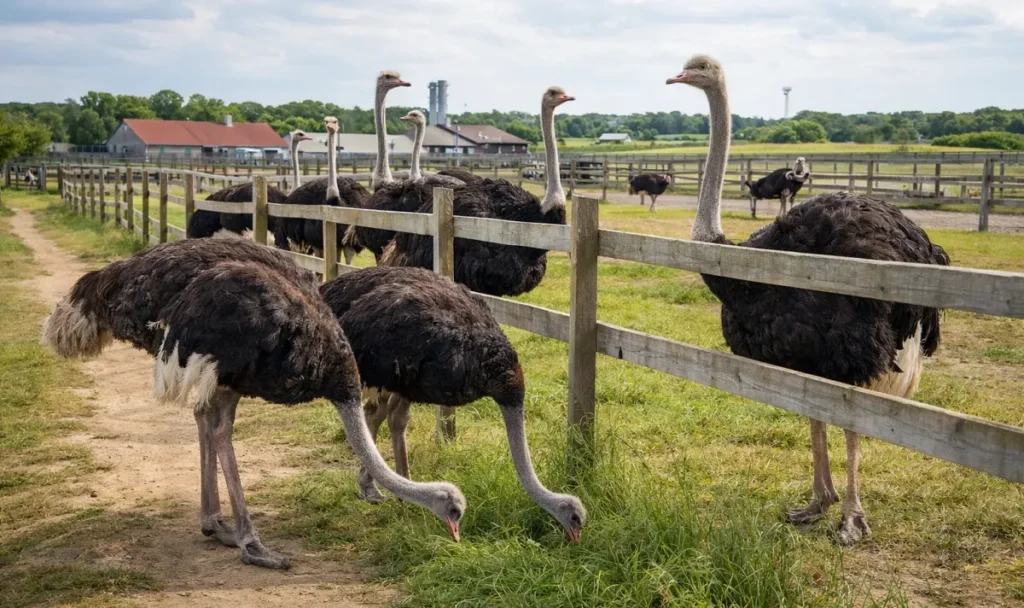
Ostrich farming requires more than space and feed. It is a long-term production system that combines infrastructure planning, genetics, nutrition, health management, and market strategy. Before investing, it is essential to understand the structural foundations of the operation.
Farm Location and Infrastructure
Location directly influences operational success. Climate, land cost, water availability, and access to markets all affect long-term viability.
Ostriches require open space and strong fencing. Because of their speed and size, weak perimeter systems can quickly become expensive mistakes. Fencing should be high, durable, and designed to absorb impact without injury.
Basic infrastructure typically includes:
- Open paddocks with sufficient space per bird
- Separate areas for breeders, growers, and chicks
- Shelter from extreme weather
- Secure incubation and brooding facilities
- Reliable water supply systems
Overcrowding increases stress, aggression, and injury risk. Space planning should prioritize bird welfare rather than maximum density.
Breeding and Flock Management
A typical breeding group consists of one male and one to two females, although ratios vary by system. Fertility rates depend on genetics, nutrition, stress levels, and seasonal conditions.
Successful flock management requires:
- Monitoring dominance behavior
- Controlling breeding groups
- Tracking egg production
- Maintaining accurate performance records
Good record-keeping is often the difference between a hobby operation and a scalable business.
Growth Cycle and Production Timeline
Ostriches grow more slowly than broiler chickens. Depending on the production goal, slaughter weight may be reached between 10 and 14 months.
This longer growth cycle affects:
- Feed cost accumulation
- Cash flow planning
- Infrastructure utilization
- Risk exposure
Farmers must account for the extended timeline when calculating return on investment.
Risk Factors and Common Mistakes
Common beginner mistakes include:
- Underestimating fencing strength
- Ignoring genetic background
- Overfeeding energy-rich rations
- Poor chick management
- Inadequate biosecurity planning
Because ostriches are large and valuable animals, early mistakes can scale quickly in cost.
Starting small, learning the behavioral patterns of the birds, and gradually expanding often produces more stable long-term results than rapid expansion.
Is Ostrich Farming Profitable?
Profitability in ostrich farming depends less on the bird itself and more on management decisions. The biological potential exists, but financial outcomes vary significantly between operations.
Before discussing numbers, it is important to understand one key principle: ostrich farming is a multi-output system. Revenue does not come from a single product.
Revenue Streams
A typical operation may generate income from:
- Meat production
- Fertile egg sales
- Chick sales
- Breeding stock
- Leather
- Occasionally feathers
This diversified structure can reduce risk compared to single-product livestock systems. However, it also increases complexity.
Cost Structure
The main cost categories usually include:
- Feed (often the largest expense)
- Infrastructure and fencing
- Incubation equipment
- Labor
- Veterinary and health management
- Utilities and water
Because ostriches have a longer growth cycle than many poultry species, capital remains tied up for a longer period. This affects cash flow planning and break-even timelines.
Profitability Variables
Profit margins depend heavily on:
- Feed efficiency
- Hatchability rates
- Mortality levels
- Market access
- Local demand
- Scale of operation
A well-managed farm with stable market connections can achieve strong margins, particularly in premium meat and breeding markets. On the other hand, poor genetic selection, high chick mortality, or weak market positioning can quickly eliminate profit.
Risk and Market Realities
Ostrich meat remains a niche product in many countries. Market education, branding, and distribution channels often require active effort. Producers who rely solely on commodity-style selling may struggle.
Additionally, regulatory frameworks vary by region. Slaughter facilities, export requirements, and health certifications can influence cost and feasibility.
Profitability improves when operations:
- Integrate multiple revenue streams
- Maintain strong breeding performance
- Control feed costs
- Build direct market relationships
In simple terms, ostrich farming can be profitable, but it is not automatically profitable. It rewards planning, patience, and operational discipline.
Common Health Issues in Ostriches
Like all livestock species, ostriches are vulnerable to specific health challenges. Many of these issues are preventable with proper management, nutrition, and biosecurity practices. Understanding common risk areas allows farmers to intervene early and reduce long-term losses.
Leg and Skeletal Problems
Rapid growth, improper nutrition, or mineral imbalance can lead to leg deformities, joint stress, and mobility issues, particularly in juveniles.
Contributing factors often include:
- Excess energy in feed
- Calcium and phosphorus imbalance
- Inadequate exercise space
- Slippery or poorly designed flooring
Because ostriches rely heavily on leg strength for movement and survival, skeletal health should be monitored carefully during the grower phase.
Digestive Disorders
Ostriches have a strong digestive system, but it can still be disrupted by sudden feed changes, low-quality ingredients, or contaminated water.
Common digestive concerns include:
- Impaction
- Enteritis
- Nutritional deficiencies
Gradual feed transitions and consistent water quality significantly reduce digestive stress.
Parasitic and Infectious Diseases
Internal parasites can affect weight gain and overall performance if not managed. Biosecurity protocols become especially important in multi-age farms.
Preventive measures typically involve:
- Controlled visitor access
- Regular health monitoring
- Clean incubation practices
- Separation of age groups
Early detection reduces treatment cost and production loss.
Chick Mortality and Early-Life Risk
The brooding stage is one of the most sensitive phases in ostrich production. Temperature control, hygiene, and nutrition must be carefully managed.
Common early-life challenges include:
- Dehydration
- Weak leg development
- Inadequate yolk absorption
- Stress-related immune weakness
Small mistakes during this phase can disproportionately affect long-term profitability.
Ostrich health management is not about eliminating all risk. It is about reducing avoidable problems through structured systems. Well-designed housing, balanced nutrition, and consistent observation remain the most effective preventive tools.
Frequently Asked Questions
How long does it take for an ostrich to reach slaughter weight?
Most ostriches raised for meat reach slaughter weight between 10 and 14 months of age. Growth rate depends on genetics, feed quality, and management practices. Accelerating growth too aggressively can increase the risk of skeletal problems.
How many eggs does a female ostrich lay per year?
Under proper management conditions, a breeding female may lay between 40 and 60 eggs annually. Actual production depends on nutrition, stress levels, daylight exposure, and genetic background.
Are ostriches aggressive?
Ostriches are generally cautious rather than aggressive. However, males can become territorial during breeding season. Proper handling systems and controlled group management significantly reduce risk.
How much space does an ostrich need?
Space requirements vary by age and production system. Adult birds require open paddocks that allow free movement and natural behavior. Overcrowding increases stress, injury risk, and reduced productivity.
Is ostrich meat healthier than beef?
Ostrich meat is typically lower in fat and saturated fat compared to many cuts of beef, while maintaining high protein levels. However, nutritional values depend on feed and processing methods.
Can ostriches survive in cold climates?
Ostriches are naturally adapted to warm and semi-arid environments. However, with proper shelter and management, they can tolerate colder climates. Protection from extreme wind and moisture is more critical than temperature alone.
Is ostrich farming suitable for beginners?
Ostrich farming can be suitable for beginners who invest time in learning and start at a manageable scale. It requires planning, infrastructure, and market research. Entering the industry without preparation increases financial risk.
Final Thoughts
Ostriches are often viewed through extremes. Some see them as exotic curiosities. Others see them as a shortcut to high-profit farming. In reality, they are neither.
They are highly specialized animals shaped by demanding environments. Their biology explains both their strengths and their management challenges. When understood properly, these characteristics become advantages rather than obstacles.
For those interested in ostrich farming, success rarely comes from enthusiasm alone. It comes from structured planning, careful breeding decisions, controlled nutrition, and realistic market expectations. The industry offers opportunity, but it also demands discipline.
At the same time, ostriches represent something broader. They demonstrate how alternative livestock systems can function in regions where conventional production models struggle. Their efficiency in dry climates and their multi-product revenue potential make them a subject worth serious consideration.
Whether you are exploring ostriches from a biological perspective or evaluating them as a production system, the most important step is informed decision-making. Understanding the fundamentals reduces risk and improves long-term outcomes.
This guide provides a foundation. The next step depends on how you choose to apply it.