Quick Answer: The biggest ostrich meat benefits come down to one thing: it’s one of the leanest red meats available, offering high protein, low fat, low cholesterol, and more iron than beef, all in a package that tastes remarkably close to a quality beef steak. It’s particularly useful for people managing weight, building muscle, or watching heart health, though as with any red meat, it fits best as part of a balanced diet rather than a cure-all.
Table of Contents
The ostrich meat benefits that keep coming up in nutrition circles aren’t marketing spin, they hold up under real scrutiny. It delivers the flavor and texture people expect from beef, while offering a nutritional profile that’s genuinely different. Here’s what the numbers actually show, and what they mean in practice.
Complete Nutrition Breakdown of Ostrich Meat: Vitamins, Minerals & Macros
Per 100 grams of raw ostrich meat, based on USDA nutrient data:
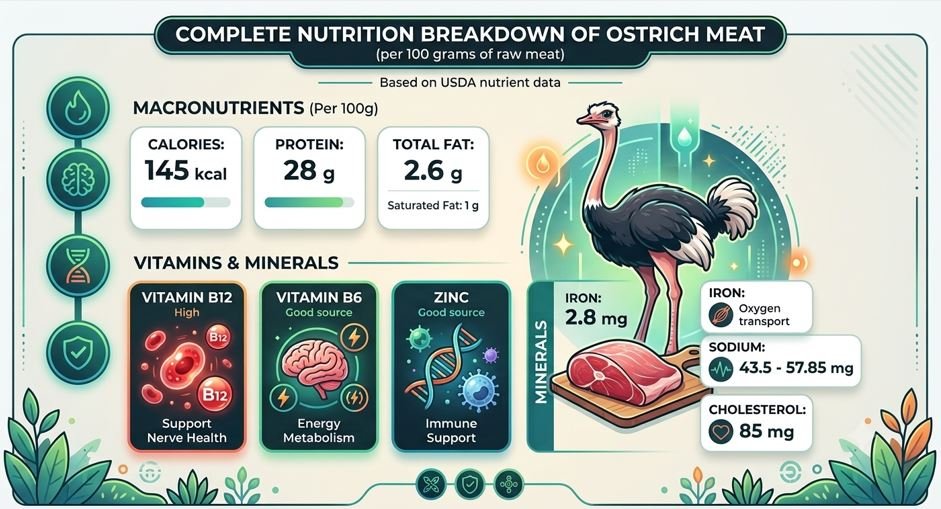
Source: USDA FoodData Central nutrient values for raw ostrich meat.
Two things stand out immediately. First, the protein-to-calorie ratio is unusually good, you get nearly 28 grams of protein for under 150 calories, which is hard to match in most red meats. Second, the fat content is extremely low for something that eats and cooks like a steak, closer to skinless chicken breast than to beef.
Ostrich is also naturally low in sodium compared to turkey, chicken, and beef, which matters for anyone watching blood pressure or overall sodium intake.
Is Ostrich Meat Good for Weight Loss?
Ostrich meat can be a genuinely useful tool for weight management, mainly because of how much protein it delivers per calorie. Protein is the most satiating macronutrient, meaning it helps you feel full longer, and doing that on roughly 145 calories per 100g gives it an edge over fattier cuts of beef or pork that pack more calories into the same protein amount.
It’s not a magic solution on its own, no single food is, but swapping a fattier protein source for ostrich a few times a week is a reasonable, low-effort way to reduce overall calorie intake without cutting portion sizes or sacrificing the feeling of eating a substantial meal, one of the more practical ostrich meat benefits for anyone managing weight long term.
Ostrich Meat and Heart Health: Omega-3 and Fat Quality
Beyond just being low in fat, the fat ostrich does contain appears to be higher quality than what’s found in conventional red meat. Research comparing fatty acid profiles found ostrich meat has a more favorable omega-6 to omega-3 ratio (around 3:1) compared to beef (nearly 9:1) and standard poultry (around 7.7:1).
A lower omega-6 to omega-3 ratio is generally considered better for cardiovascular health, since diets heavy in omega-6 relative to omega-3 have been linked to increased inflammation in some research. Combined with its low saturated fat content and lower cholesterol than beef, ostrich fits well into eating patterns aimed at supporting heart health, though it should be paired with other heart-healthy habits rather than treated as a standalone fix.
Is Ostrich Meat Good for Muscle Building?
Yes, ostrich is a strong option for anyone focused on building or maintaining muscle. At 28g of protein per 100g, it’s a complete protein source, meaning it contains all nine essential amino acids the body needs for muscle repair and growth.

What makes it particularly useful in a muscle building context is the low fat content. It allows people to hit higher protein targets without also driving up calorie or saturated fat intake, which matters for anyone trying to build lean mass without significant fat gain. It works well in a rotation alongside chicken breast and lean beef for people who want variety without compromising their macros.
Ostrich Meat and Iron: A Natural Solution for Anemia
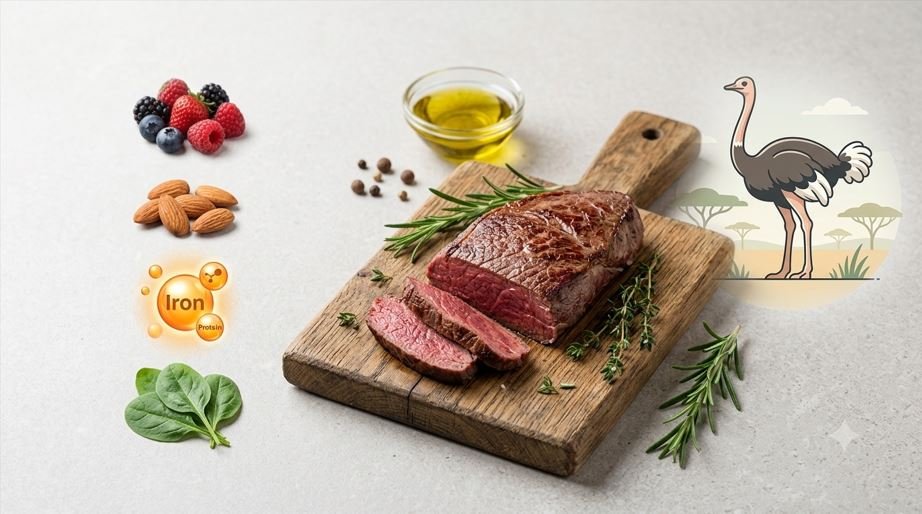
Ostrich meat contains more iron than beef per 100 grams (2.8mg versus roughly 2.6mg), and critically, it’s heme iron, the form of iron found in animal products that the body absorbs far more efficiently than the non-heme iron found in plant sources like spinach or lentils.
This makes ostrich a genuinely useful food for people managing iron deficiency or anemia, particularly for those who already eat red meat but want a leaner source. As always, anyone with a diagnosed iron deficiency should work with a doctor on treatment, food alone isn’t a substitute for medical care, but as part of an iron-conscious diet, ostrich pulls real weight.
Which Is Healthier: Ostrich Meat or Chicken?
This is a closer comparison than most people expect. Skinless chicken breast and ostrich meat are both lean, both high protein, and both relatively low in fat. The differences come down to a few specifics:
| Nutrient (per 100g) | Ostrich | Chicken Breast (skinless) |
|---|---|---|
| Calories | 145 | ~165 |
| Protein | 28g | ~31g |
| Iron | 2.8mg | ~1.0mg |
| Fat | 2.6g | ~3.6g |
Chicken edges out ostrich slightly on raw protein content, but ostrich pulls ahead significantly on iron, nearly three times as much. If iron intake is a priority, ostrich has a clear advantage. If pure protein-per-calorie is the goal, the two are close enough that either works well, and the choice often comes down to flavor preference rather than nutrition.
Ostrich Meat Benefits Compared: Where Does It Rank Among the World’s Healthiest Meats?
When you add up the ostrich meat benefits covered here, protein, iron, fat quality, it’s clear why ostrich consistently ranks near the top among lean meats broadly, ostrich consistently ranks near the top for its combination of high protein, low fat, low cholesterol, and strong micronutrient profile. It’s frequently grouped with skinless poultry and wild game as one of the leaner, more nutrient-dense options compared to fattier cuts of conventional red meat.
It’s worth being clear that “healthiest” depends heavily on individual dietary goals. For someone managing cholesterol, ostrich’s low saturated fat matters most. For someone building muscle, the protein-to-calorie ratio matters most. For someone managing anemia, the iron content matters most. Ostrich performs well across all three, which is part of why it keeps showing up in these conversations.
Frequently Asked Questions
Is ostrich meat a superfood?
It’s not officially classified as a superfood, since that’s a marketing term rather than a scientific one, but it does offer an unusually strong combination of high protein, low fat, and high iron in a single food.
How much protein is in ostrich meat?
Ostrich meat contains approximately 28 grams of protein per 100 grams raw, among the highest protein-to-calorie ratios of any commonly eaten meat.
Is ostrich meat good for bodybuilding?
Yes, its high complete protein content and low fat make it a solid choice for anyone focused on building or maintaining lean muscle mass.
Is ostrich meat anti-inflammatory?
Its favorable omega-6 to omega-3 ratio is generally considered more supportive of reduced inflammation compared to beef, though it shouldn’t be relied on as a treatment for any inflammatory condition.
What vitamins does ostrich meat contain?
Ostrich meat is a good source of vitamin B12, vitamin B6, and zinc, all of which support energy metabolism and immune function.
Does ostrich meat have any downsides?
The main drawback is price rather than nutrition. Ostrich typically costs significantly more than beef due to limited supply and specialized farming. For the full breakdown, see our guide on why ostrich meat is so expensive.
Is ostrich meat clean or unclean to eat?
This depends on the dietary tradition. It’s generally considered halal in Islamic dietary law, while it’s listed as unclean under Jewish dietary law in Leviticus. For the full explanation, see our guide on whether ostrich meat is halal.
Does ostrich meat taste like beef?
Yes, most people describe it as very close to lean beef, particularly cuts like sirloin or tenderloin, with a slightly sweeter, milder flavor. For more detail, see our full breakdown of what ostrich meat tastes like.
Which meat has the most protein per calorie?
Ostrich ranks among the highest, delivering close to 28 grams of protein for under 150 calories, putting it ahead of most cuts of beef and on par with or better than skinless chicken breast.
Ostrich meat earns its reputation as a genuinely beneficial red meat option, not through marketing claims, but through numbers that hold up: high protein, low fat, low cholesterol, strong iron content, and a favorable fat profile compared to conventional beef.
It’s not a miracle food, and it works best as part of a varied, balanced diet rather than a replacement for medical advice or a complete eating plan on its own. For anyone already curious about the flavor or the price, what does ostrich meat taste like and why is ostrich meat so expensive round out the full picture before you decide to try it.