Quick Answer: How do you cook ostrich steak without drying it out?
The best way to cook ostrich steak is to sear it over high heat in a cast-iron skillet with a neutral oil, then baste it with butter, garlic, and fresh herbs. Sear a 3/4-inch to 1-inch steak for 2 to 3 minutes per side until the internal temperature reaches 125°F to 130°F (52°C to 54°C) for rare to medium-rare. Let it rest for 5 minutes before slicing across the grain.
Table of Contents
Ostrich steak looks and tastes surprisingly like premium beef filet mignon, but it behaves differently on the stove. Because ostrich is extremely lean, it contains almost no intramuscular fat. Leaving it on the heat for even a minute too long drains its natural juices and turns a tender cut tough.
Cooking ostrich perfectly comes down to simple physics: high heat, short cooking times, and strict temperature control. You do not need complex marinades or specialized equipment to get a steakhouse-quality finish. A preheated skillet, coarse salt, freshly cracked pepper, and a reliable instant-read thermometer are all it takes.
Below, the OstrichPro team outlines five reliable ostrich steak cooking methods, breaks down the best cuts for each technique, and provides quick fixes for common cooking mistakes. If you need target temperatures for other cuts, explore our detailed guide on how to cook ostrich meat.
Before You Cook: What Ostrich Steak Really Is
Ostrich is classified as poultry, but its meat behaves almost identically to high-end beef. It features a deep red color, a fine grain, and a mild, clean flavor with a subtle natural sweetness. When cooked correctly, ostrich steak delivers the tenderness of beef filet mignon without any of the gamey taste people often expect from exotic meats.
Its low fat content makes ostrich an exceptionally healthy red meat, but it also leaves little room for error. Without intramuscular fat to insulate the muscle fibers, overcooking quickly leads to a dry, tough texture. Choosing the right cut and prepping the surface properly are the two most important steps to guarantee a juicy result.
For a deeper look at the science behind its classification, check out our guide on whether ostrich meat is red meat.
Which Ostrich Steak Cuts Are Best?
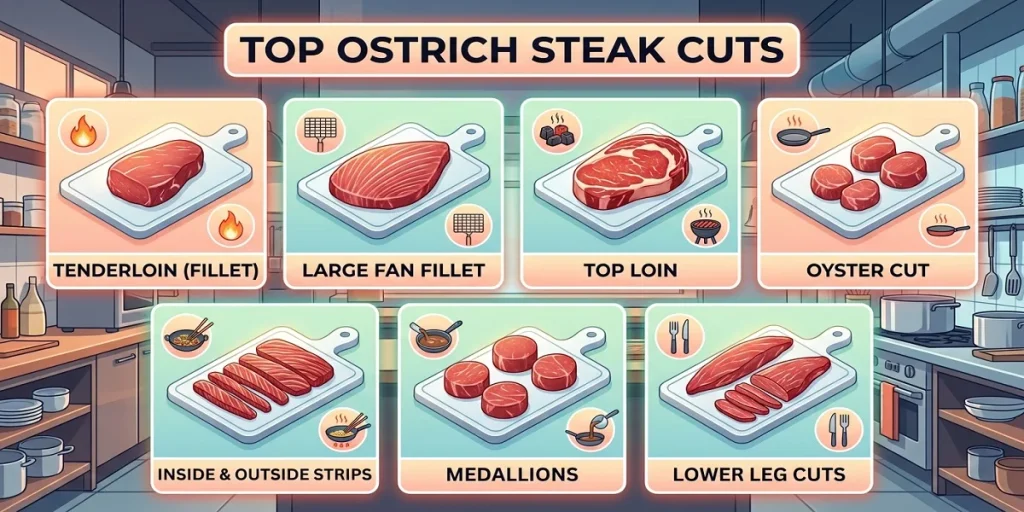
Ostrich steaks are harvested from the bird’s large leg and thigh muscle groups rather than the breast. Different muscles serve different structural functions, so tenderness varies across cuts. Knowing which cut you have helps you pick the ideal cooking method.
If your package simply reads “ostrich steak,” ask your supplier or butcher for the specific muscle name. This detail helps you adjust your heat management and timing accordingly.
| Cut | Texture Profile | Recommended Cooking Method |
| Tenderloin (Fillet) | Extremely tender, delicate | High-heat pan-searing or grilling |
| Fan Fillet | Tender, consistent grain | Pan-searing, grilling, or air frying |
| Top Loin | Tender, rich flavor | Pan-searing or charcoal grilling |
| Oyster Cut | Very tender when seared fast | Hot pan-searing or quick grilling |
| Inside & Outside Strips | Moderately tender, tight grain | Quick pan-searing or flash stir-frying |
| Medallions | Uniform tenderness based on origin | Fast pan-searing with a pan sauce |
| Lower Leg Cuts | Leaner, slightly chewier | Thin slicing across the grain or stir-frying |
For beginners, steaks cut between 3/4 inch and 1 inch thick offer the best balance. This thickness allows you to build a golden crust on the outside while keeping the center cooked to rare or medium-rare.
Prep Rules That Make Every Recipe Better
Following these quick prep steps ensures consistent results across all cooking methods:
- Thaw completely in the fridge. Never thaw ostrich meat on the counter at room temperature. Move frozen steaks to the refrigerator 12 to 24 hours before cooking to preserve moisture.
- Pat the surface completely dry. Use paper towels to remove moisture from the exterior. Moisture creates steam, which prevents a proper caramelized crust from forming in the pan.
- Keep seasonings balanced. Coarse salt and freshly cracked black pepper build an excellent crust. If you want added aroma, add minced garlic, fresh rosemary, or smoked paprika just before cooking.
- Use short marinating times. Limit oil and acid marinades to 30 to 60 minutes in the refrigerator. Prolonged exposure to high acidity alters the surface proteins and creates a mushy texture.
- Keep an instant-read thermometer nearby. Ostrich meat changes color quickly, making visual estimation unreliable. Pulling the steak based on internal temperature prevents overcooking.
- Set up a resting station. Have a warm plate or cutting board ready next to your stove. Resting the steak allows the muscle fibers to relax and redistribute juices back into the meat.
How Done Should Ostrich Steak Be?
Because ostrich meat is so lean, internal temperature control is the single most critical factor in cooking it successfully. Judging doneness by sight or cooking time alone often leads to overcooked, dry meat. Ostrich steak passes from tender medium-rare to tough and chewy in a matter of 30 to 40 seconds.
Culinary professionals almost universally recommend serving ostrich steak rare or medium-rare to maintain its natural tenderness and moisture. The chart below details standard culinary doneness targets for ostrich steak:
| Doneness Level | Internal Temperature Range | Visual & Texture Profile |
| Rare | 120°F to 129°F (49°C to 54°C) | Deep red center, warm and soft texture |
| Medium-Rare | 130°F to 139°F (54°C to 59°C) | Bright pink center, supple and juicy |
| Medium | 140°F to 149°F (60°C to 65°C) | Pale pink center, noticeably firmer texture |
| Medium-Well | 150°F to 159°F (66°C to 71°C) | Trace pinkness, high risk of dry texture |
| Well-Done | 160°F (71°C) and above | Uniformly gray-brown, tight fibers, dry texture |
Food Safety Notice
The United States Department of Agriculture (USDA) recommends a minimum internal temperature of 145°F (63°C) with a 3-minute rest for whole muscle cuts of beef, pork, veal, and lamb. While federal guidelines do not specifically list whole-cut ratite steaks like ostrich, reaching 145°F (63°C) ensures food safety, though it yields a medium-well steak with reduced juiciness. For ground ostrich meat, always cook to a safe minimum internal temperature of 160°F (71°C).
How to Measure Temperature Accurately
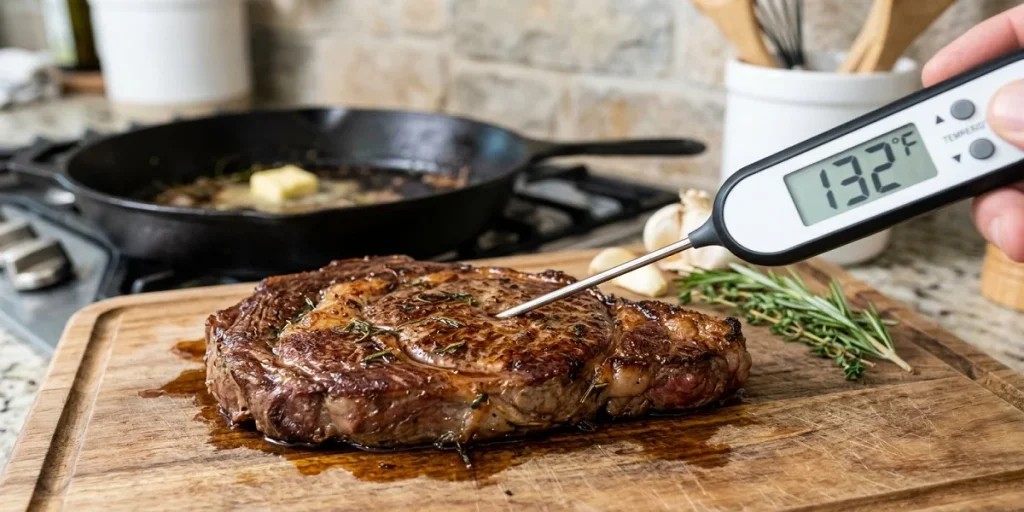
- Insert from the side on thin cuts. For steaks under 1 inch thick, push the digital probe horizontally into the side of the steak so the sensor tip rests in the absolute geometric center.
- Avoid pan contact. Ensure the thermometer tip does not pass through the meat and touch the hot cooking surface below.
- Account for carryover cooking. Remove the steak from heat when it reaches 3°F to 5°F below your target temperature. Residual heat continues to cook the interior while the meat rests on the board.
Now that target temperatures are established, let’s look at five distinct cooking methods, starting with the gold standard: classic pan-searing with garlic herb butter.
5 Easy-to-Cook Ostrich Steak Recipes
The OstrichPro team has put together five ostrich steak recipes to help you get the best out of this lean, flavorful meat. From a classic pan-seared steak with garlic butter to a grilled version, a quick air fryer option, and restaurant-style sauces, each recipe offers a different way to enjoy ostrich at home. We have also included practical cooking tips to help you avoid overcooking and keep your steak as tender and juicy as possible.
1. Classic Pan-Seared Ostrich Steak with Garlic Butter
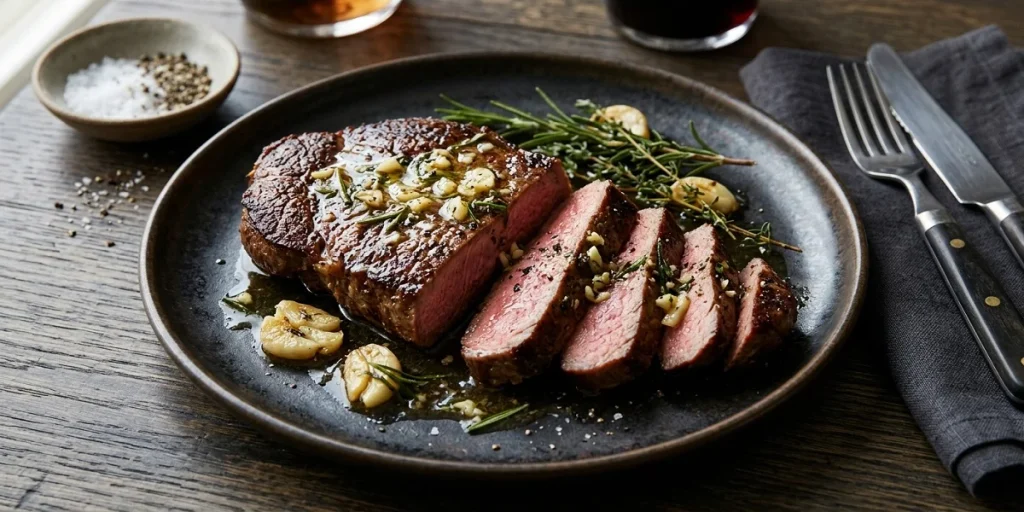
Prep time: 5 minutes Cook time: 5–8 minutes Servings: 2
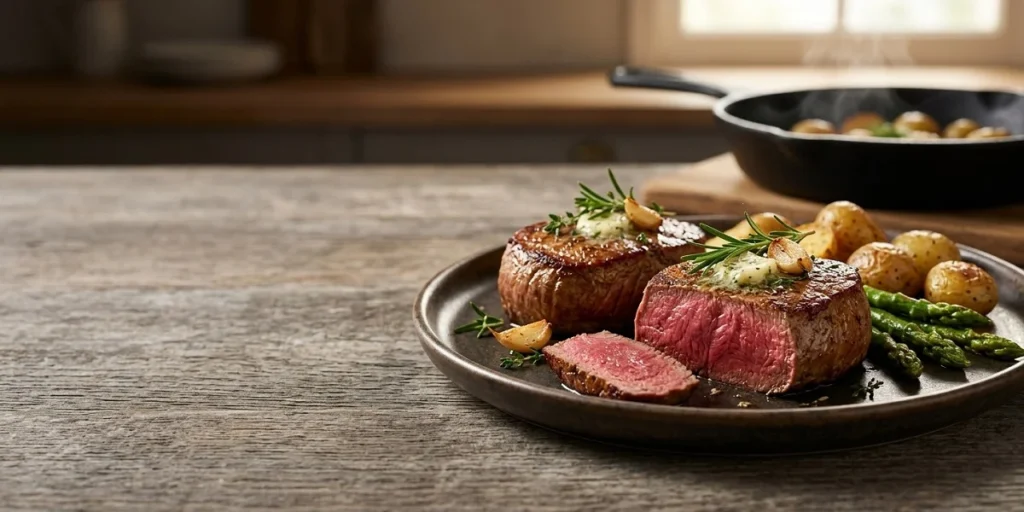
If you are cooking ostrich steak for the first time, this traditional pan-searing method is the best place to start. Sear high and fast in a heavy skillet to build a deeply browned crust, then finish with melted butter, crushed garlic, and fresh herbs to complement the rich, beef-like flavor.
Ingredients
- 2 ostrich steaks (6 to 8 oz each, 3/4 to 1 inch thick)
- 1 tablespoon high-smoke-point oil (avocado oil or refined olive oil)
- 1 tablespoon unsalted butter
- 2 garlic cloves, lightly smashed
- 2 fresh rosemary or thyme sprigs
- Coarse sea salt and freshly cracked black pepper, to taste
Step-by-Step Instructions
- Prep and season the steaks. Thoroughly pat the steaks dry with paper towels. Season both sides generously with coarse salt and freshly cracked black pepper right before cooking.
- Preheat the skillet. Place a heavy cast-iron skillet over high heat until it begins to wisp smoke. Swirl in the high-smoke-point oil.
- Sear the first side. Lay the steaks in the hot skillet. Leave them undisturbed for 2 to 3 minutes to form a crisp, golden crust.
- Flip and baste with butter. Turn the steaks over. Immediately add the butter, smashed garlic cloves, and herb sprigs to the pan. Tilting the pan slightly, spoon the foaming melted butter over the steaks continuously for 1 to 2 minutes.
- Check the internal temperature. Insert an instant-read digital thermometer horizontally into the thickest part of the steak. Pull the steaks off the heat when they reach 125°F to 130°F (52°C to 54°C) for medium-rare.
- Rest and slice. Transfer the steaks to a cutting board and let them rest for 5 minutes. Slice across the grain into thin strips and drizzle with the warm pan butter before serving.
Butter vs. Oil: Which Is Best for Ostrich Steak?
Using both yields the best results. High-smoke-point oils withstand the extreme heat required for a deep initial sear without burning or producing bitter flavors. Butter, on the other hand, adds richness and enhances the mouthfeel of lean game meat.
Adding butter during the final minute of cooking gives you the flavor benefits of butter basting without burning the delicate milk solids during high-heat searing.
OstrichPro Tip: Keep your seasonings simple on your first attempt. Mastering the balance of high heat, quick searing times, and internal temperature control gives you a strong foundation before you move on to complex marinades or heavy pan sauces.
2. Ostrich Steak with Red Wine and Mushroom Sauce
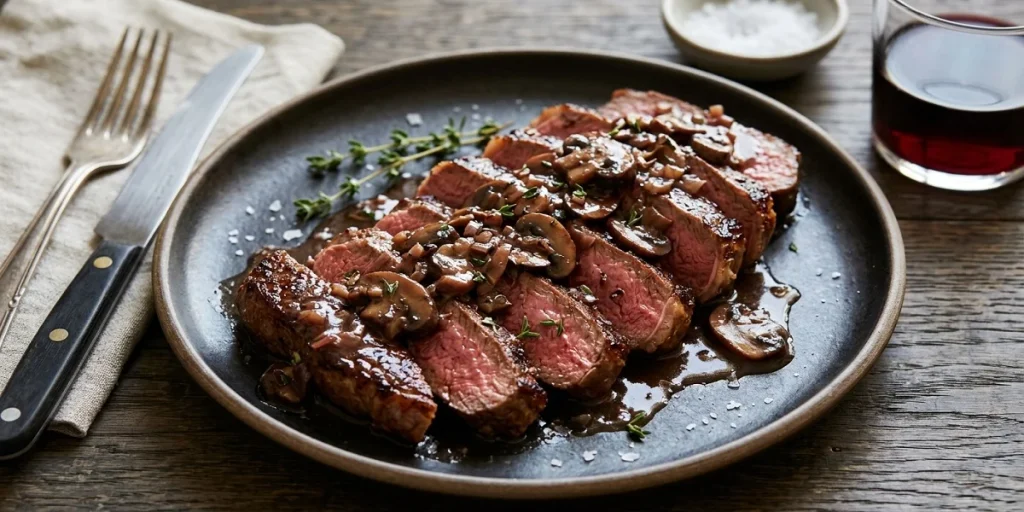
Prep time: 10 minutes Cook time: 15 minutes Servings: 2
If you enjoy steak with a rich, savory finish, this recipe delivers a classic steakhouse profile. Earthy mushrooms, dry red wine, garlic, and fresh thyme create a deeply satisfying pan sauce that complements the natural meatiness of ostrich without overpowering it.
The secret to a great pan sauce is building on the fond, the caramelized browned bits left in the skillet after searing the steak. Because ostrich is so lean, resting the meat while you finish the sauce ensures you get a tender result coated in rich flavor.
Ingredients
- 2 ostrich steaks (6 to 8 oz each, 3/4 to 1 inch thick)
- 1 tablespoon olive oil
- 1 tablespoon unsalted butter
- 8 oz (225 g) cremini or button mushrooms, sliced
- 1 small shallot or yellow onion, finely diced
- 2 garlic cloves, minced
- 1/2 cup (120 ml) dry red wine (Cabernet Sauvignon or Merlot)
- 1/2 cup (120 ml) low-sodium beef stock
- 3 fresh thyme sprigs
- 1/4 cup (60 ml) heavy cream (optional)
- Coarse sea salt and freshly cracked black pepper, to taste
Step-by-Step Instructions
- Season and sear. Pat the steaks dry with paper towels and season with salt and black pepper. Heat olive oil in a heavy skillet over medium-high heat. Sear the steaks for 2 to 3 minutes per side until the internal temperature reaches 125°F to 130°F (52°C to 54°C) for medium-rare.
- Rest the meat. Transfer the seared steaks to a plate and cover loosely with foil. Set aside while preparing the pan sauce.
- Sauté the aromatics and mushrooms. Lower the heat to medium and melt the butter in the same pan. Add the diced shallots and cook until soft. Stir in the sliced mushrooms and cook for 4 to 5 minutes until browned and tender.
- Deglaze with red wine. Add the minced garlic, then pour in the dry red wine. Use a wooden spoon to scrape up all the caramelized browned bits stuck to the bottom of the pan. Simmer until the wine reduces by half.
- Simmer the sauce. Pour in the beef stock and add the thyme sprigs. Simmer for 3 to 4 minutes until the liquid reduces and thickens slightly. Stir in the heavy cream if you want a richer texture, and season with extra salt and pepper to taste.
- Slice and serve. Slice the rested ostrich steaks against the grain. Plate the meat and spoon the rich mushroom sauce generously over the top.
OstrichPro Tip: Use a dry red wine you enjoy drinking, like Cabernet Sauvignon, Merlot, or Syrah. If you prefer to cook without alcohol, replace the red wine with an equal amount of beef stock plus 1 teaspoon of balsamic vinegar to provide that necessary acid balance.
3. Grilled Ostrich Steak with a Quick Savory Marinade
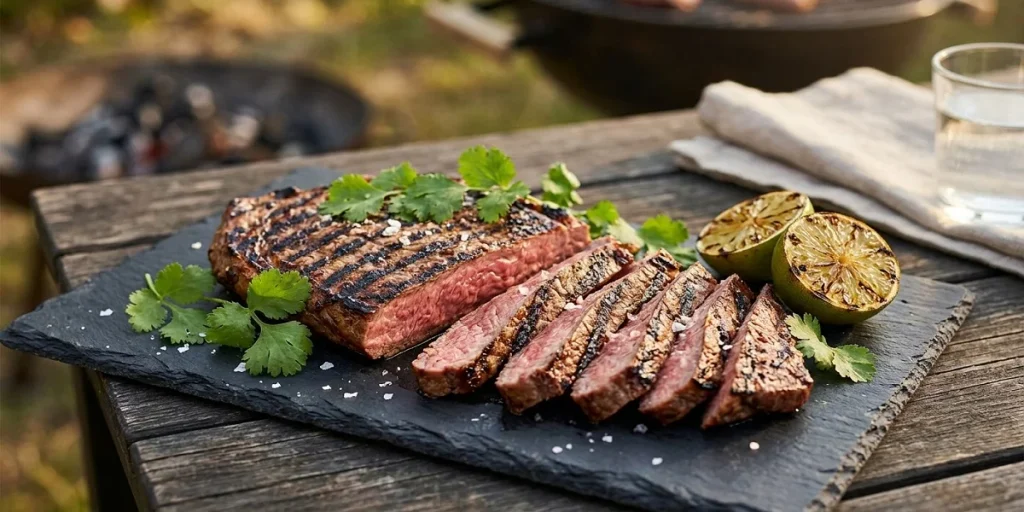
Prep time: 10 minutes Marinating time: 30–60 minutes Cook time: 5–8 minutes Servings: 2
Grilling infuses ostrich steak with a smoky char and a caramelised outer crust, making it an outstanding option for outdoor cooking. Because ostrich meat is so lean, a quick marinade featuring soy sauce, fresh lime juice, and garlic adds rich umami and moisture without breaking down the natural texture of the muscle fibers.
The key to successful grilling is maintaining direct, high heat for a short duration. Keep the marinating window brief, monitor internal temperatures closely, and rest the meat before slicing.
Ingredients
For the steaks:
- 2 ostrich steaks (6 to 8 oz each, 3/4 to 1 inch thick)
- Neutral oil, for greasing grill grates
For the marinade:
- 3 tablespoons soy sauce
- 2 tablespoons olive oil
- 1 tablespoon fresh lime juice
- 2 garlic cloves, minced
- 1 teaspoon honey
- 1/4 teaspoon freshly ground black pepper
Step-by-Step Instructions
- Whisk the marinade. In a small bowl, combine the soy sauce, olive oil, lime juice, minced garlic, honey, and black pepper until well blended.
- Marinate the steaks. Place the ostrich steaks in a shallow glass dish or a zip-top bag and pour the marinade over them. Seal and refrigerate for 30 to 60 minutes, turning once midway through.
- Preheat the grill. Clean your grill grates thoroughly and preheat to medium-high or high heat (400°F to 450°F / 200°C to 230°C). Lightly oil the grates to prevent sticking.
- Prep the meat for searing. Remove the steaks from the marinade and let the excess liquid drip off. Discard the remaining marinade.
- Grill high and fast. Place the steaks over direct heat. Grill for 2 to 3 minutes per side until grill marks form and an instant-read thermometer inserted into the thickest part reads 125°F to 130°F (52°C to 54°C) for medium-rare.
- Rest and serve. Move the steaks to a clean plate, tent loosely with foil, and let rest for 5 minutes. Slice thinly across the grain and serve immediately.
Why This Marinade Formula Works
- Soy sauce provides necessary salinity and deepens savory umami flavor.
- Lime juice cuts through the rich profile with balanced acidity.
- Honey promotes quick surface caramelization over open flames.
- Olive oil coats the lean surface, preventing sticking and locking in juices.
OstrichPro Tip: Keep the grill lid closed between turns to maintain stable ambient heat, but do not walk away. Lean cuts on high heat can transition from tender medium-rare to overcooked in under a minute.
4. Ostrich Steak in the Air Fryer
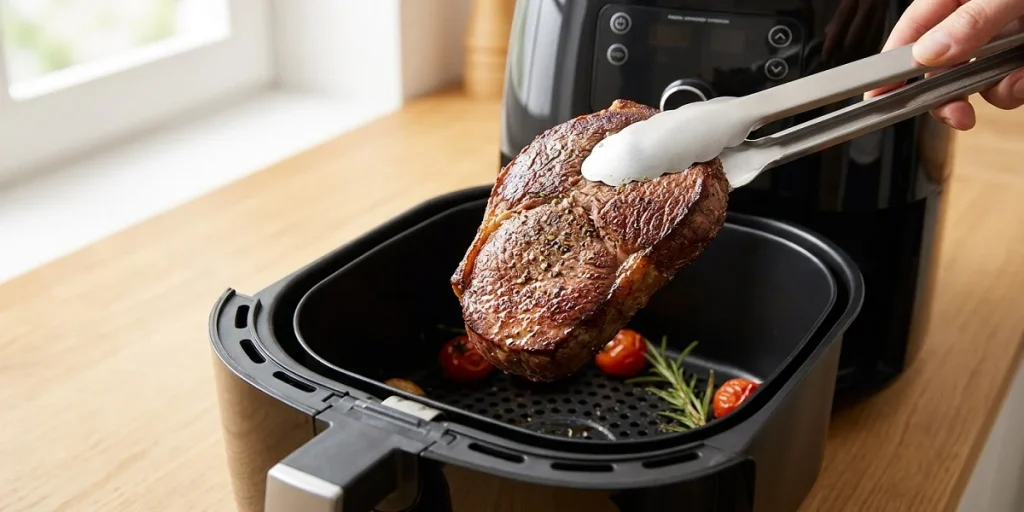
Prep time: 5 minutes Cook time: 5–8 minutes Servings: 2
An air fryer is a fast, convenient alternative when you want a tender ostrich steak without heating up a heavy skillet or preheating an outdoor grill. Rapid hot air circulation helps brown the thin oil coating on the exterior while keeping the center tender.
Because air fryers cook intensely through convection, the main risk is drying out the lean meat. Keep the cooking time short, refrain from overcrowding the basket, and start checking the internal temperature early.
Ingredients
- 2 ostrich steaks (6 to 8 oz each, 3/4 to 1 inch thick)
- 1 to 2 teaspoons olive oil or avocado oil
- 1/2 teaspoon garlic powder
- 1/4 teaspoon smoked paprika (optional)
- Coarse sea salt and freshly cracked black pepper, to taste
Step-by-Step Instructions
- Prep the meat. Pat the steaks thoroughly dry with paper towels to remove surface moisture.
- Oil and season. Lightly rub both sides of each steak with olive oil, then season evenly with salt, black pepper, garlic powder, and smoked paprika.
- Preheat the air fryer. Set your air fryer to 375°F (190°C) and let it preheat for 3 minutes.
- Arrange in a single layer. Place the seasoned steaks into the air fryer basket, ensuring they do not overlap so hot air circulates freely around each cut.
- Air fry and flip. Cook for 5 to 8 minutes total, flipping the steaks at the 3-minute mark. Begin checking the internal temperature around 4 minutes, as air fryer wattages vary significantly.
- Verify internal temperature. Insert an instant-read thermometer horizontally into the center of the steak. Remove the meat when it reaches 125°F to 130°F (52°C to 54°C) for medium-rare.
- Rest and serve. Transfer the steaks to a clean plate, let them rest for 5 minutes, and slice thinly across the grain.
How Long Should You Cook Ostrich Steak in an Air Fryer?
Cooking times depend heavily on steak thickness and your specific air fryer model. For a standard 3/4-inch to 1-inch thick steak, treat 5 to 8 minutes as a baseline range rather than a strict timer rule.
To prevent overcooking, never double-stack steaks in the basket and resist adding extra minutes just to darken the exterior color.
OstrichPro Tip: Because convection air frying adds no extra fats, pair your air-fried ostrich steak with a quick garlic butter melt, a rich peppercorn sauce, or side dishes like herb-roasted potatoes to balance the lean profile.
5. Ostrich Medallions with Port and Blue Cheese Sauce
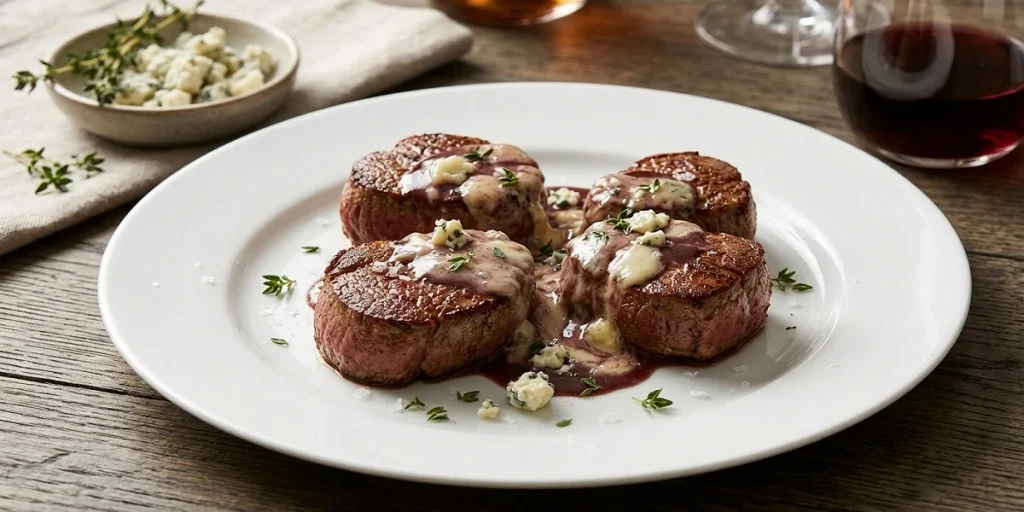
Prep time: 5 minutes Cook time: 10–15 minutes Servings: 2
If you want to present ostrich steak as an elegant, restaurant-style dinner, medallions with a silky port wine and blue cheese reduction are an exceptional choice. The dark sweetness of ruby port balances the sharp, salty punch of crumbled blue cheese, while heavy cream ties everything into a velvety sauce.
Medallions are thick, circular cuts trimmed from larger prime roasts. Their uniform thickness makes them easier to cook evenly, but because they are smaller, precise temperature monitoring is essential to keep them tender and juicy.
Ingredients
- 4 ostrich medallions (approximately 3/4 inch thick)
- 1 tablespoon olive oil
- 1 tablespoon unsalted butter
- 1/4 cup (60 ml) ruby port wine
- 1/4 cup (60 ml) heavy cream
- 1 to 2 tablespoons crumbled blue cheese (Gorgonzola or Roquefort)
- Fresh thyme leaves, for garnish
- Coarse sea salt and freshly cracked black pepper, to taste
Step-by-Step Instructions
- Prep and season the medallions. Pat the medallions thoroughly dry with paper towels. Season generously on all sides with salt and black pepper.
- Sear in a hot skillet. Heat olive oil in a heavy skillet over medium-high heat. Add the medallions and sear for roughly 2 minutes per side to build a dark outer crust.
- Verify internal temperature. Probe the center of a medallion with an instant-read thermometer. Pull the meat off the heat when it reads 125°F to 130°F (52°C to 54°C) for medium-rare.
- Rest the meat. Transfer the medallions to a warm plate and cover loosely with foil while you construct the pan sauce.
- Reduce the port wine. Reduce the skillet heat to medium. Pour in the port wine, scraping up the flavorful browned fond from the bottom of the pan with a wooden spoon. Allow the wine to simmer until reduced by half.
- Whisk in cream and cheese. Reduce heat to low. Stir in the heavy cream and crumbled blue cheese. Stir gently until the cheese melts completely and the sauce coats the back of a spoon. Avoid boiling rapidly to prevent the emulsion from separating.
- Plate and serve. Arrange the rested medallions on plates and spoon the warm blue cheese sauce over the top. Garnish with fresh thyme leaves.
How to Balance the Rich Flavors
- Blue cheese control: Blue cheese can overpower mild meats quickly. Start with a single tablespoon and taste before adding more.
- Mild alternatives: If blue cheese is too strong for your palate, swap it for a teaspoon of Dijon mustard and extra fresh thyme for a classic French bistrot style sauce.
- Alcohol-free substitute: Replace port wine with low-sodium beef stock and 1 teaspoon of fig or pomegranate molasses to preserve that necessary hint of fruity sweetness.
OstrichPro Tip: Pair these rich medallions with smooth garlic mashed potatoes and roasted asparagus. Simple, savory side dishes soak up the extra port reduction without competing with the steak for center stage.
Why Is My Ostrich Steak Tough?
If your ostrich steak turned out dry, chewy, or stringy, you are not alone. Ostrich is exceptionally lean, containing virtually no intramuscular fat (marbling) to retain moisture during high-heat cooking. Unlike well-marbled beef steaks, ostrich leaves very little room for error. Passing your target temperature by just a few degrees can cause the lean muscle fibers to contract tightly and squeeze out residual juices.
To help you diagnose issues and refine your technique, the OstrichPro team created this quick troubleshooting guide:
| Problem | Likely Cause | Solution |
| Dry and chewy texture | Overcooking beyond medium-rare | Use a digital instant-read thermometer and pull the meat off heat at 125°F to 130°F (52°C to 54°C). |
| Pale gray surface with no crust | Low pan temperature or surface moisture | Pat the meat completely dry with paper towels and preheat your heavy skillet until it wisps smoke before adding oil. |
| Unevenly cooked interior | Uneven steak thickness or extreme direct heat | Select uniform cuts or adjust heat levels so the surface browns at the same rate the center warms. |
| Juices pooling on the cutting board | Slicing immediately without resting | Allow the steak to rest for 5 minutes on a warm plate so muscle fibers relax and reabsorb internal juices. |
| Stringy or tough bites | Slicing parallel with the muscle grain | Locate the direction of the grain fibers and cut perpendicular across them to shorten muscle fibers. |
| Tough despite precise cooking | Cut selected from a high-exercise muscle group | Reserve lean fan cuts or roasts for thin slicing, quick stir-fries, or gentle marinating. |
| Mushy or soft surface texture | Over-marinating in high-acid liquids | Limit acidic marinades (citrus, vinegar, wine) to 30 to 60 minutes maximum in the refrigerator. |
Can You Fix an Overcooked Ostrich Steak?
Once ostrich meat is overcooked, you cannot fully restore its lost internal moisture. However, you can save the dish and avoid food waste with these professional kitchen adjustments:
- Slice paper-thin across the grain: Shortening the long, stringy muscle fibers mechanically makes the meat significantly easier to chew.
- Pair with rich, fat-based sauces: Serving sliced overcooked steak alongside a pan sauce, garlic butter, or red wine mushroom reduction restores mouthfeel and adds needed fat.
- Repurpose into secondary dishes: Thinly slice leftovers and toss them into warm wraps, salads, sandwiches, or stir-fries during the final 30 seconds of cooking just to warm them through without additional cooking.
OstrichPro Tip: Remember that even premium cuts like ostrich tenderloin or fan fillets will turn dry if overcooked. An instant-read digital thermometer remains your most critical tool for consistent, professional cooking.
What to Serve with Ostrich Steak
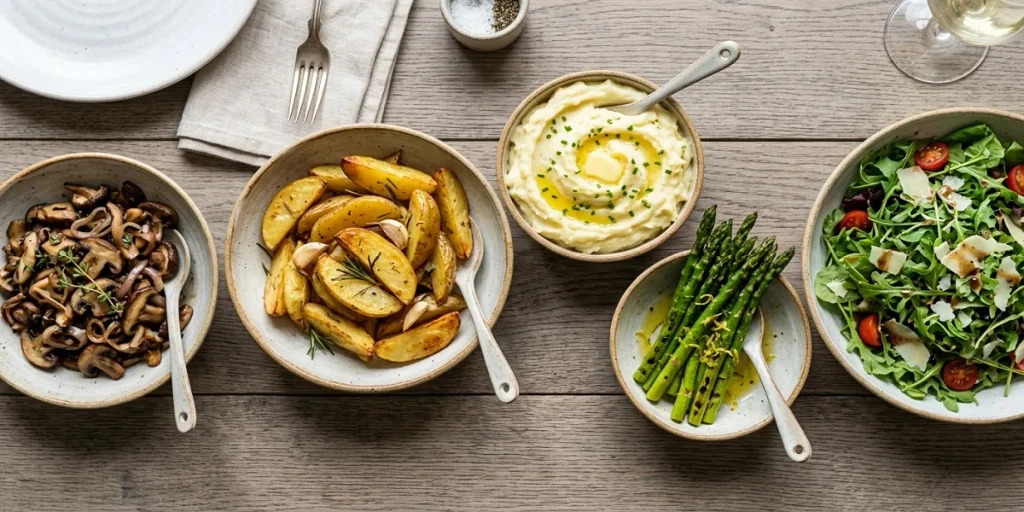
Because ostrich steak is exceptionally lean with a mild, beef-like flavor profile, it pairs best with side dishes that supply creaminess, healthy fats, or a touch of refreshing acidity. You do not need a complex menu. A perfectly seared steak paired with a rich sauce and one or two well-chosen sides creates a balanced, restaurant-quality meal.
The OstrichPro team recommends these side dish pairings:
- Roasted Yukon Gold or Sweet Potato Wedges: Crispy on the outside and fluffy inside, roasted potatoes offer a textured contrast to tender pan-seared or grilled ostrich.
- Creamy Garlic Mashed Potatoes: An ideal starch base for catching extra red wine reduction, mushroom sauce, or blue cheese glaze.
- Charred Asparagus or Roasted Green Beans: Tender-crisp green vegetables bring vibrant color and fresh crunch without overpowering the steak.
- Crisp Green Salad with Acidic Vinaigrette: A sharp lemon or balsamic dressing cuts through richer pan sauces and refreshes the palate.
- Sautéed Wild Mushrooms and Caramelized Shallots: Earthy, sweet flavors highlight the natural depth of lean ostrich meat.
- Parmesan Risotto or Herbed Rice Pilaf: A rich, comforting alternative to potatoes that absorbs pan juices nicely.
Which Sauce Goes Best with Ostrich Steak?
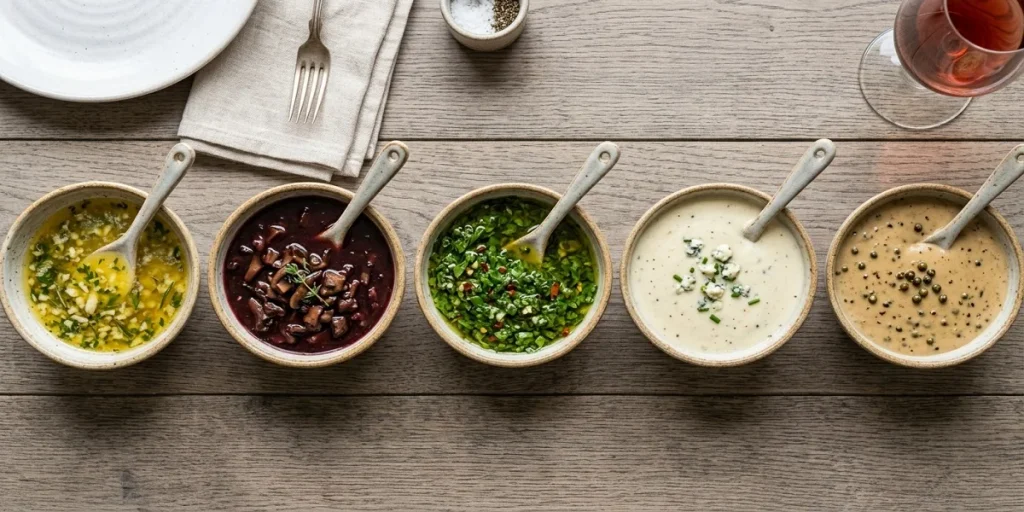
Because ostrich meat contains virtually no fat, the right sauce serves a dual purpose. It enhances flavor while introducing essential moisture and mouthfeel that balance the lean muscle texture.
- Classic Garlic Herb Butter: Perfect for simple pan-seared cuts, melting over the hot steak to add quick richness.
- Red Wine and Mushroom Pan Sauce: Adds depth and classic steakhouse elegance for romantic or formal dinners.
- Green Peppercorn Sauce: Delivers a sharp, warming spice kick that cuts through lean protein.
- Fresh Chimichurri or Herb Oil: Excellent for grilled ostrich, providing bright acidity and fresh herbs that lift smoky grill notes.
OstrichPro Tip: When serving lean game meats, always plated sauces underneath or over sliced steak rather than letting the meat sit dry. Generous saucing ensures every bite remains succulent.
Is Ostrich Steak Worth Cooking?
For culinary enthusiasts and health-conscious home cooks, ostrich steak is well worth exploring. It offers the familiar, rich flavor profile of premium beef while delivering a exceptionally lean, high-protein alternative. Because ostrich cooks quickly and takes well to simple pan-searing or grilling, it fits just as easily into a quick weeknight dinner as it does an elevated weekend menu.
Naturally, there are a few practical considerations to keep in mind:
- Availability and Sourcing: Ostrich meat is less common than conventional red meats and often comes at a higher price point per pound.
- Precision Required: Due to its low fat content, ostrich is unforgiving when overcooked. Using a digital meat thermometer is essential for consistent results.
- Storage and Thawing: Most specialty cuts arrive frozen, requiring deliberate, slow thawing in the refrigerator to preserve muscle fiber integrity.
Where Can You Buy Ostrich Steak?
In the United States and North America, high-quality ostrich cuts can typically be sourced through four primary channels:
- Specialty Butchers: Independent local butcher shops often stock game meats or can custom-order specific cuts from regional distributors.
- Direct-from-Farm Producers: Independent ostrich ranches frequently operate online storefronts, shipping frozen steaks directly to consumers.
- Online Specialty Retailers: Meat delivery services offer the broadest selection, including prime fan fillets, tenderloins, top loins, and pre-cut medallions.
- Gourmet Food Retailers: Select high-end grocery stores carry frozen ostrich steaks in their specialty game freezer sections.
When buying ostrich meat, check the available cuts, compare prices, and choose a reputable supplier. Our guide on where to buy ostrich meat explains what to look for when ordering online or from a specialty butcher, including proper chilled or frozen shipping.
OstrichPro Tip: If you are cooking ostrich for the first time, start with a classic pan-seared fan fillet. Master the high-heat sear and resting period before moving on to complex pan sauces or air frying.
Frequently Asked Questions About Cooking Ostrich Steak
Cooking ostrich steak is straightforward once you master its lean texture, but home cooks often have a few specific questions before buying or preparing it. Here are direct answers to the most common inquiries.
How Do You Cook Ostrich Steak?
Pat the steak thoroughly dry with paper towels, season generously with salt and black pepper, and sear it in a smoking-hot skillet with a high-smoke-point oil. For a steak roughly 3/4 to 1 inch thick, sear for 2 to 3 minutes per side as a baseline. Always rely on a digital thermometer rather than strict timer estimates, pulling the meat at 125°F to 130°F (52°C to 54°C) for medium-rare. Rest for 5 minutes before slicing against the grain.
What Is the Best Way to Cook Ostrich Steak?
Pan-searing in a cast-iron skillet is widely considered the best cooking method. It creates a dark, savory outer crust quickly without overcooking the lean interior. Outdoor grilling is another excellent option for smoky flavor, while air frying offers convenient weeknight cooking for single portions.
Is It Better to Pan-Fry Ostrich Steak in Butter or Oil?
A combination of both delivers the best results. Start searing with a high-smoke-point oil (like avocado or canola oil) to withstand high temperatures without burning. Add a tablespoon of butter during the final minute of cooking to baste the meat and build flavor without scorching the milk solids.
How Long Do You Cook Ostrich Steak in an Air Fryer?
Preheat your air fryer to 375°F (190°C) and cook a 3/4-inch steak for approximately 5 to 8 minutes total, flipping halfway through. Because air fryer models vary in heat intensity, insert a probe thermometer early to avoid drying out the lean meat.
What Temperature Should Ostrich Steak Be Cooked To?
For optimal culinary texture and juiciness, culinary experts recommend serving ostrich medium-rare at 125°F to 130°F (52°C to 54°C). From a food safety standpoint, the standard guideline for whole muscle cuts is reaching an internal temperature of 145°F (63°C) followed by a 3-minute rest, while ground ostrich should always reach 160°F (71°C).
Why Is My Ostrich Steak Tough?
Overcooking is the primary cause of tough, chewy ostrich steak. Because the meat contains virtually no intramuscular fat, overheating causes muscle fibers to contract tightly and express all moisture. Other common factors include skipping the 5-minute resting period, using low-heat pans, or slicing parallel to the muscle grain instead of across it.
Is Ostrich Meat Healthier Than Beef?
Ostrich meat is exceptionally lean, low in calories, and lower in saturated fat and cholesterol than most conventional cuts of beef, while offering comparable iron and protein levels. However, exact nutritional differences depend on the specific cuts, trimming, and cooking methods used.
Is It Legal to Eat Ostrich Meat in the US?
Yes. Ostrich meat is legal to purchase, cook, and consume in the United States when sourced through licensed, inspected suppliers. Because ostriches are farmed poultry class birds processed under federal or state food safety standards, commercially available ostrich meat is distributed through specialty butchers, direct-to-consumer ranches, and certified online meat purveyors. Always purchase from reputable sellers who adhere to proper handling, labeling, and cold-chain storage guidelines.
Do Muslims Eat Ostrich?
Ostrich meat is broadly considered permissible (halal) under Islamic dietary law, provided the bird is healthy at slaughter and processed in accordance with standard dhabihah ritual requirements. Because minor nuances exist regarding wild versus farmed game birds, always consult a local religious authority or trusted scholar if you require a ruling tailored to a specific school of jurisprudence (madhhab)
Does the Bible Prohibit Eating Ostrich?
In the Old Testament, Leviticus 11:16 and Deuteronomy 14:15 list certain birds as unclean and unsuitable for consumption under biblical dietary laws. Depending on the biblical translation, the Hebrew term bath ya’anah is frequently translated as ostrich or owl. Modern kosher dietary laws prohibit ostrich meat entirely. Conversely, most mainstream Christian traditions do not observe Mosaic dietary restrictions, making ostrich consumption a matter of personal dietary preference.