
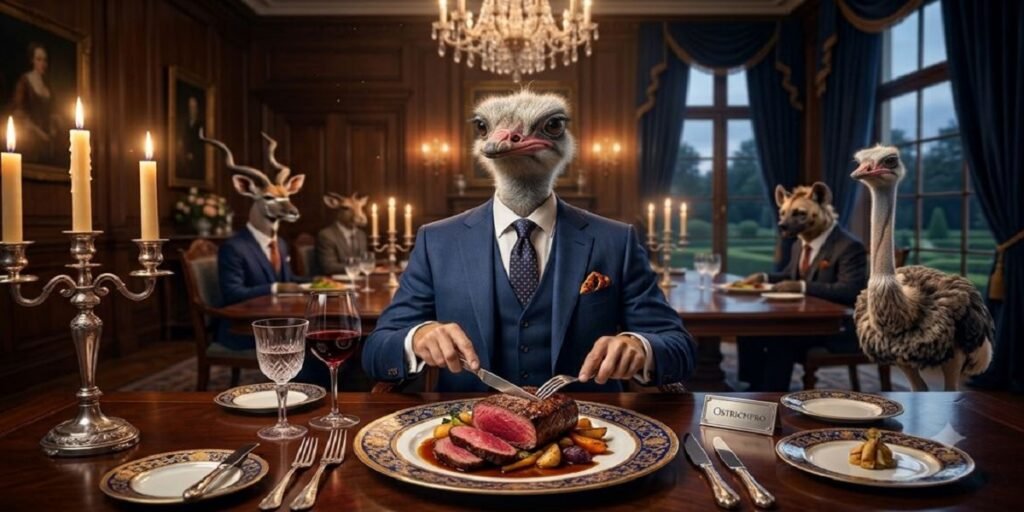
Quick Answer: Why is ostrich meat expensive? The short answer is that, ostrich meat is expensive because production remains small, farming is labor-intensive, processing facilities are limited, and the industry lacks the economies of scale enjoyed by beef and poultry producers. Most cuts sell for $12–30 per pound, compared with roughly $4–6 per pound for beef.
Table of Contents
Ostrich meat consistently surprises first-time buyers with its price tag. It’s leaner, arguably healthier, and tastes remarkably similar to beef, so the cost difference raises an obvious question: what’s actually driving the price up? The answer involves economics, history, and a genuinely fascinating boom-and-bust story most people have never heard.
How Much Does Ostrich Meat Actually Cost?
Prices vary by cut and source, but as a general range:
| Ostrich Meat Cut Style | Price Range (per lb) |
|---|---|
| Ground ostrich | $12-17 |
| Ostrich steak | $20-30 |
| Premium fillet | $26-35+ |
| Beef (for comparison) | $4-6 |
That’s roughly 3 to 6 times more expensive than beef, depending on the cut. To understand why, it helps to look at each factor separately.
Small Supply and Limited Farms
The United States has an estimated 350,000 to 500,000 ostriches total, spread across a relatively small number of farms. To put that in perspective, matching just 1% of the U.S. beef market would require slaughtering roughly 80,000 ostriches per week, a volume the current industry isn’t close to producing.
South Africa remains the dominant global producer, with an ostrich farming infrastructure that’s had over a century to develop. American and European operations are still catching up, which keeps supply tight and prices high in those markets.
No Government Subsidies
Beef, pork, and poultry industries have benefited from decades of investment, mature supply chains, and large-scale production that reduce costs throughout the value chain. Ostrich farming operates on a much smaller scale, with limited processing facilities, specialized production requirements, and fewer economies of scale.
Although ostrich producers may qualify for certain USDA assistance programs, the industry has not developed the extensive infrastructure enjoyed by conventional livestock sectors. As a result, production costs remain significantly higher, and those costs are reflected in the final retail price.
💡 Did You Know? Many people assume ostrich farming receives no government support at all. In reality, eligible producers can apply for certain USDA disaster assistance programs through their local Farm Service Agency office. However, unlike conventional livestock industries, ostrich farming still lacks the large-scale infrastructure and economic advantages that help reduce production costs.
Slow, Labor-Intensive Farming
Ostriches take 10 to 12 months to reach market weight, require specialized knowledge at every stage from breeding to hatching to processing, and don’t breed as predictably in captivity as cattle do. Farms also tend to operate at lower stocking densities, giving birds more room to roam, which improves meat quality but reduces the number of animals a farm can raise at once.
Feed costs add up too. Because most ostrich operations are small scale, they don’t get the bulk purchasing discounts that large cattle or poultry producers do.
Specialized Processing Facilities
Ostrich processing isn’t something a standard cattle slaughterhouse can handle. It requires custom equipment sized for the bird’s unique anatomy, along with USDA-inspected facilities built specifically for ostrich. Very few of these exist, which limits capacity and adds cost at the final stage before meat reaches a buyer.
The Untold History: The 1980s Ostrich Boom and Bust
Here’s a piece of the story most articles never mention, and it explains a lot about why the industry looks the way it does today.
In the 1980s, ostrich farming became a genuine investment craze in the United States, grouped with other “get rich quick” livestock trends of the era like chinchillas and llamas. Investors and brokers poured money into ostrich ranches, betting on ostrich meat and leather becoming the next big thing.
Then, in 1993, the repeal of American anti-apartheid trade restrictions opened the door for South African ranchers, who had decades of established ostrich infrastructure, to flood the U.S. market with birds. Supply outpaced demand fast. By 1995, the global ostrich market collapsed, prices crashed, and many American investors and ranchers were left with expensive flocks and no viable buyers.
The industry never fully recovered its speculative scale, but it also never disappeared. What remains today is a smaller, more deliberate group of farmers, which is part of why current pricing reflects a niche, careful industry rather than a mass-market one.
Limited Consumer Awareness
Unlike beef or chicken, most Americans have never cooked or eaten ostrich. That unfamiliarity means farms have to spend real money on marketing and education just to build a customer base, costs that get folded into the final price. A 1998 Baylor University study on ostrich meat found that participants rated it favorably once they knew what it was. However, unfamiliarity remained a significant barrier to broader adoption and that barrier hasn’t fully disappeared.
Why Is Ostrich Meat More Expensive Than Beef?
Beef benefits from a mature supply chain built over more than a century, with massive production volumes, established processing infrastructure, and significant economies of scale. Ostrich farming remains a niche industry with far fewer farms, limited processing facilities, and higher production costs per bird. As a result, ostrich meat typically costs three to six times more than comparable cuts of beef. See our article that deep dive the topic: Ostrich meat vs beef
Why Is Ostrich Meat Expensive If It’s So Lean?
Many people assume lean meat should be cheaper because it contains less fat, but that’s not how meat pricing works. The cost of ostrich meat has very little to do with its nutritional profile and almost everything to do with how it’s produced.
Whether a cut is lean or fatty doesn’t change the cost of raising the animal. Farmers still need to feed the bird, provide veterinary care, maintain fencing and facilities, and process the meat in USDA-inspected plants. Those production costs are spread across far fewer birds than in the beef or poultry industries, making each pound of ostrich meat more expensive.
In fact, ostrich meat’s lean nutritional profile can actually increase its value in the eyes of consumers. Many buyers are willing to pay a premium for a red meat that’s naturally high in protein while being lower in fat and cholesterol than many traditional beef cuts.
In other words, ostrich meat isn’t expensive because it’s lean. It’s expensive because it’s produced on a much smaller scale, and its nutritional benefits make many consumers willing to pay the higher price.
Will Ostrich Meat Ever Get Cheaper?
Possibly, but slowly. Prices tend to drop as an industry scales, and ostrich farming has shown periods of growth since the 1990s crash. More farms, better distribution, and growing consumer familiarity could gradually narrow the gap with beef over the coming years.
That said, the 1990s boom-and-bust is a cautionary tale the industry hasn’t forgotten. Sustainable, gradual growth is far more likely than a sudden price collapse, and given the memory of what happened last time, most current farmers seem to prefer it that way.
Frequently Asked Questions
Is it legal to eat ostrich meat in the US?
Yes, ostrich meat is legal and USDA-inspected in the United States, sold through specialty butchers, online retailers, and some restaurants.
Does the Bible say not to eat ostrich?
The Old Testament lists ostrich among birds considered unclean under Jewish dietary law. For a full breakdown of how different religious traditions approach this, see our guide on whether ostrich meat is halal.
Can Muslims eat ostrich meat?
Yes, the majority of Islamic scholars consider ostrich meat halal. For the full explanation, including the one dissenting school of thought, see our complete guide on ostrich meat and Islamic dietary law.
Why don’t grocery stores sell ostrich meat?
Most grocery stores don’t carry ostrich meat because demand is still relatively low. Since production is limited, farmers often sell directly to consumers, specialty butcher shops, restaurants, or online retailers instead of large supermarket chains.
Why is ostrich farming so expensive?
Raising ostriches requires more than simply feeding large birds. Farmers need specialized fencing, incubation equipment, experienced handling, and access to USDA-approved processing facilities. Because the industry is small, many of these costs cannot be spread across large production volumes the way they are in the beef or poultry industries.
Is ostrich meat considered a luxury food?
It often is. While ostrich meat was originally promoted as a healthy alternative to beef, its limited supply and relatively high price have positioned it as more of a specialty product than an everyday protein. Many people buy it for special occasions or simply to try something different.
Is ostrich meat worth the price?
That depends on what you’re looking for. If you’re after the lowest-cost protein, probably not. But if you value lean nutrition, a unique dining experience, and supporting a niche farming industry, many people feel the higher price is justified.
Ostrich meat’s high price isn’t arbitrary. It reflects a genuinely small industry still rebuilding after a speculative crash, working without the subsidies larger meat industries take for granted, and handling an animal that simply takes more time, space, and specialized care than cattle or poultry. Whether that price comes down meaningfully in the next decade depends on how steadily, and carefully, the industry chooses to grow.
If the price of ostrich meat still feels worth it once you understand the flavor, what does ostrich meat taste like is a good next read.
1 thought on “Why Is Ostrich Meat Expensive? 6 Real Reasons Behind the Price”