
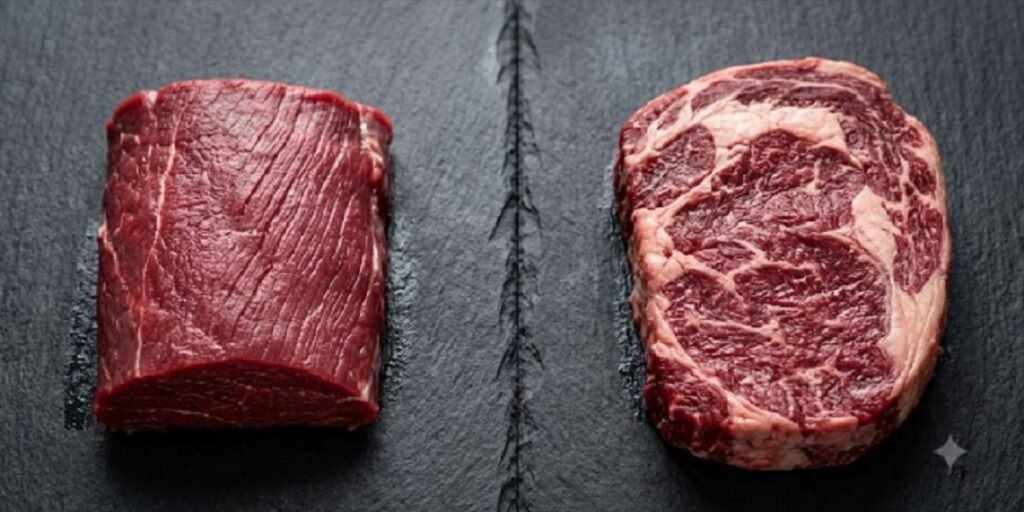
Quick Answer: When comparing ostrich meat vs beef, ostrich generally comes out healthier. Yes, ostrich meat is generally healthier than beef when you compare the raw numbers. It has noticeably fewer calories, far less total fat, and less saturated fat per 100 grams, while delivering more protein and more iron. Beef still wins on price and availability, so the right choice comes down to what you’re optimizing for.
The ostrich meat vs beef comparison comes up constantly because the two look and cook almost identically, deep red color, similar grain, similar sear. But once you put the actual numbers side by side, the differences become clear pretty fast.
Table of Contents
Nutrition Comparison: Ostrich vs Beef Per 100g (Raw)
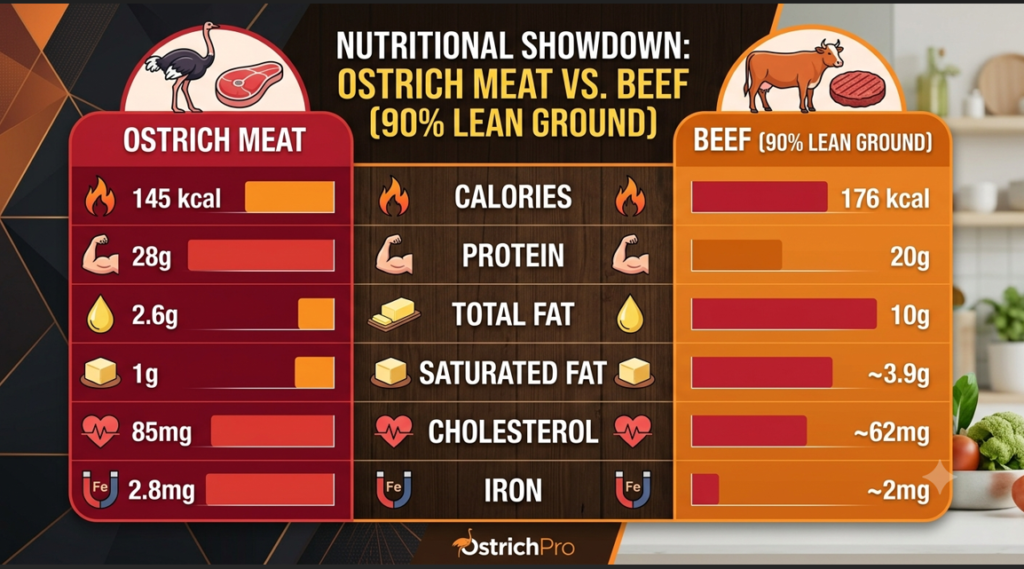
Source: USDA FoodData Central figures for raw ostrich meat and 90% lean ground beef.
The fat gap is the headline here. Ostrich carries roughly a quarter of the total fat that a standard 90% lean ground beef does, which is a big part of why it’s marketed as a “guilt free” red meat. Protein also comes out higher on the ostrich side per 100 grams, not just per calorie, which surprises people who assume beef automatically wins on protein.
Cholesterol is actually the one spot where beef edges ahead, though the gap is small enough that it rarely changes anyone’s dietary decision on its own.
Which One Has More Protein?
Ostrich delivers 28g of protein per 100g raw, compared to 20g for 90% lean ground beef, a meaningful difference rather than a rounding error. Both meats offer a complete amino acid profile, so the quality of the protein is comparable. What changes is efficiency: ostrich gives you more protein for fewer calories, which matters if you’re tracking intake closely rather than just eating until full.
Taste Test: Does Ostrich Really Taste Like Beef?
Close, but not identical. Ostrich has a clean, slightly sweet flavor, often described as sitting somewhere between lean beef and venison, minus the gamey edge people expect from non-cow red meat. In blind taste tests, most people struggle to tell the two apart once the meat is grilled or seared.
Texture is where the real difference shows up. Ostrich’s muscle fibers are finer, so it’s naturally more tender, but it also has almost no intramuscular fat, which means it cooks faster and punishes overcooking more than beef does. Medium rare to medium is the sweet spot. Past that, it dries out quickly.
Best Cuts to Try First
If you’re switching from beef to ostrich for the first time, starting with the right cut makes a big difference in how the experience goes.
On the ostrich side, the fan fillet is the closest thing to a filet mignon you’ll find, extremely tender, minimal prep needed, best cooked quickly over high heat. The top loin works well as a steak substitute in almost any beef recipe, while the leg cuts are tougher and better suited to slow cooking, braises, or kebabs where the connective tissue has time to break down. Ground ostrich is a solid entry point too, since it behaves almost exactly like ground beef in burgers, tacos, or bolognese.
On the beef side, if you’re doing a direct comparison at home, pick a lean cut like sirloin or tenderloin rather than a fattier one like ribeye. Matching leanness on both sides gives you a fairer taste and texture comparison, and it’s closer to how most of the nutrition data above was measured.
A simple way to test the difference yourself: cook a beef sirloin and an ostrich fan fillet the same way, same seasoning, same heat, same rest time, then compare side by side. Most people are surprised at how close they land, both in flavor and in how the kitchen smells while cooking.
Common Mistakes When Cooking Ostrich
Most people who try ostrich for the first time make the same handful of mistakes, and almost all of them come from treating it exactly like beef.
Cooking it too long. This is the big one. Ostrich has so little intramuscular fat that there’s no buffer zone the way there is with a fattier beef cut. Two extra minutes on the grill can be the difference between tender and shoe leather. If you’re used to cooking beef by feel, switch to a meat thermometer for your first few attempts with ostrich.
Skipping the rest. Just like beef, ostrich needs to rest for a few minutes after cooking so the juices redistribute. Skip this step and you’ll lose moisture the second you cut into it, which makes already lean meat taste even drier than it needs to.
Using high heat for tougher cuts. The fan fillet and top loin can handle a hot, fast sear. Leg cuts can’t. Treating a leg cut like a steak instead of braising or slow cooking it is one of the most common reasons people say ostrich “wasn’t for them,” when really it was just the wrong cooking method for that cut.
Over seasoning to compensate for expected gaminess. Because people assume ostrich will taste strong or gamey, they sometimes over season it before even tasting it plain. Ostrich’s flavor is naturally mild and clean, so it holds up fine with simple salt, pepper, and a good sear, no heavy marinades required to make it palatable.
Getting these four things right on the first try makes a bigger difference in how someone experiences ostrich than almost anything else in this guide.
Price Comparison: Which Costs More?
Beef wins here, clearly. Ostrich production is still small scale compared to the global cattle industry, and that shows up directly in price. Premium cuts like the fan fillet can cost two to four times more than a comparable beef cut, depending on where you’re buying.
That gap exists because supply hasn’t caught up to demand yet, not because ostrich is inherently expensive to raise. As more farms come online, prices have room to come down, but for now, beef remains the cheaper everyday option.
Environmental Impact
Ostrich uses less land, water, and feed per pound of meat than cattle, and produces far less methane since it isn’t a ruminant. If sustainability factors into how you shop, that’s a real point in ostrich’s favor. It shouldn’t be the deciding factor for most people, but it’s worth knowing if a lower footprint is part of what you’re looking for.
Which One Should You Choose? Ostrich meat vs Beef?
Ostrich makes sense if you’re watching fat or calorie intake, want more protein per calorie, or care about the environmental footprint of your meat.
Beef makes sense if budget matters, you want something available at every grocery store, or your current diet already works fine for you.
For a lot of people, this isn’t an either/or decision. Ostrich fits well as an occasional swap, especially for anyone who already loves steak and wants a leaner version of the same experience once in a while.
Frequently Asked Questions
Is ostrich meat considered red meat or white meat?
Ostrich is classified as red meat because of its myoglobin content and color, even though it technically comes from a bird. Nutritionally and visually, it behaves like beef, not like chicken or turkey.
Does ostrich meat taste gamey like venison?
No. Most people describe it as mild and slightly sweet, without the strong gamey flavor associated with venison or other wild game.
Can I substitute ostrich for beef in any recipe?
Yes, ostrich works as a one to one swap in most beef recipes, including burgers, steaks, stews, and jerky. Just cut the cooking time slightly since it has far less fat.
Is ostrich meat safe to eat rare or medium rare?
Yes, and it’s actually the recommended way to cook it. Because it’s so lean, pushing it past medium tends to make it tough and dry.
The nutrition numbers make a clear case for ostrich: less fat, fewer calories, more protein, all in the same size portion. Beef still holds the price and convenience advantage, which is exactly why it’s not going anywhere as the everyday default. If ostrich meat sounds worth trying, what it actually tastes like and why it’s technically classified as red meat are good next reads before you buy your first cut.


2 thoughts on “Ostrich Meat vs Beef: 5 Surprising Nutrition Differences Will Shock You”