Quick Answer: Yes, ostrich farming can be profitable, but it takes 2 to 3 years to break even. Ostriches produce meat, eggs, leather, and feathers from a single animal, but they don’t reach breeding age until 3 to 4 years old, and chick mortality can reach 50 percent. Success depends less on the birds themselves and more on whether you have reliable buyers for what they produce. Without reliable buyers, even a healthy flock may struggle to generate consistent profits.
Table of Contents
Online, you’ll find claims that ostrich farming generates 30 to 50 percent profit margins, pays for itself within a year, or turns a single breeding pair into a fortune. The reality is far less dramatic. Ostrich farming can absolutely be profitable, but only if you understand the startup costs, mortality risks, breeding timelines, and, most importantly, whether you actually have a market to sell into.
Many of the numbers repeated online are difficult to verify and often trace back to farming forums, promotional material, or articles that cite one another rather than original farm data. This guide separates widely repeated claims from figures that can be supported by research or consistent industry reporting, so you can make a more informed decision before investing in ostrich farming.
Is Ostrich Farming Profitable? The Short Answer
Yes, ostrich farming can be profitable, but it is a slow, capital-intensive business, not a quick side income. Ostriches do not reach breeding age until 3 to 4 years old, which means most farms operate at a loss for the first few years before any meaningful revenue arrives.
The birds themselves are efficient. Ostriches convert feed into lean meat better than cattle, and a single animal can produce meat, leather, feathers, and eggs, giving farmers multiple income streams from one animal. That is the appeal.
The catch is market access. Unlike beef or chicken, there is no established supply chain for ostrich products in most regions. Farmers often have to find their own buyers, transport birds long distances to a certified processor, or sell direct to consumers themselves.
How Much Does It Cost to Start an Ostrich Farm
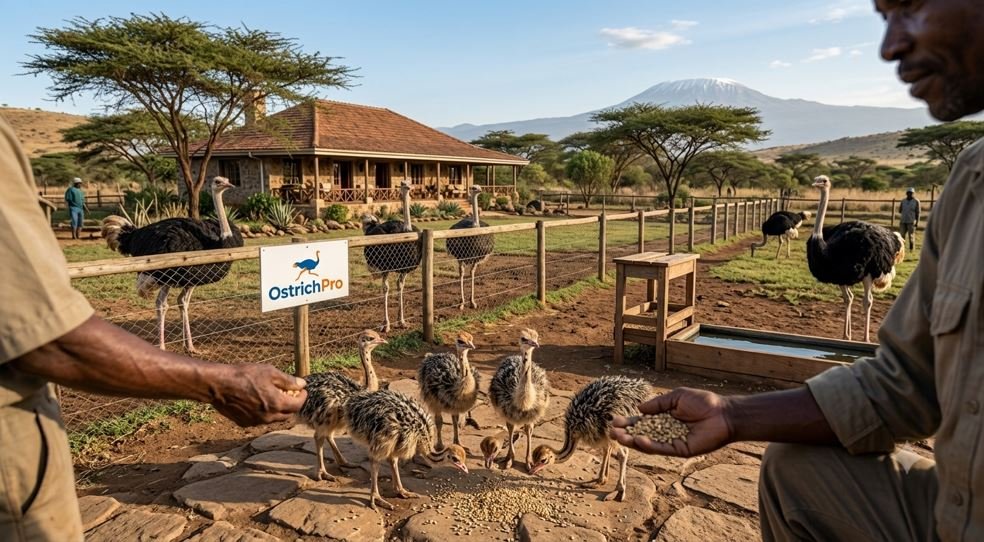
Startup costs vary enormously depending on the age of the birds you purchase, the size of your flock, and whether you already own suitable land and infrastructure. While the birds themselves are a major expense, fencing, shelter, and other farm improvements often account for a significant share of the initial investment.
| Cost Item | Estimated Range | Notes |
|---|---|---|
| Day-old chicks | $100 to $150 each | Mortality rate can reach 50 percent in the first few months |
| Yearling ostrich | $1,500 to $2,500 each | Lower risk than day-old chicks, but higher upfront cost |
| Adult breeding pair | $8,000 to $20,000 | Figures vary widely by source; treat high-end estimates with caution |
| Fencing (per farm) | $500 to $2,000+ | Needs to be 6 to 8 feet tall, ostriches are strong and can push through weak fencing |
| Shelter and infrastructure | $1,000 to $10,000 | Depends on climate and number of birds |
| Feed (per adult, monthly) | Varies by region | Ostriches eat significantly less than cattle relative to meat yield |
| Veterinary and insurance | 2 to 5 percent of gross revenue | Ostriches are hardy but not immune to illness |
A transparency note: many of these numbers come from farming forums, blog posts, and secondhand estimates rather than audited financial data. Treat the higher-end figures, especially the breeding pair cost, as unverified until you get a quote from an actual supplier in your region. For a full cost breakdown of individual birds, see our guide on how much does an ostrich cost.
Example Startup Scenarios for Ostrich Farming
The total investment required to start an ostrich farm depends on far more than the price of the birds. Whether you already own suitable land, the size of your flock, and whether you begin with chicks or breeding pairs can dramatically change your startup budget.
The examples below are planning scenarios rather than industry averages. Actual costs vary by region, supplier pricing, and infrastructure already available on the farm.
| Farm Type | Typical Starting Flock | Estimated Startup Budget* | Suitable For |
|---|---|---|---|
| Hobby Farm | 2-4 chicks | $5,000-$15,000 | Learning ostrich husbandry and gaining experience |
| Small Meat Farm | 10-20 chicks | $20,000-$50,000 | Producing meat for local customers or restaurants |
| Small Breeding Farm | 3-5 breeding pairs | $40,000-$100,000+ | Selling chicks, hatching eggs, and breeding stock |
| Commercial Operation | 20+ breeding pairs | $150,000+ | Full-scale production of meat, leather, eggs, and breeding stock |
These estimates assume suitable land is already available. Purchasing farmland or building significant new infrastructure can increase startup costs substantially.
Choosing the Right Starting Strategy
The cheapest way to start an ostrich farm is not always the most profitable. Your choice of birds affects both your upfront investment and how quickly the farm can begin generating revenue.
| Starting Option | Advantages | Trade-Offs |
|---|---|---|
| Day-old chicks | Lowest purchase price and easiest entry point | Highest mortality risk and longest wait before generating income |
| Yearlings | Lower mortality and faster path to market weight | Higher purchase price than chicks |
| Breeding pairs | Can begin producing eggs much sooner | Highest upfront investment and greater financial risk |
For many first-time farmers, starting with a small group of healthy chicks or yearlings provides a lower-risk way to gain experience before investing in expensive breeding stock. Larger commercial operations, however, often choose breeding pairs because they shorten the timeline to egg production and future flock expansion.
What Makes One Farm Much More Expensive Than Another?
The price of the birds is only one part of the equation. Several factors can dramatically increase or reduce your startup costs:
- Land ownership: Farmers who already own suitable pasture avoid one of the largest expenses.
- Starting with chicks or breeding pairs: Chicks cost far less but require more time and carry a higher mortality risk. Breeding pairs are expensive but can begin producing eggs much sooner.
- Local fencing costs: Ostriches require tall, durable fencing that can withstand powerful birds.
- Processing distance: In regions without nearby licensed processors, transportation costs can become significant.
- Climate: Colder areas may require additional shelter and winter feed.
How Ostrich Farms Make Money
Ostrich farms rarely rely on one product. Different farms rely on different revenue mixes. Meat-focused farms generate income much sooner, while breeding operations may wait several years before seeing their highest returns.
Most successful operations combine several of the following:
Meat. This is usually the primary revenue driver. Ostrich meat is red, lean, and lower in cholesterol than beef, which appeals to health-conscious buyers. A single bird can yield close to 100 pounds of meat at slaughter age, typically 12 to 14 months. We cover pricing in detail in our article on why ostrich meat is so expensive and how it stacks up nutritionally in ostrich meat vs beef.
Eggs. A single ostrich egg is roughly equivalent to two dozen chicken eggs in volume, and fresh eggs can sell for a premium to specialty buyers and restaurants. Only a portion of eggs are used for hatching new chicks; the rest can be sold for eating. See our breakdown in ostrich egg vs chicken egg.
Leather. Ostrich hide is prized in the luxury goods industry for its distinctive quill pattern. Tanned hides are graded on quality, with top-grade hides commanding the highest prices, though exact per-square-foot figures vary too much across sources to state with confidence.
Feathers. Historically the original driver of the entire ostrich farming industry in the 1800s, feathers remain valuable in fashion, costume, and decor markets, though this is typically a secondary income stream rather than a primary one.
Realistic Profit Timeline: How Long Until You Break Even
Most farming business guides estimate that ostrich farms become profitable after 2 to 3 years, though this depends heavily on whether you start with chicks or already-mature breeding stock.
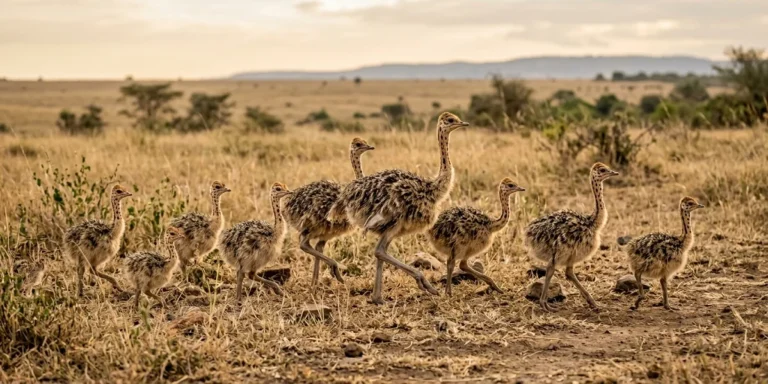
The first year is almost always a net cost. You are paying for chicks, fencing, shelter, and feed, with no birds yet ready for slaughter or breeding. If you start with day-old chicks, you also need to survive the high early mortality rate, which some farmers report at close to 50 percent.
By year two or three, birds raised for meat reach slaughter weight, and any breeding pairs may begin producing eggs. This is typically when the first real revenue arrives. Farms that scale up their flock size, rather than staying at a handful of birds, tend to reach profitability faster simply because fixed costs like fencing and shelter are spread across more animals.
| Stage | What Typically Happens | Financial Impact |
|---|---|---|
| Year 1 | Infrastructure, chicks, feed, and setup costs | 📉 Mostly expenses |
| Year 2 | Meat birds reach market age | 💵 First meaningful revenue |
| Years 3-4 | Breeding begins, egg production starts | 💰 Multiple income streams |
| Year 4+ | Established flock and repeat production | 📈 Greater long-term profitability |
Important: This timeline assumes normal flock health, successful marketing, and access to a processor or buyers. High chick mortality, disease outbreaks, or weak local demand can delay profitability by several years.
Disadvantages and Risks of Ostrich Farming
Profitability guides tend to focus only on the upside. The disadvantages matter just as much:
High chick mortality: Ostrich chicks are fragile in their first weeks, and mortality rates of up to 50 percent are commonly reported by farmers who raise from day-old birds. One Missouri ostrich farming couple documented in Grit magazine reported chick mortality rates close to 50 percent in their own operation, confirming this isn’t just a worst-case estimate. (Source)
Slow breeding maturity: Ostriches do not typically start breeding until 3 to 4 years old, which delays the point where a farm can grow its own flock instead of continually buying new birds.
Limited processing infrastructure: In many regions, there are very few USDA-certified (or local equivalent) processing facilities for ostrich meat, which can mean transporting birds long distances before slaughter.
Market awareness: Ostrich meat, leather, and feathers are still niche products in most consumer markets. Farmers often need to build their own customer base rather than relying on an existing distribution network, the way they could with beef or pork.
Physical risk: Adult ostriches are large, strong, and can be aggressive, particularly during breeding season. A kick from an ostrich can cause serious injury, which adds a safety and insurance dimension that smaller livestock does not carry.
High upfront investment: Between land, fencing, shelter, and breeding stock, the initial capital required is significant compared to smaller-scale farming ventures like poultry.
Market risk matters more than biological risk
Disease and chick mortality are real challenges, but many experienced farmers argue that finding consistent buyers is the bigger obstacle. Producing healthy birds is only half the business. Without processors, restaurants, retailers, or direct customers willing to purchase ostrich products, profitability becomes difficult regardless of production efficiency.
Is Ostrich Farming a Good Investment Compared to Other Livestock
Ostrich farming sits in an unusual middle ground. It requires less land and feed per pound of meat produced than cattle, but far more patience and upfront capital than raising chickens.
Compared to cattle, ostriches convert feed more efficiently into lean meat, and a single animal offers more revenue streams (meat, leather, feathers, eggs) than a cow typically does outside of dairy operations.
Compared to poultry, the barrier to entry is much higher. Chickens reach market weight in weeks and breed constantly, while ostriches take over a year to reach slaughter weight and years to reach breeding age.
Whether ostrich farming is “the most profitable” animal to raise depends entirely on your access to buyers. Without a reliable market for ostrich meat or leather, even efficient feed conversion will not translate into profit.
| Compare to | Ostrich | Cattle | Chickens |
|---|---|---|---|
| Initial investment | High | High | Low |
| Time to revenue | Medium | Long | Very short |
| Feed efficiency | High | Low | Very high |
| Market demand | Low | High | Very high |
| Revenue streams | 4 | 1-2 | 1 |
Frequently Asked Questions
What are the disadvantages of ostrich farming?
The main disadvantages are high chick mortality (up to 50 percent in the first months), slow breeding maturity of 3 to 4 years, limited processing infrastructure in many regions, and the physical risk that comes with handling large, strong birds.
How do ostrich farms make money?
Ostrich farms generate revenue primarily through meat sales, followed by eggs, leather, and feathers. Most profitable farms combine two or more of these income streams rather than relying on just one.
Can you make money raising ostriches?
Yes, but it typically takes 2 to 3 years before a farm becomes profitable, and success depends heavily on finding reliable buyers for meat, eggs, or leather in a market where ostrich products remain a niche category.
Is there money in raising ostriches?
There can be, particularly for farmers who diversify across meat, eggs, and leather rather than depending on a single product. However, the upfront costs and slow timeline to breeding age mean it is not a fast source of income.
What is the ostrich farm controversy?
Much of the skepticism around ostrich farming stems from the exaggerated profit claims found in some online guides and old promotional material from the 1980s ostrich farming boom, when overpriced breeding stock was sold to investors without adequate market demand to support it.
Are ostriches a good investment?
Ostriches can be a sound investment for farmers with patience, adequate land, and access to a processing and sales market. They are a poor fit for anyone expecting a quick return, given the multi-year timeline to profitability.
What is the most profitable farm animal to raise?
This depends on scale, region, and market access. Ostriches can outperform cattle in feed efficiency and product diversity, but poultry and smaller livestock typically offer faster, lower-risk returns for beginning farmers.
How much does a breeding pair of ostriches cost?
Estimates vary widely across sources, commonly ranging from $8,000 to $20,000 per pair. Prices depend heavily on the age, health, and breeding history of the birds, so getting a direct quote from a verified breeder is the only reliable way to know current costs in your area.
How expensive is it to own an ostrich?
Beyond the initial purchase price, ongoing costs include feed, fencing maintenance, veterinary care, and insurance, which some estimates place at 2 to 5 percent of gross farm revenue annually.
Ostrich farming can be profitable, but it rewards patience over speed. The birds are efficient, versatile, and capable of producing meat, eggs, leather, and feathers from a single animal, which is more than most livestock can offer.
The tradeoff is a multi-year runway before that efficiency turns into real income. Chicks carry a high mortality risk, breeding stock takes years to mature, and the market for ostrich products remains niche in most regions, meaning farmers often have to build their own customer base from scratch.
For anyone weighing this against other farming options, the honest answer is that ostrich farming rewards those who treat it as a long-term agricultural business, not a fast path to profit.
The biggest misconception about ostrich farming is that raising the birds is the hard part. In reality, producing healthy ostriches is only half of the business. Building reliable markets for meat, eggs, leather, and breeding stock is what ultimately determines whether an ostrich farm becomes profitable.