
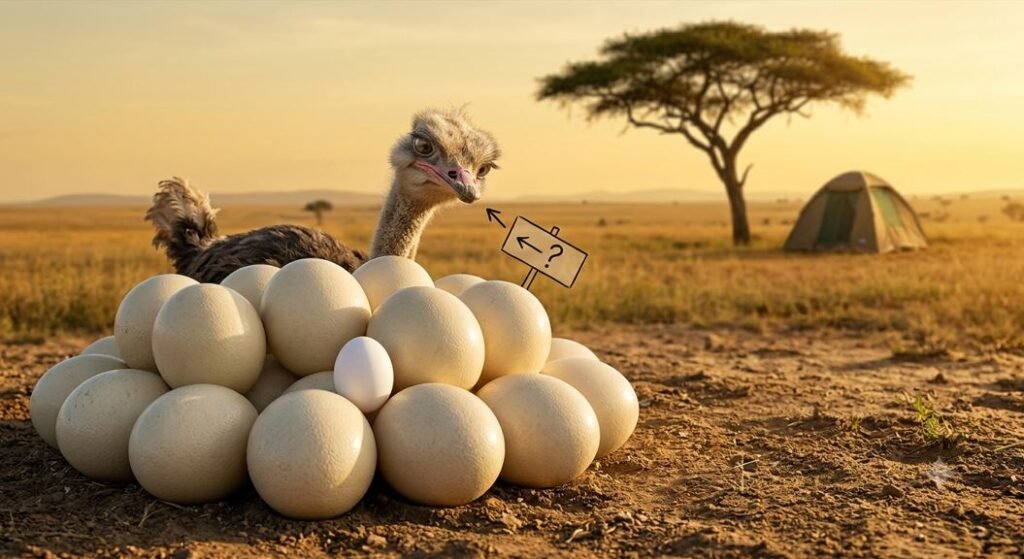
You’re camping out in the African savanna. You spend the night in your tent, and head out for a morning stroll. Suddenly, you stumble upon 15 to 20 massive eggs. Oh my goodness!! Have dinosaurs returned from the dead? No, don’t panic. it’s just a clutch of ostrich eggs.
This is the classic ostrich egg vs chicken egg comparison everyone eventually stumbles on. If you’ve ever seen the two side by side, the size difference is almost comical. One looks like a normal breakfast ingredient. The other looks like a prop from a movie. But once you get past the size, an interesting question comes up: are they actually different when it comes to nutrition, taste, and how you cook them?
Quick Answer: An ostrich egg is roughly 20 to 24 times the size of a chicken egg, weighing around 3 pounds compared to about 2 ounces. Surprisingly, when compared gram for gram, their nutrition profiles are nearly identical, similar protein, similar fat, similar calories. The real difference only shows up once you look at the whole egg, since one ostrich egg contains roughly the same total nutrition as two dozen chicken eggs, just packed into a single, much larger shell.
Table of Contents
Size Comparison: How Big Is an Ostrich Egg vs a Chicken Egg?
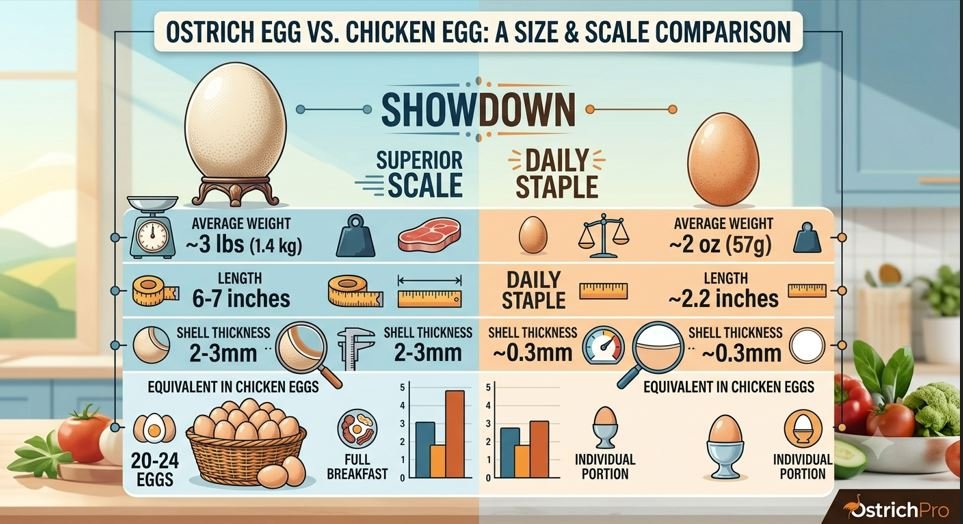
The shell thickness is where the size difference gets real in practice. An ostrich eggshell is strong enough to support an adult’s body weight without cracking. A chicken eggshell breaks with a light tap on the edge of a bowl. That extra strength is also why empty ostrich shells are popular for carving and decorative art.
Nutrition Per 100g: Are They Really That Different?
This is where most online comparisons get confusing, because they mix up “per egg” numbers with “per 100 grams” numbers. Looked at gram for gram, the two eggs are remarkably close.
Source: USDA nutrient data for whole raw eggs.
Once you normalize for weight, an ostrich egg isn’t meaningfully more or less nutritious than a chicken egg. Protein content is nearly identical. Fat content is nearly identical. Cholesterol is essentially a tie. Any article claiming ostrich eggs are dramatically healthier or leaner per gram usually isn’t comparing them fairly.
Nutrition Per Whole Egg: Why the Numbers Look So Different
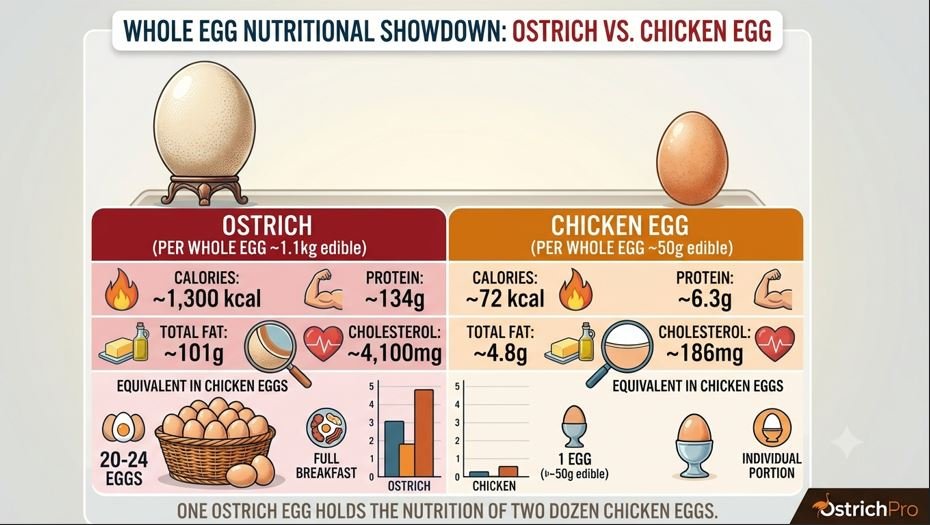
Scale the same numbers up to a full egg, and the picture changes completely. Not because the nutrition itself is different, but because the portion size is.
| Nutrient (per whole egg) | Ostrich Egg (~1.1kg edible) | Chicken Egg (~50g edible) |
|---|---|---|
| Calories | ~1,300 kcal | ~72 kcal |
| Protein | ~134g | ~6.3g |
| Total Fat | ~101g | ~4.8g |
| Cholesterol | ~4,100mg | ~186mg |
One ostrich egg delivers roughly the same total nutrition as 20 to 24 chicken eggs, because that’s essentially what it is in volume. This is why a single ostrich egg can realistically feed 6 to 8 people at breakfast, and why nobody is expected to eat one alone in a single sitting.
Taste Comparison: Does an Ostrich Egg Taste Like a Chicken Egg?
Close, with a few subtle differences. Ostrich egg is often described as slightly richer and a touch sweeter than chicken egg, with a creamier texture once cooked. It also tends to have a higher ratio of egg white to yolk, which slightly changes the texture in dishes like omelets or scrambles.
Some people notice a faint gaminess, especially in the yolk, though this varies depending on the individual bird’s diet and how fresh the egg is. Most first time tasters say it’s close enough to chicken egg that you could serve it without announcing what it is, and few people would guess.
Cooking Differences: Shell, Time & Tools You’ll Need
Once you get past the size, the ostrich egg vs chicken egg debate really comes down to how each one behaves in the kitchen. This is where the size difference actually matters day to day.
Cracking the shell isn’t something you can do against the edge of a bowl. Most people use a small saw, a drill, or a hammer and a sturdy knife to get through the shell, then widen the opening carefully.
Cooking time scales up dramatically too:
| Method | Chicken Egg | Ostrich Egg |
|---|---|---|
| Hard boiled | ~10 minutes | 90-120 minutes |
| Scrambled | 2-3 minutes | 15-20 minutes |
| Fried | 3-4 minutes | Not practical whole |
Scrambling or frying in portions is generally easier than trying to cook a whole egg, since it avoids the challenge of even heat penetration through such a large mass.
One practical tip: because a single egg goes so far, most people don’t cook it whole. Cracking it open and portioning out only what’s needed, then refrigerating or freezing the rest, is far more common than preparing a full egg in one sitting.
Price Comparison: Which Costs More Per Gram?
Chicken eggs win easily here. A dozen chicken eggs typically costs a few dollars, while a single ostrich egg usually runs anywhere from $20 to $60 depending on where you’re buying and how it’s sourced. Even accounting for the fact that one ostrich egg replaces two dozen chicken eggs, it still tends to cost more per gram of actual food.
The price reflects scarcity more than production cost. Ostriches lay far fewer eggs per year than chickens do, and the supply chain for ostrich eggs is much smaller and less commercial. Most of what you’re paying for is rarity, not nutrition.
Which One Should You Choose?
Choose chicken eggs if you want convenience, affordability, and a portion size that fits one person’s meal without waste.
Choose an ostrich egg if you’re cooking for a large group, want a novelty ingredient for baking, or simply want to try something most people never get the chance to.
Neither one is nutritionally the “better” choice on a gram for gram basis, so this comes down to portion needs and curiosity rather than health.
Frequently Asked Questions
How many chicken eggs equal one ostrich egg?
One ostrich egg is roughly equivalent to 20 to 24 large chicken eggs in volume and total nutrition.
Is an ostrich egg healthier than a chicken egg?
Not really, at least not per gram. Their nutrition profiles are nearly identical when compared by weight. The main difference is portion size, not health value.
How long does it take to hard boil an ostrich egg?
Around 90 minutes to 2 hours, compared to about 10 minutes for a chicken egg, due to the size and thick shell.
Can I substitute an ostrich egg for chicken eggs in a recipe?
Yes, though you’ll need to do the math on quantity. One ostrich egg typically replaces about two dozen chicken eggs, so it works best in large batch baking rather than a recipe calling for just a few eggs.
The ostrich egg vs chicken egg comparison ultimately comes down to portion size, not nutrition. Once you separate “per egg” from “per gram,” the ostrich vs chicken egg debate gets a lot less confusing. Nutritionally, they’re nearly twins. The real story is scale, one much bigger shell holding the same nutrition you’d otherwise need two dozen separate eggs to get.
If you’re curious how eggs compare to actual ostrich meat nutrition, is ostrich meat considered red meat is worth a look next. And if you’re weighing whether to try ostrich as a whole new protein source beyond the eggs, what does ostrich meat taste like breaks that down in full.



1 thought on “Ostrich Egg vs Chicken Egg: Size, Nutrition & 5 Remarkable Facts”