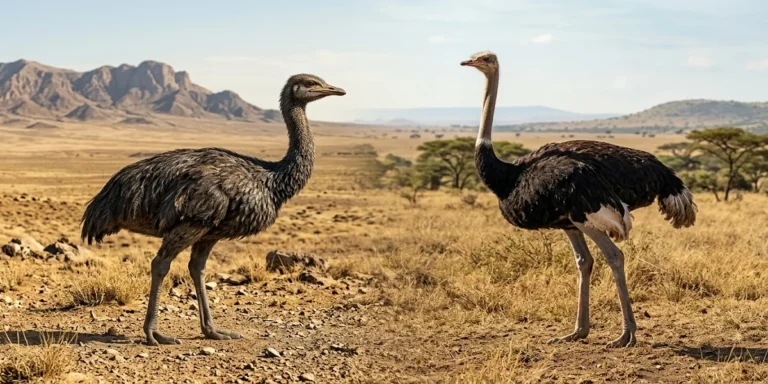
Quick Answer: The answer depends on what you mean by “largest.” The common ostrich is the largest living bird, typically standing 2.1 to 2.7 meters (7 to 9 feet) tall and weighing 100 to 160 kg (220 to 350 lb). Among birds that can still fly, the wandering albatross has the largest wingspan at up to 3.7 meters (12.1 feet), while the kori bustard and great bustard are the heaviest flying birds, weighing up to 21 kg (46 lb). Looking back through history, the extinct elephant bird Vorombe titan remains the largest bird ever discovered.
Table of Contents
Ask someone to name the largest bird in the world and most people will immediately say the ostrich. They’re right, but only if they’re talking about living birds.
In reality, there isn’t just one record for bird size. Scientists compare birds by height, weight, and wingspan, and the winners are often completely different species. Flightless birds can grow far heavier than flying birds because they no longer need to generate enough lift to leave the ground, while birds that still fly must stay within strict aerodynamic limits.
To build this guide, the OstrichPro editorial team analyzed scientific research, museum records, Guinness World Records, and ornithology references to compare the world’s largest birds across every major category. We’ll explore the largest living bird, the largest bird that can fly, the largest bird ever discovered, and the prehistoric giants that once towered over today’s ostriches, explaining why there isn’t a single champion, but several remarkable record holders.
The Largest Living Bird: The Common Ostrich
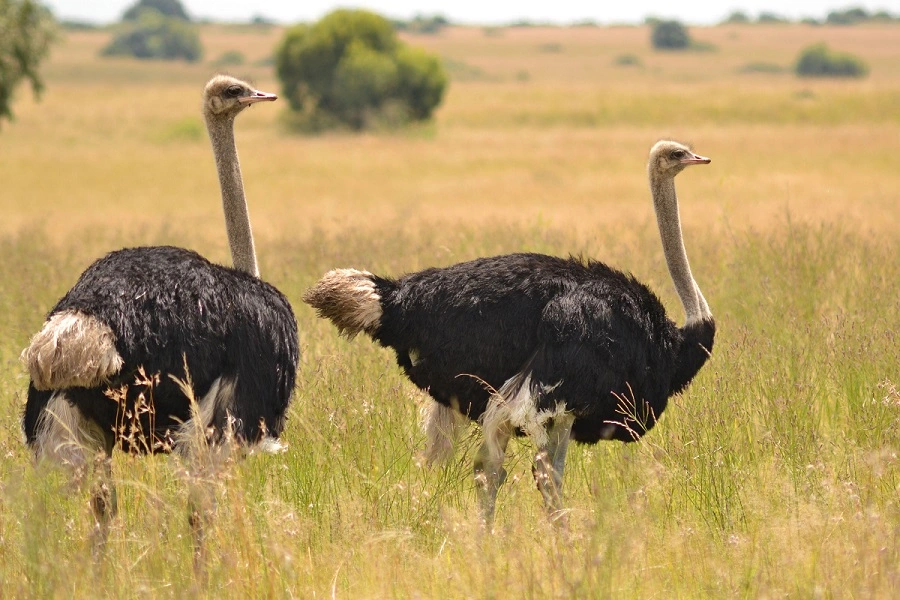
The common ostrich (Struthio camelus) is the largest bird alive today and holds two records at once. Adult males can reach exceptional sizes. According to Guinness World Records, the largest recorded individuals have stood up to 2.8 meters (9.2 feet) tall and weighed 156.8 kg (346 lb).
While exceptional individuals approach these maximum measurements, most wild ostriches are somewhat smaller. Even so, an average adult male still outweighs every other living bird by a considerable margin.
Their enormous size is the result of millions of years of evolution on open African savannas. Rather than investing energy into flight, ostriches evolved exceptionally powerful legs that allow them to run at speeds of 70 km/h (43 mph) and cover vast distances while escaping predators. In evolutionary terms, they traded wings for speed.
That tradeoff explains why ostriches can no longer fly. Their bodies simply produce too much weight for their relatively small wings to generate enough lift. Instead of functioning as flight organs, the wings now help with balance while running, courtship displays, and rapid changes in direction.
Ostriches also produce another impressive record. They lay the largest eggs of any living bird, with a typical egg weighing around 1.4 kg (3 lb). Although enormous by modern standards, even these eggs are surprisingly small relative to the size of the adult, making up only about one percent of the female’s body weight.
The Somali ostrich (Struthio molybdophanes), recognized as a separate species in 2014, comes close in size, reaching approximately 2.75 meters (9 feet) tall. Together, these two species are the undisputed giants of today’s bird world.
Largest Living Bird Records
| Record | Species | Maximum |
|---|---|---|
| Tallest living bird | Common ostrich | 2.8 m (9.2 ft) |
| Heaviest living bird | Common ostrich | 156.8 kg (346 lb) |
| Largest egg (living bird) | Common ostrich | ~1.4 kg (3 lb) |
Fun fact: Even the world’s largest living bird is tiny compared with some extinct species. The biggest elephant birds are estimated to have weighed more than five times as much as a modern ostrich.
What About the Largest Flying Bird?
Unlike the ostrich, the largest flying bird doesn’t have a single record holder. That depends on whether you’re measuring wingspan or body weight.
A bird with exceptionally long wings isn’t necessarily the heaviest, and the heaviest birds that can fly don’t usually have the widest wings. Different body designs solve different aerodynamic challenges.
Largest Wingspan: The Wandering Albatross
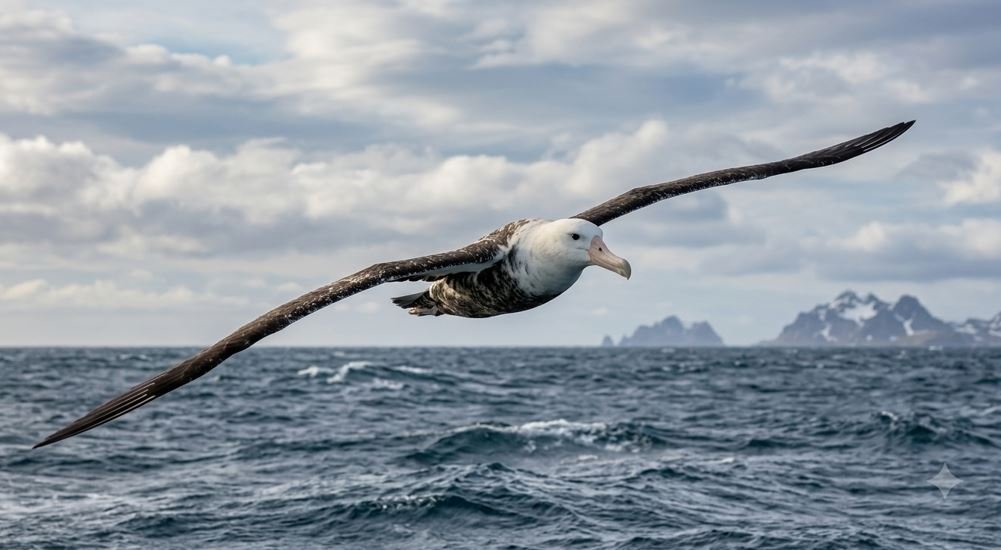
The wandering albatross (Diomedea exulans) holds the record for the largest wingspan of any living bird, reaching up to 3.7 meters (12.1 feet).
Those enormous wings aren’t designed for powerful flapping. Instead, they’re built for dynamic soaring, a technique that allows the bird to harvest energy from changing wind speeds above ocean waves. By gliding almost continuously over the Southern Ocean, wandering albatrosses can travel thousands of kilometers while expending remarkably little energy.
Although its wings are the longest of any living bird, the wandering albatross weighs only around 6 to 12 kg (13 to 26 lb). Compared with an ostrich, it’s surprisingly lightweight, showing that wingspan and body mass don’t always increase together.
By wingspan, the wandering albatross (Diomedea exulans), sometimes referred to as the snowy albatross, holds the record among living birds…
Heaviest Flying Bird: Kori Bustard and Great Bustard
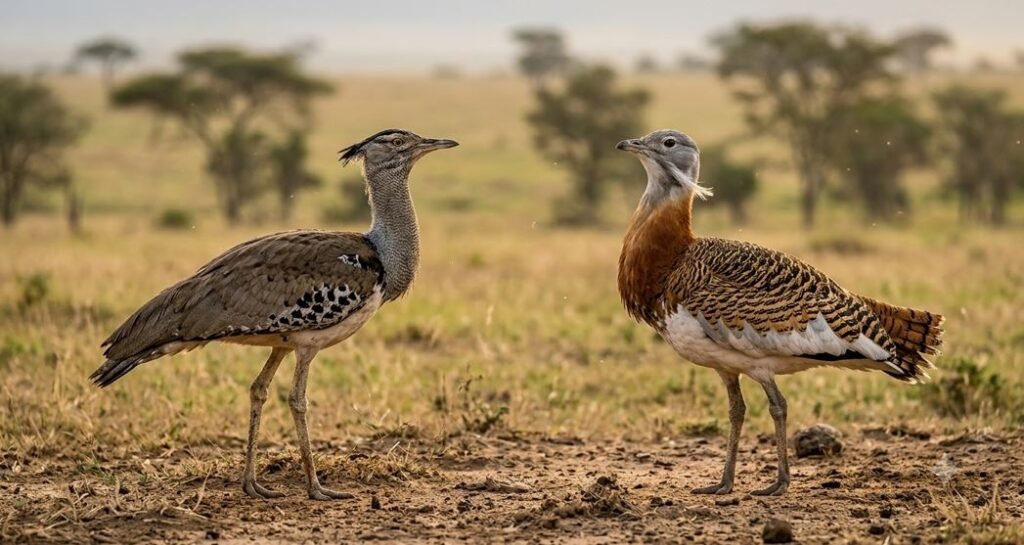
If weight is your measure of size, the title belongs to two very different birds: the kori bustard (Ardeotis kori) of Africa and the great bustard (Otis tarda) of Europe and Asia.
Large males can weigh between 19 and 21 kg (42 to 46 lb), making them the heaviest birds capable of sustained flight.
Unlike albatrosses, bustards don’t spend much time in the air. They live mostly on the ground, feeding on seeds, insects, reptiles, and small animals. When threatened, they usually prefer to walk or run before finally taking off.
Getting airborne is an energy-intensive effort. Their broad wings generate enough lift for flight, but only after a powerful running start and vigorous wingbeats. Once in the air, however, they are fully capable of sustained flight over considerable distances.
The comparison highlights an important principle of bird evolution. Long, narrow wings are ideal for efficient gliding, while heavier birds require larger flight muscles and much greater energy to become airborne. As body mass increases, flight becomes progressively more difficult, placing a natural upper limit on how heavy a flying bird can be.
Largest Flying Bird Records
| Category | Species | Maximum |
|---|---|---|
| Largest wingspan (living) | Wandering albatross | 3.7 m (12.1 ft) |
| Heaviest flying bird | Kori bustard | Up to 21 kg (46 lb) |
| Co-heaviest flying bird | Great bustard | Up to 21 kg (46 lb) |
So, what is the largest bird that can fly?
The most accurate answer depends on the measurement:
- By wingspan: Wandering albatross
- By body weight: Kori bustard and great bustard
Unlike the ostrich, which clearly dominates both height and weight among living birds, flying species divide these records because evolution forces a balance between body mass and the ability to stay airborne.
The Biggest Bird That Ever Lived
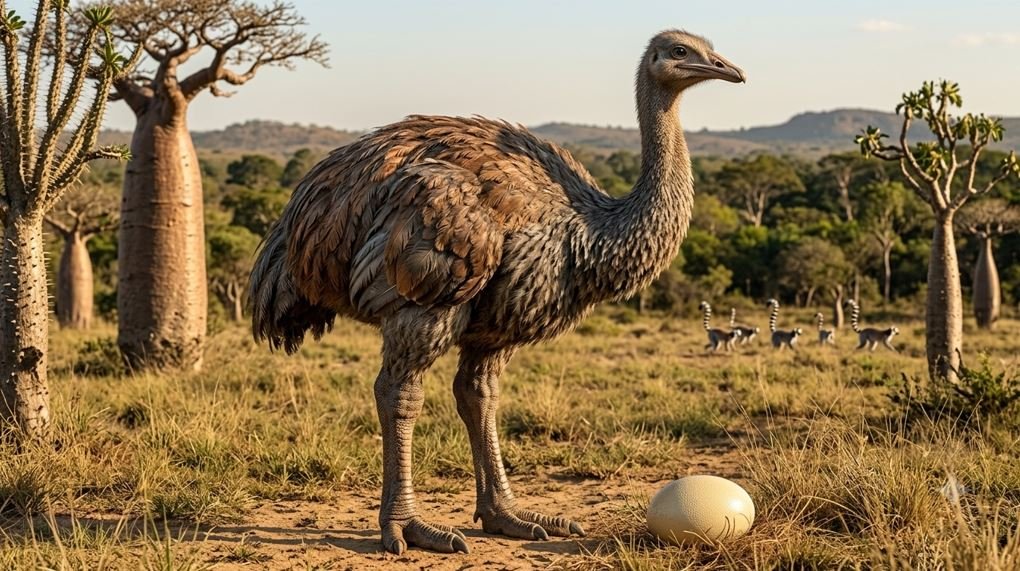
When people ask about the largest bird ever, the answer is no longer the same as it was a decade ago.
Today, the title belongs to Vorombe titan, an extinct elephant bird that lived on the island of Madagascar until roughly 1,000 years ago. Based on a comprehensive taxonomic revision published in 2018, researchers estimated that the largest individuals weighed between 536 and 860 kg (1,180 to 1,896 lb) and stood around 3 meters (10 feet) tall.
To put that into perspective, the heaviest known common ostrich weighs about 156.8 kg (346 lb). Even at the lower end of the estimate, Vorombe titan was more than three times heavier, while the largest individuals may have approached five times the weight of a modern ostrich.
Why Do Some Sources Still Say Aepyornis maximus?
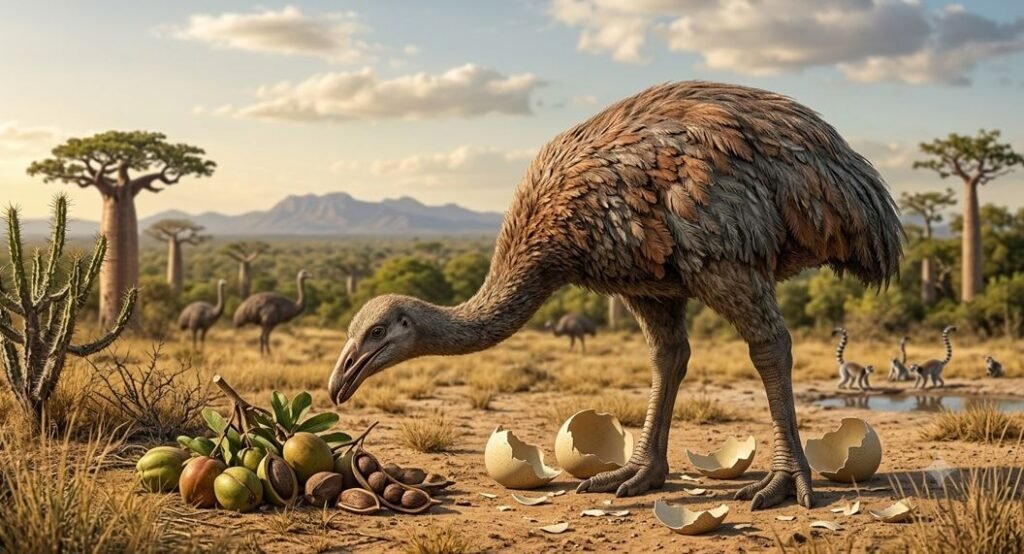
If you’ve searched this topic before, you’ve probably seen another name: Aepyornis maximus.
That’s because for decades, scientists believed Aepyornis maximus was the largest elephant bird ever discovered. Many books, museum exhibits, and older websites still use that classification.
Everything changed in 2018, when researchers re-examined hundreds of elephant bird bones collected over the past century. Their analysis showed that some of the largest skeletons belonged to a previously unrecognized species rather than Aepyornis. The new species was named Vorombe titan, with Vorombe meaning “big bird” in Malagasy.
In other words, older sources aren’t necessarily wrong. They simply reflect the scientific classification that existed before the 2018 revision.
Elephant Bird Classification
| Period | Largest Bird Recognized |
|---|---|
| Before 2018 | Aepyornis maximus |
| Since 2018 | Vorombe titan |
More Than Just a Heavyweight
Although Vorombe titan now holds the overall size record, its close relative Aepyornis maximus still has an extraordinary claim to fame.
Elephant birds laid the largest eggs ever produced by any known bird. Some fossil eggs measured over 30 cm (12 inches) long and weighed close to 10 kg (22 lb). Each egg could hold the equivalent of well over 100 chicken eggs, making them among the largest single cells ever produced by any vertebrate.
Like today’s ostriches, elephant birds were completely flightless. They evolved in isolation on Madagascar, where the absence of large mammalian predators allowed them to grow to enormous sizes over millions of years.
Why Did Elephant Birds Go Extinct?
For thousands of years, elephant birds thrived across Madagascar. Their decline began only after humans settled the island.
Archaeological evidence suggests that hunting, widespread egg collecting, habitat clearing, and the gradual transformation of Madagascar’s forests placed increasing pressure on their populations. Rather than disappearing because of a single catastrophic event, elephant birds likely declined over several centuries before finally becoming extinct around the 17th century.
Their story is a reminder that even the largest birds ever to walk the Earth proved surprisingly vulnerable once people entered their ecosystem.
Did you know? Despite weighing up to 860 kg, elephant birds weren’t the tallest birds that ever lived. That record belongs to another extinct giant from New Zealand, which we’ll look at next.
The Tallest Extinct Bird: The Giant Moa
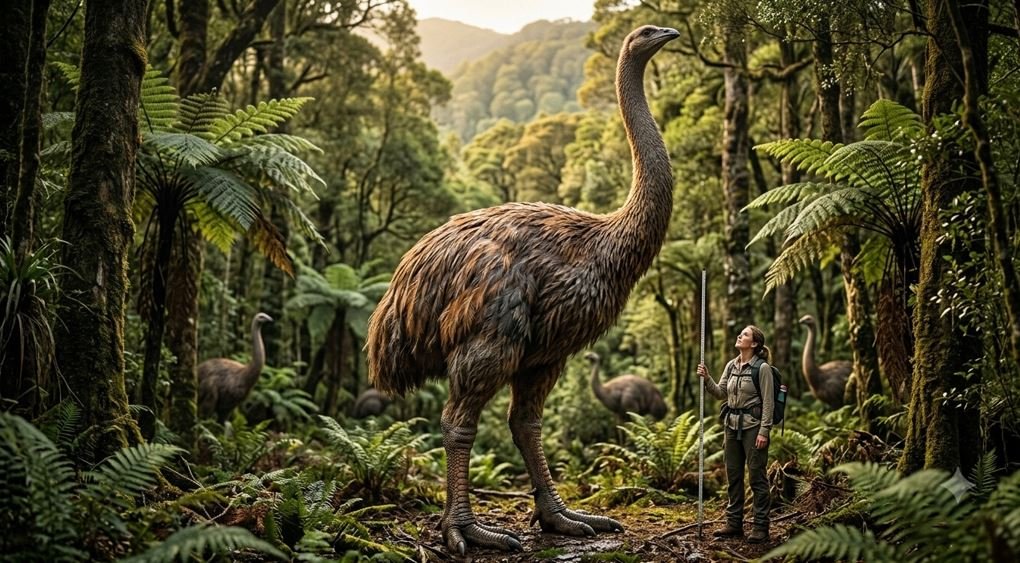
While elephant birds dominated by weight, they weren’t the tallest birds to ever walk the Earth.
That distinction belongs to the giant moa (Dinornis robustus and Dinornis novaezealandiae), two closely related species that once lived across New Zealand. Fully grown females could reach around 3.6 meters (12 feet) in height when stretching their necks, making them taller than even the largest elephant birds.
Despite their impressive height, giant moa were much lighter than Vorombe titan, with most estimates placing their weight at around 230 kg (507 lb). Their long legs and relatively slender build made them exceptionally tall without approaching the extraordinary mass of Madagascar’s elephant birds.
Like ostriches and elephant birds, moa belonged to a group of flightless birds known as ratites. However, they took flightlessness even further than their relatives. Unlike ostriches, emus, or cassowaries, moa completely lost their wings over millions of years of evolution. They are the only known birds to have no external wings at all, not even small, vestigial ones.
A World Without Land Mammals
Before humans arrived, New Zealand was unlike almost anywhere else on Earth.
The islands had no native land mammals capable of hunting large birds. In their place, moa evolved into giant herbivores, filling ecological roles similar to deer or antelope elsewhere in the world. They browsed on leaves, shoots, fruits, and small branches, shaping New Zealand’s forests for thousands of years.
At the top of this unique ecosystem stood the Haast’s eagle (Hieraaetus moorei), the largest eagle known to have existed. With a wingspan approaching 3 meters (10 feet) and an estimated weight of up to 15 kg (33 lb), it was powerful enough to hunt adult moa many times its own size.
Why Did the Giant Moa Disappear?
That remarkable ecosystem changed rapidly after the first Polynesian settlers reached New Zealand in the late 13th century.
Archaeological evidence shows that moa were hunted extensively for food, while forests were cleared to create new settlements and agricultural land. With slow reproduction and no evolutionary history of avoiding human hunters, moa populations collapsed with surprising speed.
Most scientists believe all moa species disappeared within 150 to 200 years of human arrival, making their extinction one of the fastest documented losses of a large animal following human colonization.
The disappearance of moa had consequences beyond the birds themselves. As their primary prey vanished, the Haast’s eagle also disappeared soon afterward, illustrating how the loss of a single species can reshape an entire ecosystem.
Elephant Bird vs. Giant Moa
| Feature | Elephant Bird (Vorombe titan) | Giant Moa (Dinornis) |
|---|---|---|
| Maximum height | ~3.0 m (10 ft) | ~3.6 m (12 ft) |
| Maximum weight | Up to 860 kg (1,896 lb) | ~230 kg (507 lb) |
| Home | Madagascar | New Zealand |
| Flight | Flightless | Flightless |
| Record | Heaviest bird ever | Tallest bird ever |
Although both birds disappeared long before modern science could study them alive, together they illustrate an important point: the biggest bird isn’t necessarily the tallest bird. Depending on whether you’re measuring height or weight, two entirely different species hold the record.
The Largest Flying Bird in History
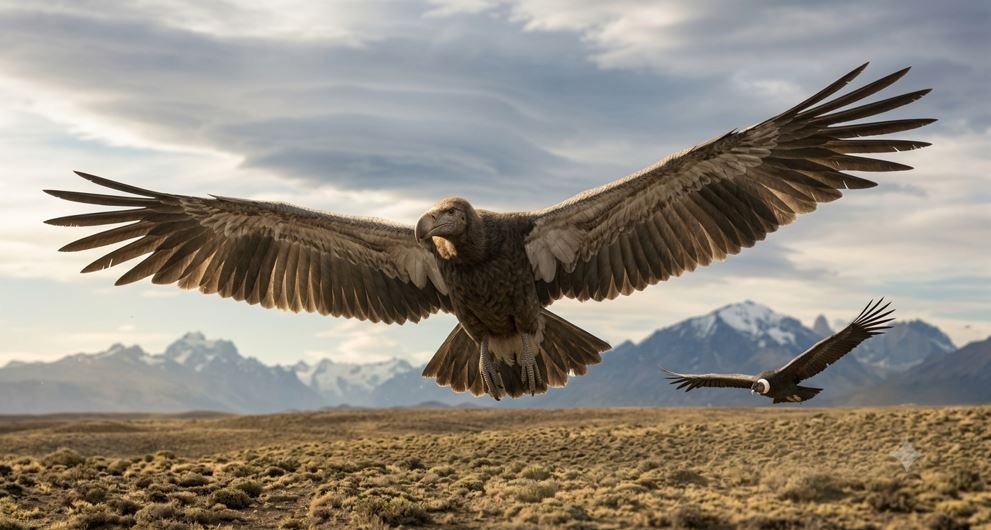
The largest flying bird ever discovered wasn’t an albatross, a condor, or an eagle. It was Argentavis magnificens, an enormous bird that lived in what is now Argentina approximately 6 million years ago.
Current estimates suggest Argentavis had a wingspan of 5 to 7 meters (16 to 23 feet) and weighed around 70 to 80 kg (154 to 176 lb). That made it dramatically larger than any bird alive today while still remaining capable of flight.
Unlike modern birds that rely on frequent wingbeats, Argentavis was almost certainly a specialized soaring bird. Researchers believe it spent much of its time riding thermal updrafts, much like today’s condors and large vultures, conserving energy by gliding rather than continuously flapping its wings.
Once airborne, it may have remained in the sky for hours, covering vast distances while searching for carrion or small prey across the open landscapes of prehistoric South America.
Could Anything Fly Bigger?
One prehistoric bird is sometimes mentioned alongside Argentavis: Pelagornis sandersi.
Discovered in South Carolina and described in 2014, Pelagornis is estimated to have reached a wingspan of 6.1 to 7.4 meters (20 to 24 feet), making it a strong contender for the largest wingspan ever measured in a bird.
So why isn’t Pelagornis always called the largest flying bird?
Because the answer depends on which measurement you prioritize.
While Pelagornis may have had slightly longer wings, it was considerably lighter than Argentavis, with estimates generally ranging between 20 and 40 kg (44 to 88 lb). In contrast, Argentavis magnificens carried nearly twice that body mass, making it the larger bird overall despite having a similar wingspan.
This distinction mirrors what we see among living birds. The wandering albatross holds the record for wingspan, while the kori bustard and great bustard are the heaviest birds still capable of flight.
Argentavis vs. Pelagornis
| Feature | Argentavis magnificens | Pelagornis sandersi |
|---|---|---|
| Age | ~6 million years ago | ~25 million years ago |
| Estimated wingspan | 5 to 7 m (16 to 23 ft) | 6.1 to 7.4 m (20 to 24 ft) |
| Estimated weight | 70 to 80 kg (154 to 176 lb) | 20 to 40 kg (44 to 88 lb) |
| Record | Largest flying bird by body size | Largest known wingspan |
Both birds demonstrate just how close evolution came to the physical limits of flight. Yet even these prehistoric giants weighed only a fraction of Vorombe titan, highlighting the enormous difference between birds built for the sky and those that abandoned flight altogether.
Flying vs. Flightless: Why Size Works Differently
If there’s one pattern connecting every bird in this guide, it’s this:
The bigger a bird becomes, the harder it is to keep flying.
That isn’t simply because larger birds have more weight to lift. It’s because flight depends on maintaining the right balance between body mass, wing size, and muscle power. As one increases, the others must keep pace.
Biologists often describe this relationship using a concept called wing loading, which compares a bird’s body weight to the amount of wing area available to support it.
A bird with low wing loading has relatively large wings for its weight, allowing it to generate lift efficiently and stay airborne with less effort. That’s one reason the wandering albatross can glide across oceans for hours while barely flapping its wings.
A bird with high wing loading, on the other hand, must produce much more lift to fly. As body mass increases, takeoff becomes increasingly difficult, energy demands rise sharply, and eventually flight is no longer practical.
That’s exactly why the world’s largest birds evolved in two very different directions.
The wandering albatross invested in extraordinarily long, narrow wings that maximize lift and reduce energy use during flight. The kori bustard sits much closer to the upper weight limit for powered flight, relying on powerful wingbeats and a running start to become airborne.
The common ostrich followed an entirely different evolutionary path. Once flight was no longer essential for survival, natural selection favored stronger legs, larger muscles, and a heavier body instead of larger wings. Those adaptations allow ostriches to sprint at speeds of up to 70 km/h (43 mph), deliver powerful defensive kicks, and thrive on open African grasslands where speed matters more than flight.
The same trend appears throughout prehistoric birds. Argentavis magnificens remained light enough to soar despite its enormous wingspan, while Vorombe titan and the giant moa abandoned flight completely, growing far beyond the size limits that any flying bird could realistically achieve.
Why the Largest Birds Evolved So Differently
| Flightless Giants | Flying Giants |
|---|---|
| Heavy bodies | Lightweight skeletons |
| Smaller wings | Large wings relative to body size |
| Strong legs for running | Powerful flight muscles |
| High body mass | Lower body mass |
| Built for speed or defense on land | Built for lift and efficient soaring |
This tradeoff explains why there isn’t one definitive answer to the question, “What is the largest bird in the world?”
If you’re measuring height or weight, flightless birds dominate the rankings. If you’re measuring wingspan, flying birds still hold the record.
In other words, evolution forces birds to make a choice. They can become larger, or they can remain exceptional fliers, but they can’t maximize both at the same time.
Largest Bird Records at a Glance
| Record | Species | Maximum |
|---|---|---|
| Largest living bird | Common ostrich | 2.8 m (9.2 ft), 156.8 kg (346 lb) |
| Largest bird ever | Vorombe titan | Up to 860 kg (1,896 lb) |
| Tallest bird ever | Giant moa (Dinornis) | Up to 3.6 m (12 ft) |
| Largest wingspan (living) | Wandering albatross | Up to 3.7 m (12.1 ft) |
| Heaviest flying bird | Kori bustard / Great bustard | Up to 21 kg (46 lb) |
| Largest flying bird in history | Argentavis magnificens | 70 to 80 kg (154 to 176 lb) |
| Largest known wingspan in history | Pelagornis sandersi | Up to 7.4 m (24 ft) |
Frequently Asked Questions
What is the largest bird alive today?
The common ostrich (Struthio camelus) is the largest living bird. Adult males can reach 2.8 meters (9.2 feet) in height and weigh up to 156.8 kg (346 lb), making them both the tallest and heaviest birds alive today.
What is the biggest bird ever, flying or not?
The largest bird ever discovered is Vorombe titan, an extinct elephant bird from Madagascar. Based on current scientific estimates, the largest individuals weighed between 536 and 860 kg (1,180 to 1,896 lb), making them several times heavier than today’s ostriches.
Is the ostrich bigger than an emu?
Yes. Ostriches are substantially larger than emus. While emus typically grow to around 1.9 meters (6.2 feet) tall, ostriches can reach 2.8 meters (9.2 feet) and weigh more than twice as much.
What bird has the largest wingspan alive today?
The wandering albatross has the largest wingspan of any living bird, measuring up to 3.7 meters (12.1 feet). Its exceptionally long wings allow it to glide over the ocean for thousands of kilometers with minimal effort.
What is the largest bird that can fly?
It depends on the measurement. The wandering albatross has the largest wingspan among living birds, while the kori bustard and great bustard are the heaviest birds capable of sustained flight.
Can any living bird match Argentavis magnificens?
No. With an estimated wingspan of 5 to 7 meters (16 to 23 feet) and a body mass of around 70 to 80 kg (154 to 176 lb), Argentavis magnificens remains the largest flying bird known to science.
Did humans cause the extinction of the giant moa and elephant birds?
The evidence strongly suggests that human activity played the primary role in the extinction of both groups. Hunting, egg collecting, and habitat destruction caused populations to decline rapidly after people settled New Zealand and Madagascar.
Why can’t ostriches fly if they’re birds?
Ostriches evolved for life on the ground rather than in the air. Their large bodies, relatively small wings, and powerful legs are adaptations for running at high speeds instead of generating enough lift for flight.
So, what is the largest bird in the world?
The answer depends entirely on how you define “largest.”
If you’re talking about living birds, the common ostrich is the clear champion, holding both the height and weight records. If your focus is flight, the wandering albatross claims the largest wingspan, while the kori bustard and great bustard push the upper limits of body weight without giving up the ability to fly.
Looking further back in time, the picture becomes even more remarkable. Madagascar’s Vorombe titan outweighed every bird that has lived since, the giant moa reached greater heights than any other known bird, and Argentavis magnificens proved that truly enormous birds could still take to the skies.
Together, these species reveal an important lesson about evolution. There isn’t one perfect design for becoming the world’s largest bird. Instead, different lineages solved different challenges, some by becoming heavier, some by growing taller, and others by evolving wings capable of carrying them across continents and oceans.
Understanding those tradeoffs doesn’t just answer a trivia question. It also explains why the ostrich remains one of the most extraordinary birds alive today, standing at the crossroads between the flying ancestors of modern birds and the giant flightless species that once dominated parts of the world.