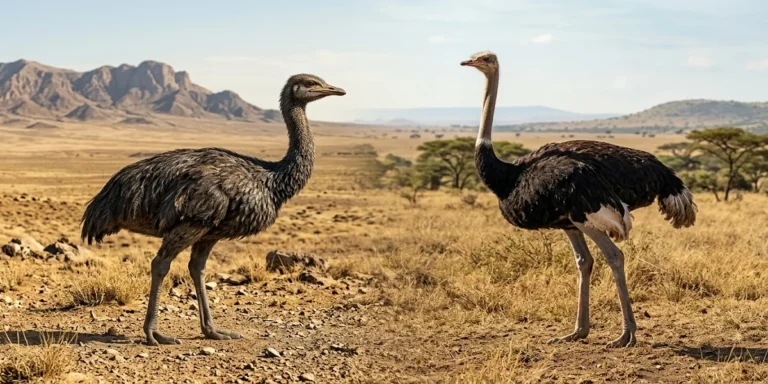
Quick Answer: Ostrich anatomy is highly specialized for life as a large, flightless, fast-running bird. Its skeleton includes a broad, keelless sternum, powerful pelvic limbs, elongated lower-leg bones, and an unusual double-patella knee with two kneecaps in each leg. Together with specialized muscles, tendons, joints, and feet, these structures allow the ostrich to support its large body while running at high speeds across open terrain.
The ostrich’s anatomy is not simply a reduced version of a flying bird. Instead, many parts of its body have been reshaped around a different set of demands. Flight is no longer the priority. Efficient terrestrial locomotion, stability, endurance, predator detection, thermoregulation, and the ability to process tough plant material have all influenced the bird’s anatomy.
Table of Contents
Introduction
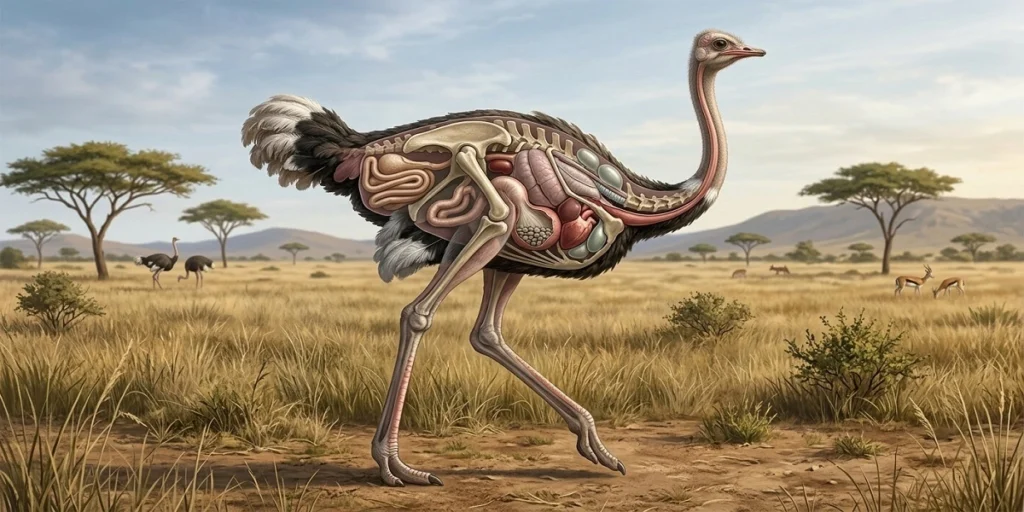
An ostrich looks unusual from the outside, but some of its most remarkable adaptations are hidden beneath its feathers.
Its skeleton, muscles, joints, respiratory system, digestive tract, eyes, and reproductive organs all reflect the demands of living as the world’s largest living bird and a highly specialized terrestrial runner. Rather than carrying the anatomical equipment needed for powered flight, the ostrich has invested heavily in structures that support its enormous body and allow it to move efficiently on two legs.
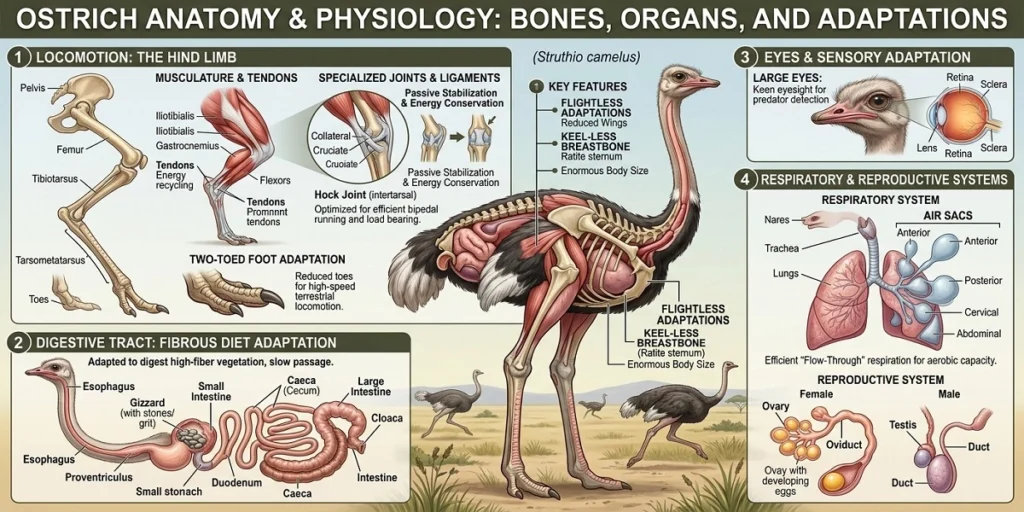
This is especially obvious in the hind limbs. Ostrich legs contain long bones, powerful muscles, specialized tendons, and unusual joints that work together as an integrated locomotor system. Research on ostrich locomotion has shown that passive structures such as ligaments and joint surfaces can also contribute to efficient movement, helping stabilize the limb and conserve energy during running.
The same principle appears throughout the body. The breastbone has no flight-related keel, the feet have only two toes, the eyes are exceptionally large, and the digestive system is adapted to extract nutrients from fibrous vegetation.
Understanding ostrich anatomy therefore means looking beyond individual bones and organs. The more interesting question is how these structures work together.
Ostrich Skeleton: Bones Built for Running, Not Flight
The ostrich skeleton can be divided broadly into the axial skeleton, which includes the skull, vertebral column, ribs, and sternum, and the appendicular skeleton, which includes the limbs and the bones connecting them to the body.
Although the basic organization is recognizable as avian, the proportions and structures are strongly adapted to a flightless lifestyle. The most obvious example is the sternum.
The Keelless Sternum
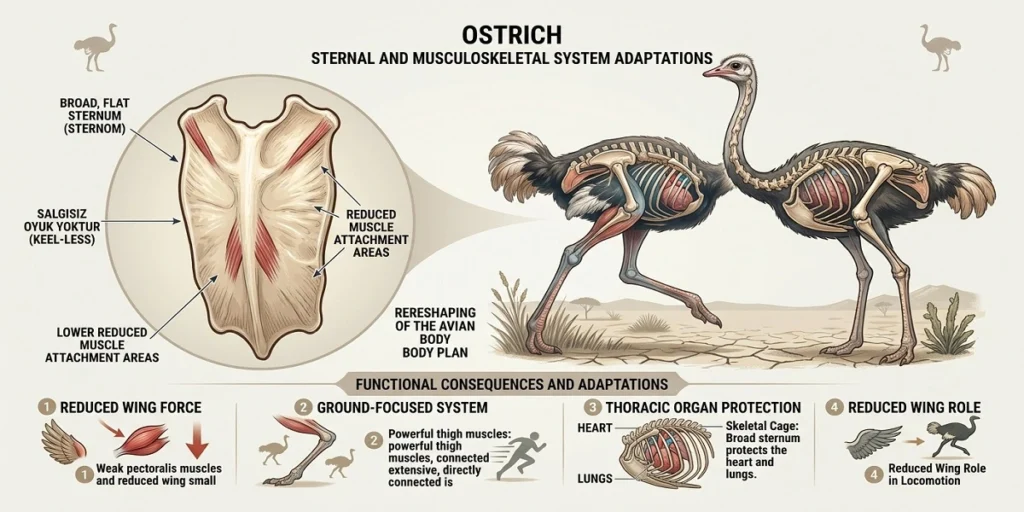
Flying birds generally have a prominent keel, or carina, projecting from the sternum. This structure provides a large attachment surface for the powerful muscles responsible for the downstroke and other movements involved in flight.
The ostrich lacks this keel.
Its sternum is broad and relatively flat rather than having the deep, projecting structure associated with the flight muscles of many flying birds. Anatomical studies describe the ostrich sternum as a broad bone without a sternal keel, consistent with the reduced role of the wings in locomotion.
This does not mean that the ostrich’s chest and shoulder region are structurally unimportant. The bones still protect the thoracic organs and provide attachment sites for muscles and connective tissues. However, the skeleton is no longer organized around generating the enormous forces required for powered flight.
The result is one of the clearest examples of how evolution can reshape an existing body plan. The ostrich did not simply become a bird that could not fly. Its musculoskeletal system became increasingly specialized for a life spent on the ground.
The Pelvis and Hind Limb
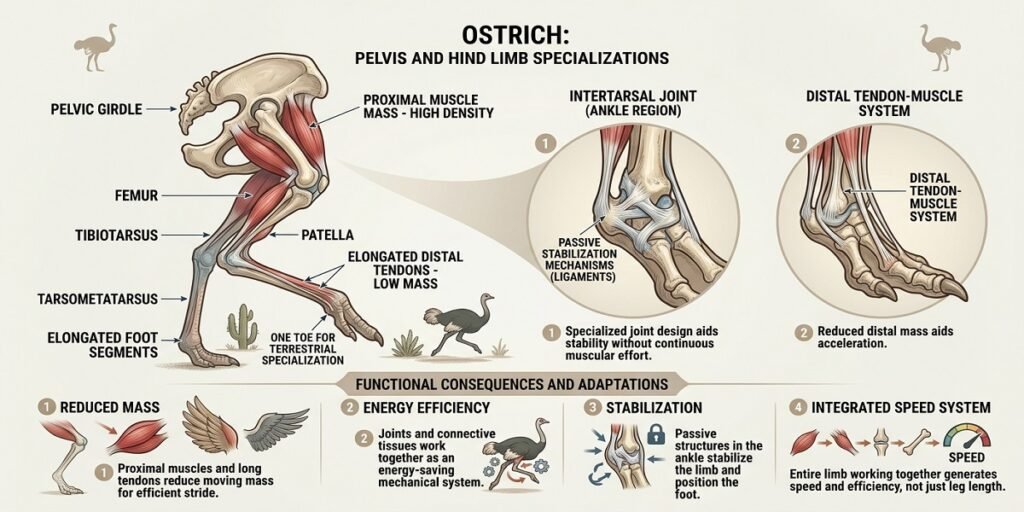
If the sternum shows what the ostrich has largely moved away from, its pelvis and hind limbs show what it has become specialized for.
The pelvic girdle provides the structural connection between the body and the powerful hind limbs. Below it, the femur, lower-leg bones, ankle region, and elongated foot form a long mechanical chain that transfers muscular forces to the ground.
Ostrich hind limbs are particularly interesting because much of the visible leg is made up of relatively long distal segments. The muscles that generate much of the force are concentrated higher up the limb, while long tendons extend toward the lower joints and foot. This arrangement can help reduce the mass that has to be accelerated at the end of each stride. Anatomical research has identified a combination of strong proximal muscles, long tendons, and specialized distal structures that contributes to the bird’s efficient running mechanics.
The lower limb is not simply a collection of long bones, either. Its joints and connective tissues form a coordinated mechanical system. Studies of the ostrich intertarsal joint have found passive mechanisms that help stabilize the limb, position the foot, and contribute to energy-efficient locomotion without requiring continuous muscular control.
This is an important part of ostrich physiology: speed comes from the entire limb system working together, not from having long legs alone.
Ostrich Limb Bones and Mechanical Adaptation
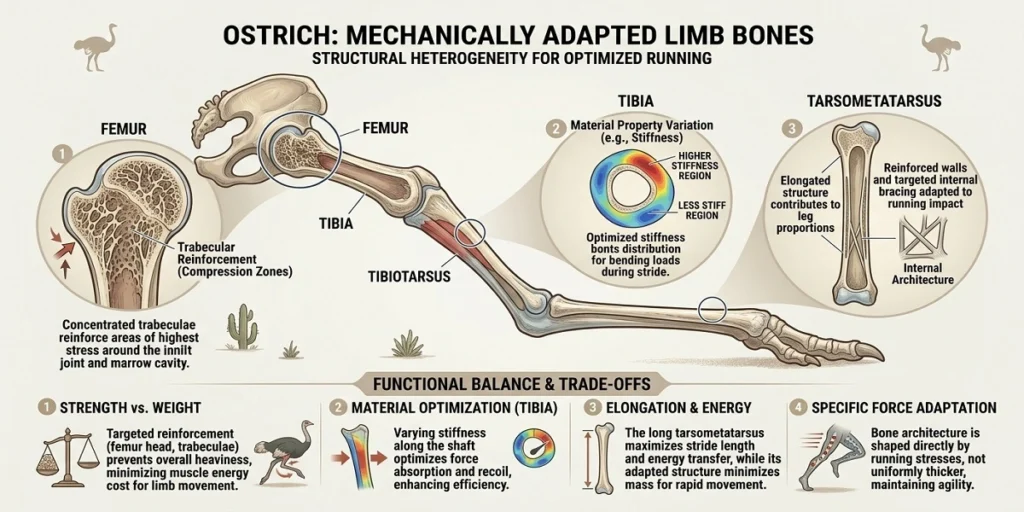
The bones themselves also show evidence of adaptation to the stresses of running.
An ostrich has to support a very large body while repeatedly absorbing forces generated when its feet strike the ground. Instead of having identical mechanical properties throughout each bone, different regions can be structurally adapted to the loads they experience.
Research on ostrich limb bones has found differences in bone structure and material properties along the femur and tibia. The femur, for example, contains internal structural features that reinforce the walls surrounding its marrow cavity, while different regions of the tibia show different mechanical characteristics. These patterns allow the bones to withstand substantial forces without simply becoming uniformly heavy.
The tarsometatarsus, the elongated lower-foot bone between the ankle and toes, is another important component of this system. Its elongated structure contributes to the long-legged proportions that characterize the ostrich, while its internal architecture is adapted to the mechanical demands of running.
In other words, ostrich bones represent a compromise between strength, stiffness, weight, and movement efficiency.
That balance matters. A skeleton that was simply made heavier and thicker everywhere would be strong, but it would also increase the energetic cost of running. The ostrich instead has a skeleton shaped around the specific forces its body experiences during locomotion.
What Happened to the Wings?
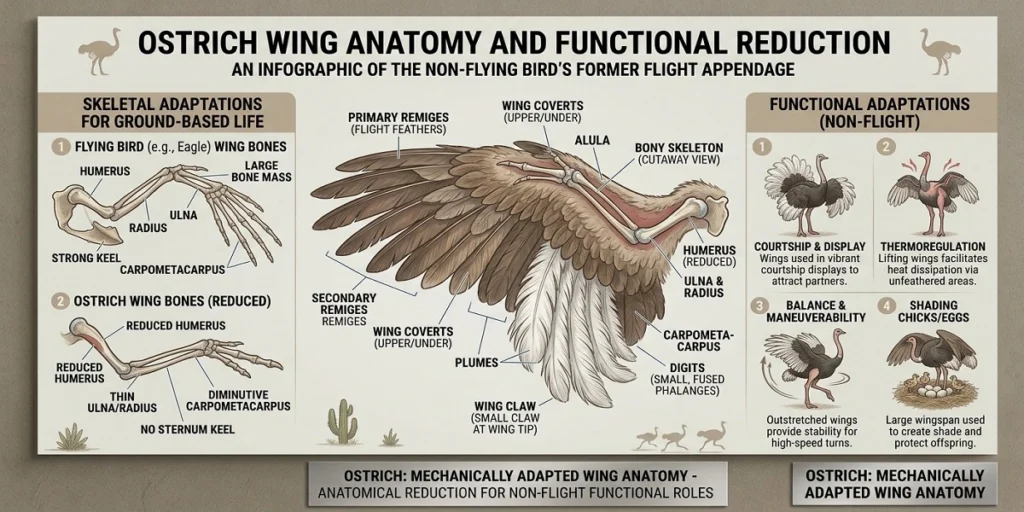
Ostriches still have wings, even though they cannot use them for powered flight.
The wing skeleton and associated muscles are reduced compared with those of flying birds, but the wings have not become completely useless. Ostriches use them in several non-flight behaviors, including courtship displays, balance and communication. Females and males can spread and move their wings dramatically during displays.
Wings can also play a role in parental behavior and shading. A bird that no longer needs its wings to generate lift can therefore repurpose them for other functions.
This is another important principle in ostrich anatomy: flightlessness did not eliminate the wings; it changed what the wings are used for.
The Four-Kneecap Mystery: Why Do Ostriches Have Two Patellae in Each Knee?
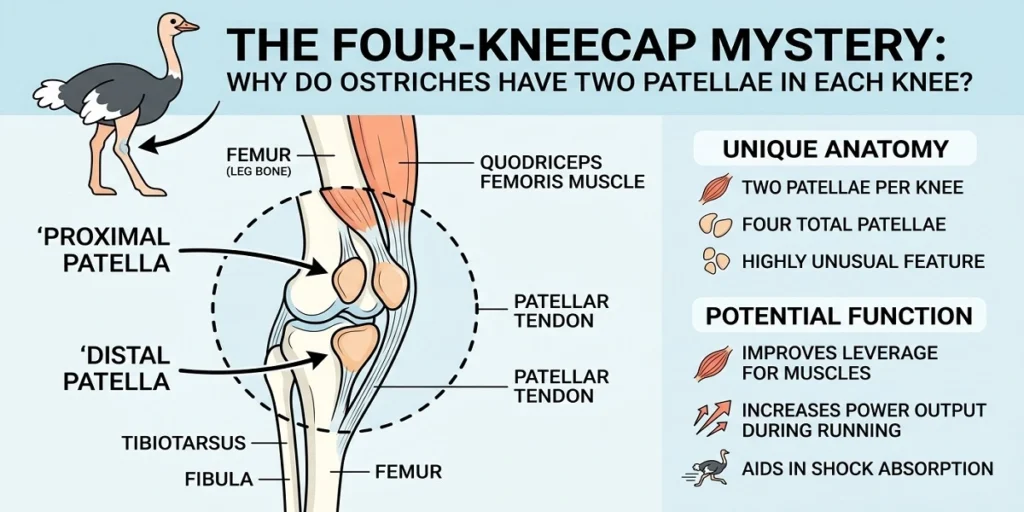
One of the strangest features of ostrich anatomy is found inside the knee.
An adult ostrich has two patellae, or kneecaps, in each knee, giving the bird four patellae in total. This double-patella arrangement is highly unusual and is one of the features that makes ostrich knee anatomy especially interesting to researchers studying locomotion and the evolution of sesamoid bones.
The two structures are generally described as a proximal patella and a distal patella.
The proximal patella is the smaller, more conventional-looking of the two. The distal patella is positioned farther down the limb and has a different shape and mechanical relationship with the surrounding structures. Detailed anatomical studies have identified multiple muscles and connective tissues associated with both patellae.
How the Double-Patella Knee Works
It is tempting to assume that four kneecaps must simply give the ostrich a stronger version of the human knee.
The reality is more interesting.
Researchers have used X-ray reconstruction of moving morphology, or XROMM, to study how the ostrich’s two patellae move during knee flexion and extension. XROMM combines three-dimensional bone models with X-ray video to reconstruct skeletal movement with high precision.
The results suggest that the two patellae do not simply duplicate the function of a human kneecap.
The proximal patella behaves more similarly to the single patella found in many other animals, while the distal patella has a more unusual mechanical role. Both patellae affect the geometry of the knee’s extensor mechanism. Studies suggest that the arrangement can reduce mechanical advantage while potentially allowing faster knee extension, and the configuration may also provide protection to the tendon during the extreme movements associated with rapid locomotion.
Why Does an Ostrich Need Two Kneecaps?
Scientists do not yet have a definitive answer.
The leading explanations connect the double-patella arrangement to the mechanical demands placed on the ostrich’s hind limbs. An ostrich’s knee experiences substantial forces during running, and the patellae may help manage the interaction between bones, tendons, and muscles as the joint moves.
However, it would be misleading to claim that scientists have completely solved the mystery.
Current research supports a relationship between the double-patella system, rapid locomotion, and tendon protection, but the precise evolutionary reason why ostriches developed two patellae rather than one remains an open question.
That uncertainty actually makes the feature more interesting. The ostrich knee is not simply a bizarre anatomical curiosity. It is an example of a highly specialized system that researchers are still trying to understand.
And the double kneecap is only one part of the ostrich’s extraordinary running machinery. Further down the leg, the bird has another striking adaptation: a foot with only two toes.
Ostrich Legs and Feet: The Two-Toed Adaptation for Speed
The ostrich has one of the most unusual feet in the bird world. While most birds have three or four toes, an ostrich has only two on each foot: digit III and digit IV.
This reduction is closely connected to the bird’s specialized running anatomy. The larger inner toe, digit III, carries most of the load and ends in a broad, thick claw that resembles a hoof. The smaller outer toe, digit IV, is much shorter and contributes less to weight-bearing and propulsion.
The two toes are not simply a curious feature. They form part of a highly specialized system that allows the ostrich to move a large body efficiently across open ground. Reducing the number of toes decreases the mass and complexity at the end of the limb, while the elongated foot and strong tendons help transfer forces efficiently during each stride.
The large claw on the main toe also provides traction. When the foot contacts the ground, the toe and its supporting structures help absorb and redirect the forces generated during running. This is particularly important for an animal capable of reaching speeds of around 45 mph (70 km/h).
Why Do Ostriches Have Only Two Toes?
The simplest explanation is that two toes are well suited to the mechanical demands of high-speed terrestrial locomotion.
Most birds evolved feet that reflect their particular lifestyles. Three-toed feet are common among ground-dwelling birds, while other species have feet adapted for grasping branches, swimming, climbing, or hunting. The ostrich took a different evolutionary path, with the foot becoming increasingly specialized for rapid running.
A lighter distal limb can be advantageous because the lower part of the leg has to be accelerated and decelerated with every stride. By concentrating much of the limb’s muscle mass higher up the leg and keeping the distal structures relatively streamlined, ostriches can reduce the energetic cost of moving their legs.
The result is a foot that looks remarkably simple but performs several jobs at once: it supports the bird’s enormous body, absorbs impact, provides traction, and helps generate forward propulsion.
The two-toed foot is therefore best understood as part of the ostrich’s overall running system rather than as an isolated adaptation.
Ostrich Digestive System: How Food Moves Through the Body
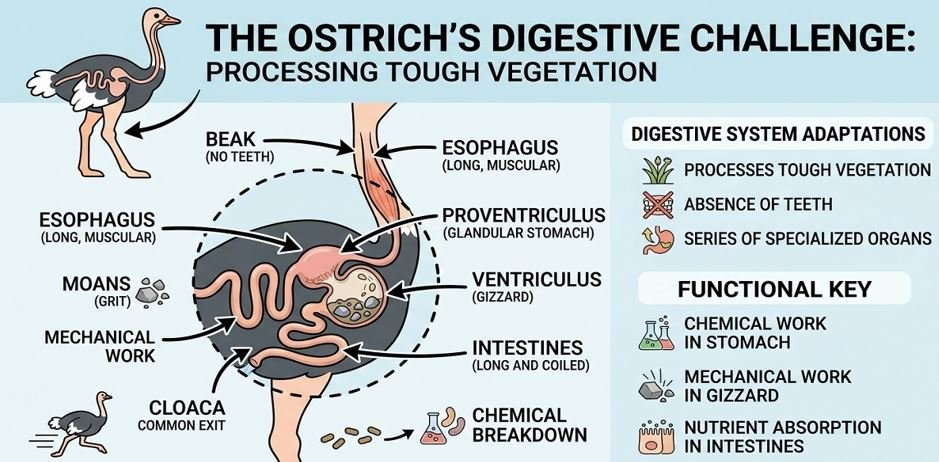
The ostrich’s digestive system is adapted to a very different challenge from its running system.
Instead of chasing prey, the bird spends much of its time processing vegetation, seeds, fruits, and other plant material. Much of this food can be fibrous and difficult to break down. Because ostriches have no teeth, their digestive tract must perform both the chemical and mechanical work that chewing would accomplish in a mammal.
The food passes through a series of specialized organs, beginning with the mouth and esophagus and continuing through the stomach, intestines, and cloaca.
Do Ostriches Have Three Stomachs?
This is one of the most common questions about ostrich anatomy, but the answer depends on how the term “stomach” is being used.
Ostriches have two main stomach compartments: the proventriculus, or glandular stomach, and the ventriculus, commonly called the gizzard. These are anatomically distinct parts of the avian digestive system and perform different functions.
However, some popular sources describe ostriches as having a “three-chambered stomach” because their digestive tract includes another important compartment before the small intestine. This wording can make the anatomy sound more similar to the multi-compartment stomach of a ruminant mammal, which it is not.
For clarity, the ostrich should be described as having a proventriculus and a ventriculus, followed by an extensive intestinal tract that handles further digestion and fermentation.
The Proventriculus: The Glandular Stomach
After food passes through the esophagus, it enters the proventriculus.
The proventriculus is the glandular part of the avian stomach. It produces digestive secretions, including hydrochloric acid and enzymes, that begin the chemical breakdown of food.
Unlike a mammalian stomach, however, the proventriculus is only one part of a two-part avian stomach. Food then moves into the ventriculus, where mechanical processing becomes much more important.
This separation between chemical digestion and mechanical grinding is one of the defining features of the avian digestive system.
The Gizzard: A Mechanical Grinder
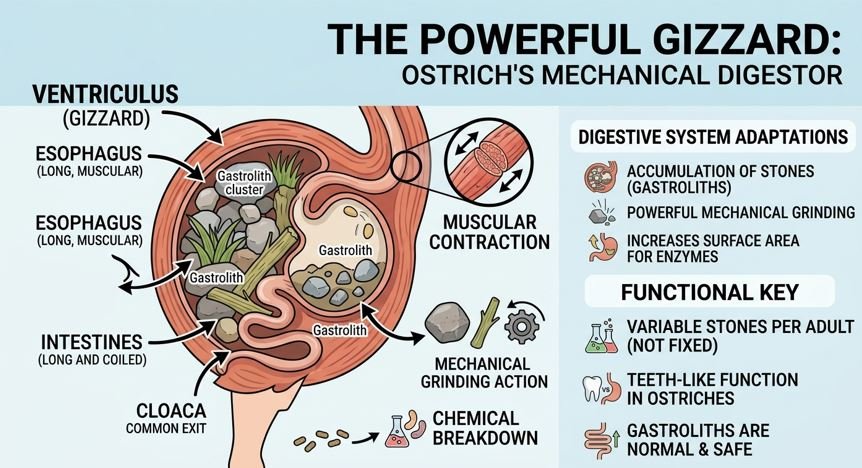
The ventriculus, or gizzard, is a powerful muscular chamber that mechanically processes food.
Because ostriches cannot chew, they swallow small stones and other hard particles that accumulate inside the gizzard. These stones, known as gastroliths, help grind tough plant material as the muscular walls of the gizzard contract.
This is why finding stones in an ostrich’s digestive tract is not necessarily a sign that it has eaten something harmful. Small stones are a normal and useful part of its digestive strategy.
An adult ostrich can carry a substantial quantity of gastroliths in its digestive tract. The exact amount varies with the individual and its diet, so claims that every adult carries a fixed quantity should be treated cautiously.
The gizzard effectively performs part of the job that teeth perform in mammals: it physically reduces food into smaller particles, increasing the surface area available for digestive enzymes and microorganisms.
The Intestines and Hindgut
After mechanical processing in the gizzard, food continues through the small intestine.
Here, digestion and absorption allow the bird to obtain nutrients released from the food. But plant-heavy diets contain large quantities of structural carbohydrates that cannot be fully broken down by the bird’s own digestive enzymes.
This is where the hindgut becomes especially important.
Ostriches have enlarged ceca and a substantial hindgut where microbial fermentation contributes to the digestion of fibrous plant material. Microorganisms living in this part of the digestive tract break down compounds that would otherwise be difficult for the bird to use.
This adaptation allows ostriches to make better use of relatively low-quality vegetation than a simple digestive system would permit.
It also helps explain why an ostrich’s diet can include a considerable amount of plant material despite the absence of teeth.
Why Do Ostriches Swallow Stones?
Stone swallowing, or gastrolith ingestion, is primarily a mechanical adaptation.
The ostrich does not swallow stones because it is trying to obtain minerals from them. Instead, hard particles remain in the gizzard and assist in grinding food as the muscular organ contracts.
This behavior is particularly useful for processing fibrous vegetation, seeds, and other food items that benefit from mechanical breakdown.
The stones eventually become worn down and can pass through the digestive tract, so ostriches periodically replace them by swallowing additional suitable particles.
In this sense, the gizzard and gastroliths form a biological grinding system that compensates for the absence of teeth.
How Long Does Digestion Take?
The movement of food through an ostrich’s digestive tract is relatively slow compared with many smaller birds.
A commonly cited estimate puts total passage time at roughly 36 hours, although digestive transit varies according to diet, food composition, environmental conditions, and the individual bird.
A longer passage time can be advantageous when an animal is extracting nutrients from fibrous food. It provides more opportunity for digestion and microbial fermentation before the remaining material is eliminated.
The exact transit time should therefore be treated as an approximate biological measure rather than a stopwatch-like constant.
The Ostrich Cloaca: Where Digestive and Urinary Systems Meet
The digestive tract eventually leads to the cloaca, a shared chamber involved in the elimination of digestive waste and the reproductive system.
Ostriches have an unusual urinary arrangement compared with many other birds. Their cloacal anatomy includes modifications associated with the storage and elimination of urine, and they can pass urine separately from feces.
This is particularly noticeable because many people assume that all birds eliminate solid and liquid waste together in the same visible material.
The ostrich’s anatomy demonstrates that even a structure as familiar as the cloaca can vary substantially between bird species.
Its digestive system is therefore more than a collection of stomach compartments. The entire pathway, from the toothless beak to the gizzard, fermentative hindgut, and cloaca, works together to extract as much value as possible from food that can be difficult to digest.
And while the digestive tract is optimized for processing food, another specialized system has to supply the oxygen needed to fuel the enormous muscles responsible for running: the ostrich respiratory system.
Ostrich Respiratory System: Lungs and Air Sacs
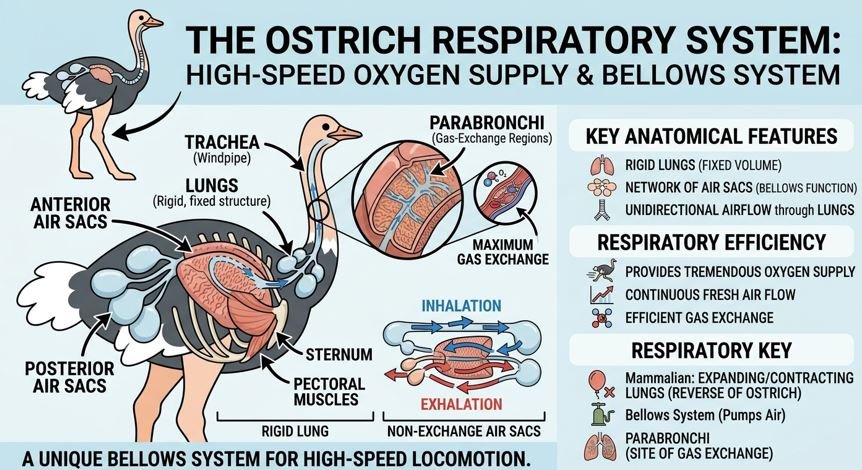
Running at high speed requires a tremendous supply of oxygen. For an ostrich, respiratory efficiency is therefore just as important as strong legs and specialized joints.
Like other birds, ostriches have a respiratory system that differs fundamentally from that of mammals. Their lungs do not expand and contract in the same way mammalian lungs do. Instead, the lungs remain relatively rigid while a network of air sacs acts as a bellows system that moves air through them.
This arrangement allows fresh air to pass through the gas-exchange regions of the lungs in a highly efficient pattern.
How Ostrich Lungs Differ From Mammal Lungs
In a mammal, air enters the lungs during inhalation and is mixed with residual air already present in the respiratory system. During exhalation, much of that air leaves the lungs.
Birds use a different system.
Air moves through the avian respiratory system in a predominantly one-way flow. The lungs themselves are relatively fixed structures attached to the body wall, while air sacs help move air through the respiratory passages.
This means that oxygen-rich air can continue passing through the gas-exchange surfaces during both phases of the breathing cycle.
For a large, active bird such as an ostrich, this is an important adaptation. Running at high speed increases the demand for oxygen in the muscles, while hot environmental conditions can increase the need for evaporative cooling through rapid breathing.
Ostrich Air Sacs
The ostrich has several major groups of air sacs, including cervical, clavicular, thoracic, and abdominal air sacs.
These structures are not primarily organs of gas exchange. Instead, they function as part of the ventilation system that moves air through the lungs.
The abdominal air sacs are particularly large, and the ostrich respiratory system also contains specialized diverticula associated with the digestive organs. A large gastric diverticulum extends over the dorsal surface of the proventriculus and ventriculus and is an unusual feature of the ostrich respiratory anatomy.
Together, the air sacs and lungs create a highly coordinated ventilation system.
The important point is that air sacs do not replace the lungs. They help ventilate them.
Why Is Efficient Breathing Important for Running?
An ostrich does not need an unusual respiratory system simply because it is a bird. It needs an efficient respiratory system because it is an exceptionally large, active bird that can sustain high running speeds.
During intense exercise, skeletal muscles consume more oxygen and produce more carbon dioxide and heat. The respiratory system must therefore deliver oxygen efficiently while removing carbon dioxide and contributing to temperature regulation.
This is one reason ostrich anatomy makes more sense when individual organs are considered as parts of a larger system.
The legs provide propulsion, the cardiovascular system transports oxygen, and the respiratory system continuously supplies that oxygen to the blood.
The result is a body designed around sustained terrestrial activity rather than powered flight.
Ostrich Eyes and Brain: Built for Seeing Predators
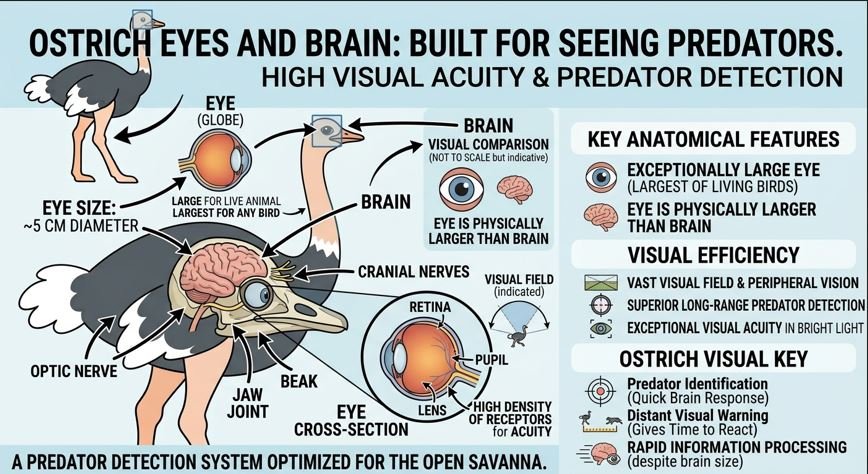
One of the first anatomical features people notice about an ostrich is its enormous eyes.
Each eye is roughly 5 centimeters (about 2 inches) in diameter, making the ostrich eye exceptionally large for a living terrestrial animal and the largest eye among living birds. Its eyes are physically larger than its brain, a fact that has made ostrich anatomy a popular source of trivia.
But the size of the eye is not simply a curiosity.
Why Are Ostrich Eyes So Large?
Large eyes can provide advantages when an animal depends heavily on visual information.
An ostrich lives primarily in open habitats where there are relatively few obstacles blocking the view. Being able to detect movement at a considerable distance can provide additional time to respond to a predator.
A large eye can accommodate a large retina and optical structures capable of gathering substantial amounts of light. Ostriches therefore have an impressive visual system suited to detecting threats and navigating large open landscapes.
Their vision also supports normal activities such as locating food, recognizing other ostriches, and coordinating movement.
This is one of the clearest examples of anatomy reflecting habitat. An animal living in dense forest would have different visual demands from one living on wide, open plains.
Is an Ostrich’s Eye Really Bigger Than Its Brain?
Yes, the individual eye is larger than the brain in physical size.
That comparison sounds extraordinary, but it should not be interpreted as evidence that ostriches have poor intelligence. Eye size and brain size perform completely different biological functions and are shaped by different evolutionary pressures.
The ostrich’s enormous eyes are particularly valuable because visual detection is critical to survival in open habitats.
The bird also has protective structures around the eyes, including long eyelashes and specialized eyelids that help protect the large ocular surface from dust, sunlight, and other environmental hazards.
The eyes are therefore not merely oversized organs. They are part of a broader sensory system adapted to life in exposed environments.
Ostrich Reproductive Anatomy
Like all birds, ostriches reproduce by laying eggs rather than giving birth to live young.
Their reproductive anatomy follows the basic avian pattern, but the size of the bird and its unusual breeding system make several aspects particularly interesting.
Female Ostrich Reproductive System
A female ostrich, or hen, has an ovary and an oviduct.
The ovary produces the developing ova. Once an ovum is released, it enters the oviduct, where the components of the egg are progressively added as it travels toward the cloaca.
The egg white, membranes, and shell are formed at different stages of the oviduct before the completed egg is laid.
This is the same basic biological principle found throughout modern birds, although the final product is exceptionally large.
An ostrich egg can weigh around 1.4 kilograms on average, making it the largest egg produced by any living bird species.
Male Ostrich Reproductive System
Male ostriches have paired testes that produce sperm.
During reproduction, sperm is transferred to the female through the cloacal region. As in other birds, fertilization occurs internally before the egg is completed and laid.
The male reproductive system is therefore closely connected to the cloaca, but the cloaca itself is not simply a reproductive organ. It serves multiple functions in the digestive, urinary, and reproductive systems.
Cloaca and Reproduction
The cloaca is the terminal chamber where several body systems converge.
In reproduction, it provides the anatomical region through which sperm can be transferred between mating partners. In females, it also serves as the passage through which the completed egg leaves the reproductive tract.
This multifunctional arrangement is typical of birds, although the exact anatomy varies among species.
The ostrich’s large body size makes its reproductive anatomy particularly interesting when considered alongside its breeding behavior and communal nesting system. Several females may lay eggs in the same nest, while incubation responsibilities are divided between males and females.
However, the visible differences between male and female ostriches are not primarily internal anatomical adaptations. They are mostly examples of sexual dimorphism.
Male and Female Ostrich Anatomy: What Is Different?
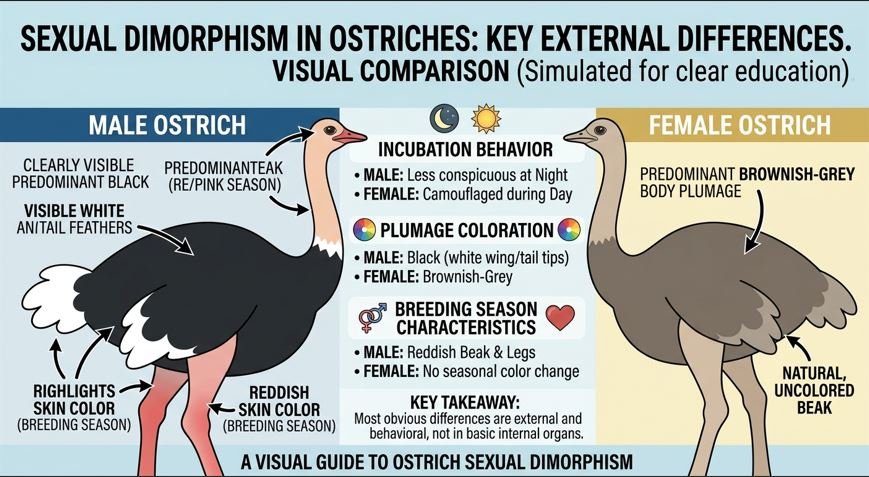
The most obvious differences are external.
Adult males generally have predominantly black body plumage with white wing and tail feathers, while females are generally brownish-grey. This difference is strongly connected to incubation behavior: the female’s lighter coloration provides camouflage during daytime incubation, while the male’s darker plumage makes him less conspicuous at night.
Males also develop more conspicuous reddish coloration on parts of the skin, including the beak and legs, during the breeding season.
These features are not changes to the bird’s skeleton or internal organs. They are external characteristics associated with sexual maturity, reproduction, and behavior.
This distinction matters because ostrich sexual dimorphism is more obvious in appearance and behavior than in the basic organization of their internal organs.
How the Respiratory and Reproductive Systems Fit Into the Bigger Picture
At first glance, the lungs, eyes, and reproductive organs appear unrelated.
But each system solves a different challenge of ostrich life.
The respiratory system supports intense physical activity. The enormous eyes improve visual awareness in open habitats. The reproductive system allows a large, long-lived bird to produce and incubate extremely large eggs.
None of these adaptations works in isolation.
The ostrich is a useful example of how anatomy and physiology operate as an integrated system. Its body is not a collection of strange individual features. Its unusual characteristics become much easier to understand when they are viewed as responses to the same basic pressures: running efficiently, finding food, detecting danger, surviving environmental extremes, and reproducing successfully.
The final piece of that story is the bird’s outer body. Its skin, feathers, and thermoregulatory system help it cope with the heat and temperature fluctuations of the African environments where ostriches evolved.
Skin, Feathers and Thermoregulation
An ostrich’s anatomy does not end with its bones and internal organs. Its skin and feathers also play important roles in protecting the body and controlling temperature.
Ostriches live in environments where daytime temperatures can become extremely high, while temperatures may fall considerably after sunset. A large animal generates substantial metabolic heat, particularly when running, so controlling body temperature is essential.
Ostrich Skin
Much of the ostrich’s body is covered by feathers, but the neck and legs have relatively little feather coverage.
The exposed skin of the neck and legs can help facilitate heat loss, particularly when blood flow to the skin increases. The legs also contain relatively little insulating tissue compared with the heavily feathered trunk.
Skin coloration varies among populations and can become more pronounced in adult males during the breeding season. The reddish coloration of the male’s skin is particularly noticeable on the neck and legs and is associated with reproductive condition.
The skin also provides a physical barrier against environmental conditions, helping protect underlying tissues from dust, sunlight, and minor mechanical damage.
Ostrich Feathers
Ostrich feathers are unusual because they are not designed for powered flight.
The body feathers are soft, loose, and relatively plume-like compared with the more rigid, aerodynamic feathers of flying birds. Their structure reflects their different purpose.
These feathers provide insulation, protect the skin, and contribute to visual displays. They can also help create shade around parts of the body.
The wings retain larger feathers even though they cannot generate powered flight. These feathers are important during courtship displays and other forms of communication.
So while feathers are no longer primarily aerodynamic structures, they remain biologically useful.
How Do Ostriches Stay Cool?
Thermoregulation is particularly important for an animal that combines a large body with a hot environment and high levels of physical activity.
Ostriches use several mechanisms to manage body temperature.
One is panting, which increases evaporation from the respiratory tract. As water evaporates, it removes heat from the body.
The bird can also modify blood flow to peripheral tissues, helping transfer heat toward areas where it can be released to the environment.
Behavior matters as well. Ostriches can alter their activity according to environmental conditions, seeking shade or reducing activity during the hottest periods when necessary.
Their feathers also provide an interesting thermal balance. Although feathers insulate the body, they can simultaneously protect the skin from direct solar radiation. This means that feather coverage is not simply a disadvantage in hot climates.
Thermoregulation is therefore another example of ostrich anatomy working as a system rather than relying on a single adaptation.
What Are 5 Facts About Ostrich Anatomy?
Five unusual features of ostrich anatomy are:
- Ostriches have a broad sternum without the prominent keel found in many flying birds.
- Each knee has two patellae, giving the bird four kneecaps in total.
- Each foot has only two toes.
- Their eyes are exceptionally large and larger than their brain.
- Their digestive system includes a muscular gizzard that uses swallowed stones to mechanically process food.
Together, these features reflect the ostrich’s adaptation to a terrestrial, fast-running lifestyle.
Ostrich Organ Systems at a Glance
The major body systems of an ostrich each have specialized structures, but their functions overlap and support one another.
| Body system | Main structures | Main function | Ostrich adaptation |
|---|---|---|---|
| Skeletal | Sternum, pelvis, femur, tibia, tarsometatarsus | Support and locomotion | Keelless sternum and running-adapted limb structure |
| Musculoskeletal | Muscles, tendons, joints, patellae | Movement and stability | Powerful hind limbs and double-patella knees |
| Digestive | Proventriculus, ventriculus, intestines, ceca | Digestion and nutrient absorption | Gizzard grinding and hindgut fermentation |
| Respiratory | Lungs and air sacs | Gas exchange and ventilation | One-way airflow through rigid lungs |
| Sensory | Eyes, brain, visual pathways | Vision and environmental awareness | Exceptionally large eyes |
| Reproductive | Ovary, oviduct, testes, cloaca | Reproduction | Adapted for producing and fertilizing very large eggs |
| Integumentary | Skin, feathers, claws | Protection and thermoregulation | Exposed skin and non-flight feathers |
| Urinary | Kidneys, ureters, cloacal structures | Waste removal and water balance | Specialized cloacal handling of urine |
How Ostrich Anatomy Is Adapted for Survival
Looking at individual organs is useful, but the most important insight comes from seeing how these structures work together.
An ostrich survives not because it has one extraordinary organ, but because many moderately specialized systems combine into an exceptionally effective whole.
1. The Skeleton Supports a Running Lifestyle
The keelless sternum reflects the loss of powered flight specialization, while the pelvis and hind limbs support a very different form of locomotion.
Long lower-limb segments, strong bones, specialized joints, tendons, and powerful muscles allow the ostrich to move a large body efficiently.
2. The Two-Toed Foot Reduces Distal Limb Mass
Having only two toes helps create a lightweight, specialized foot.
The main toe provides most of the support and traction, while the overall structure reduces the amount of mass that has to be accelerated at the end of the leg.
For an animal that takes repeated high-speed strides, even relatively small differences in distal limb mass can influence locomotion.
3. Double Patellae Help Manage an Unusual Knee
The two patellae in each knee are among the strangest features of ostrich anatomy.
Although researchers are still investigating their exact evolutionary history and mechanical function, the double-patella system is associated with the specialized mechanics of the ostrich hind limb.
It is a reminder that the fastest-running bird did not achieve its performance through leg length alone. Its joints and connective tissues are equally important.
4. The Digestive System Handles Tough Food
Ostriches lack teeth, but their digestive system compensates through mechanical and biological processing.
The gizzard uses gastroliths to grind food, while the hindgut and ceca support microbial fermentation of fibrous plant material.
This allows ostriches to extract nutrients from foods that would be difficult to process with a simpler digestive system.
5. The Respiratory System Supports High Activity
The rigid lungs and air-sac system provide efficient ventilation and continuous airflow through the gas-exchange regions of the lungs.
This supports the high oxygen demands of running and contributes to the bird’s ability to function in hot environments where rapid breathing is also important for cooling.
6. Large Eyes Improve Environmental Awareness
An ostrich’s enormous eyes give it an exceptionally strong visual system.
On open plains, early detection of a distant predator can provide valuable time to respond. The bird’s visual anatomy therefore fits its habitat just as closely as its legs fit its running lifestyle.
7. Skin and Feathers Help Manage Heat
The combination of feather coverage, exposed skin, blood-flow regulation, panting, and behavior helps the ostrich cope with environmental heat.
No single mechanism is responsible for cooling the bird. Instead, several systems work together.
This same pattern appears throughout ostrich physiology.
Frequently Asked Questions About Ostrich Anatomy
Do Ostriches Have Three Stomachs?
Not in the same sense as a cow or other ruminant.
An ostrich has two main stomach compartments: the proventriculus, which performs glandular and chemical digestion, and the ventriculus, or gizzard, which mechanically grinds food. Some sources describe the digestive system as having three chambers because they include another major compartment before the small intestine, but “three stomachs” is an oversimplification.
Why Do Ostriches Have Four Kneecaps?
Ostriches have two patellae in each knee, giving them four patellae in total.
Researchers believe the unusual arrangement is related to the mechanical demands placed on the hind limbs during rapid locomotion, although the precise evolutionary reason for having two patellae per knee is not completely settled.
Does an Ostrich Lay Eggs or Give Birth?
Ostriches lay eggs.
Like all birds, they reproduce through internal fertilization followed by the development of the embryo inside an egg. The female produces the egg in her reproductive tract and lays it through the cloaca.
Ostrich eggs are the largest eggs produced by any living bird species.
Is an Ostrich’s Eye Really Bigger Than Its Brain?
Yes. An ostrich’s individual eye is physically larger than its brain.
The comparison is striking, but it does not mean that the bird has poor cognitive abilities. The large eyes are primarily an adaptation for visual perception, particularly in the open habitats where detecting predators at a distance is important.
Why Don’t Ostriches Have Teeth?
Ostriches, like all modern birds, do not have teeth.
Instead, they use a combination of their beak, digestive secretions, muscular gizzard, and swallowed gastroliths to process food. The gizzard mechanically grinds material that would otherwise require chewing.
How Is Female Ostrich Anatomy Different From Male Anatomy?
Male and female ostriches have the same basic organization of their major body systems, but their reproductive organs differ.
Females have an ovary and oviduct for producing eggs, while males have testes that produce sperm.
The most obvious differences between the sexes are external rather than internal. Adult males typically have black-and-white plumage and develop reddish skin coloration during breeding, while females have brownish-grey plumage that provides better camouflage during daytime incubation.
Ostrich anatomy is a remarkable example of how evolution can transform a familiar body plan into something highly specialized.
The ostrich is a bird, but it is not built around flight. Its broad keelless sternum, powerful hind limbs, two-toed feet, unusual double-patella knees, highly specialized respiratory system, enormous eyes, and complex digestive tract all reflect the demands of life on the ground.
None of these features makes complete sense when viewed in isolation.
The two-toed foot works with the long leg and specialized joints. The double patellae are part of a larger knee mechanism. The lungs and air sacs support the muscles that power running. The large eyes provide early warning in open habitats. The gizzard and hindgut allow a toothless bird to make effective use of fibrous food.
Together, these adaptations explain why the ostrich is such a distinctive bird.
Its anatomy is not simply strange. It is functional.
Almost every unusual feature tells part of the same evolutionary story: a giant bird that gave up powered flight and became exceptionally well adapted to life on the ground.