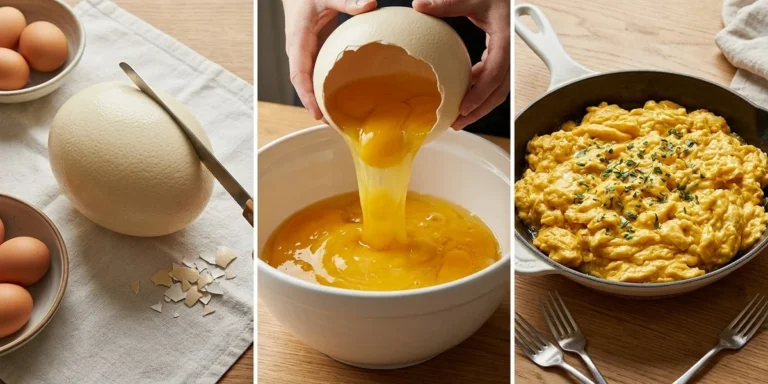
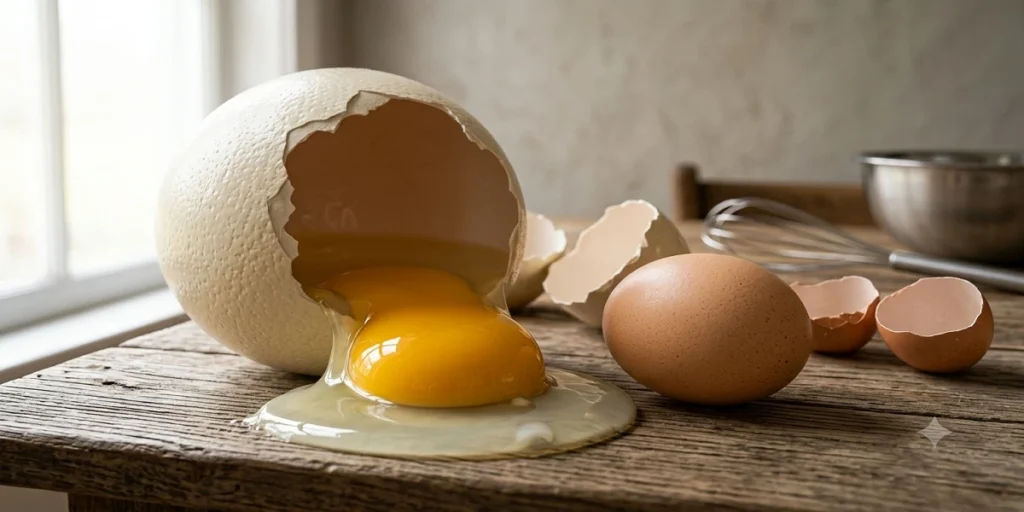
Quick Answer: Ostrich egg tastes remarkably similar to a chicken egg, but with a richer, butterier flavor and a noticeably denser texture. Most people are surprised by how familiar the taste is. The biggest difference is usually the texture rather than the flavor. Depending on the ostrich’s diet, the egg’s freshness, and how it is cooked, some people also notice a mild gamey note, although many describe it simply as a more intense version of a chicken egg.
Table of Contents
Ostrich Egg Flavor at a Glance
| Flavor Characteristic of Ostrich Egg | Rating |
|---|---|
| Similarity to Chicken Egg | ⭐⭐⭐⭐⭐ |
| Richness | ⭐⭐⭐⭐☆ |
| Buttery Flavor | ⭐⭐⭐⭐☆ |
| Gamey Flavor | ⭐⭐☆☆☆ |
| Texture Difference | ⭐⭐⭐⭐☆ |
What Does Ostrich Egg Taste Like?
For an egg that weighs around 3 pounds (1.4 kg) and can feed six to twelve people, you might expect the flavor to be completely different from a chicken egg. If you’ve never seen one in person, its enormous size is often the first surprise before you even think about the taste.
It isn’t.
In fact, the first thing most people notice is how familiar it tastes. An ostrich egg has the same recognizable egg flavor you already know, but it is often described as richer, creamier, and slightly more buttery. The yolk delivers a deeper flavor, while the white has a firmer texture that changes the overall eating experience.
This explains why reviews can seem contradictory. One person says it tastes almost identical to a chicken egg, while another describes it as richer or even slightly gamey. Both impressions can be accurate because taste is influenced by several factors, including the bird’s diet, the egg’s freshness, and the cooking method.
The simplest way to think about it is this:
An ostrich egg doesn’t taste like a completely different food. It tastes like a chicken egg with a richer yolk and a firmer bite.
The Short Answer: How Ostrich Egg Compares to Chicken Egg
If someone served you scrambled ostrich egg without telling you what it was, you would almost certainly recognize it as normal chicken egg.
The familiar sulfur notes, creamy yolk, and mild white are all there. What changes is the intensity. Nutritionally, the differences are also smaller than many people expect.
Compared with a typical chicken egg:
- The yolk tastes richer and more buttery.
- The white is firmer after cooking.
- The overall flavor feels slightly deeper rather than dramatically different.
- Some people notice a mild earthy or gamey finish, while many do not notice it at all.
This is an important distinction because the internet often exaggerates how unusual ostrich eggs taste. They are not the egg equivalent of trying venison instead of beef. The difference is much subtler.
A good comparison is using heavy cream instead of whole milk in a recipe. The overall flavor remains familiar, but it feels fuller and richer.
That is why most first-time tasters are surprised. They expect something exotic, yet end up eating an egg that is recognizable from the very first bite.
Why Does Ostrich Egg Taste Richer?
If ostrich eggs taste so similar to chicken eggs, why do many people describe them as richer?
The answer is not a single ingredient or compound. Instead, it comes from the way the yolk and white work together.
An ostrich egg contains a large yolk with a rich mouthfeel that lingers longer on the palate than a chicken egg. As you chew, the creamy yolk coats your mouth more noticeably, making the flavor seem fuller and more buttery.
The white contributes to that perception as well. Once cooked, it becomes firmer than chicken egg white, creating a denser bite. Because our brains naturally associate denser textures with richer foods, the entire eating experience feels more substantial even when the flavor differences are relatively small.
This is one reason why many people remember the texture more vividly than the taste itself.
Another factor is expectation. When people crack open an egg the size of a melon, they often anticipate a bold or unusual flavor. Instead, they find something remarkably familiar. That contrast between expectation and reality shapes how the experience is remembered.
Taste Breakdown: Yolk vs. White
Although people usually describe an ostrich egg as having one overall flavor, the yolk and the white contribute in different ways.
| Part | Flavor | Texture | Compared with Chicken Egg |
|---|---|---|---|
| Yolk | Rich, buttery, slightly creamy | Thick and smooth | More flavorful and fuller |
| White | Mild and neutral | Firmer, denser, sometimes slightly gelatinous | Less fluffy after cooking |
The Yolk
The yolk is where almost all of the extra richness comes from.
Instead of tasting dramatically different, it simply has a fuller flavor that many people describe as buttery or creamy. Some tasters also notice a faint earthy or gamey note, although this varies considerably between eggs.
Because the yolk is so rich, recipes that highlight it, such as scrambled eggs or omelets, tend to showcase the best qualities of an ostrich egg.
The White
The white is much milder.
Flavor-wise, it is very close to chicken egg white, but its texture changes more noticeably during cooking. Rather than becoming light and fluffy, it develops a firmer structure that some people describe as slightly chewy or gelatinous.
This difference is subtle, but it becomes more obvious in boiled or fried preparations where the white remains intact.
Texture: Why It Feels Different in Your Mouth
If there is one feature that consistently separates ostrich eggs from chicken eggs, it is texture.
Many first-time tasters expect a dramatic flavor difference, but instead they notice that the egg simply feels different as they eat it.
Once cooked, the white sets into a firmer structure than a chicken egg, while the yolk remains thick and creamy. Together, they create a denser mouthfeel that many people describe as more substantial.
Food scientists explain this through protein coagulation. As heat unfolds egg proteins, they bond together into a firmer network that changes both the structure and mouthfeel of the cooked egg. Like chicken eggs, ostrich eggs undergo protein coagulation when heated, creating a firm network that gives cooked eggs their structure. Because ostrich eggs are much larger and have different physical characteristics, many people perceive the cooked texture as denser and firmer than that of a typical chicken egg.
Cooking method also makes a difference.
Scrambled ostrich eggs are generally softer because the curds break apart during cooking. Hard-boiled eggs, on the other hand, highlight the firmer white and richer yolk much more clearly.
Interestingly, this texture difference also explains why some people believe ostrich eggs have a stronger flavor. Our brains often interpret dense, creamy textures as richer foods, even when the actual flavor compounds are very similar.
That is why two people can eat the same ostrich egg and describe it differently. One remembers the familiar taste, while the other remembers the dense, satisfying texture.
Why Do People Describe Ostrich Egg Taste So Differently?
If you’ve read a few reviews of ostrich eggs, you’ve probably noticed something confusing.
Some people say they taste almost identical to chicken eggs. Others describe them as richer, butterier, or even slightly gamey. At first glance, those opinions seem to contradict one another.
In reality, they are describing different parts of the same experience.
Unlike strongly flavored foods, ostrich eggs sit in a gray area where small differences in production and preparation can noticeably influence how people perceive the flavor. Four factors explain most of the variation.
1. The Ostrich’s Diet
Just as the diet of free-range chickens can influence the flavor of their eggs, an ostrich’s diet can also make a difference.
Birds raised on varied pasture with grasses, seeds, insects, and natural vegetation may produce eggs with a slightly deeper, more earthy flavor. Ostriches fed a carefully balanced commercial ration often produce eggs that taste much closer to a standard chicken egg.
The difference is usually subtle rather than dramatic, but experienced tasters may notice it.
2. Freshness
Fresh eggs generally have the cleanest, mildest flavor.
Although an ostrich egg’s thick shell helps protect its contents exceptionally well, flavor gradually changes over time. As the egg ages, some people perceive a slightly stronger aroma or a richer overall taste.
A fresh ostrich egg is often described as clean, creamy, and mild. An older egg may develop a more pronounced egg flavor, just as chicken eggs can.
3. Cooking Method
Cooking affects texture just as much as flavor.
A softly scrambled ostrich egg often tastes lighter because air becomes incorporated during cooking. A hard-boiled egg feels denser, making the richness of the yolk more noticeable.
The ingredients you cook with also matter. Butter, herbs, cheese, and vegetables can either complement or mask the egg’s natural flavor.
4. Personal Taste
Perhaps the biggest variable is the person eating it.
Some people are naturally more sensitive to earthy or sulfur-like flavors, while others barely notice them. Expectations also play a surprisingly large role. Someone expecting an exotic flavor may focus on every subtle difference, whereas another person may simply think, “It tastes like a really good egg.”
That is why no single description tells the whole story.
The overall consensus is surprisingly consistent: ostrich egg tastes familiar, but richer than chicken egg, with texture creating much of the perceived difference.
Ostrich Egg vs. Chicken, Duck, and Goose Egg
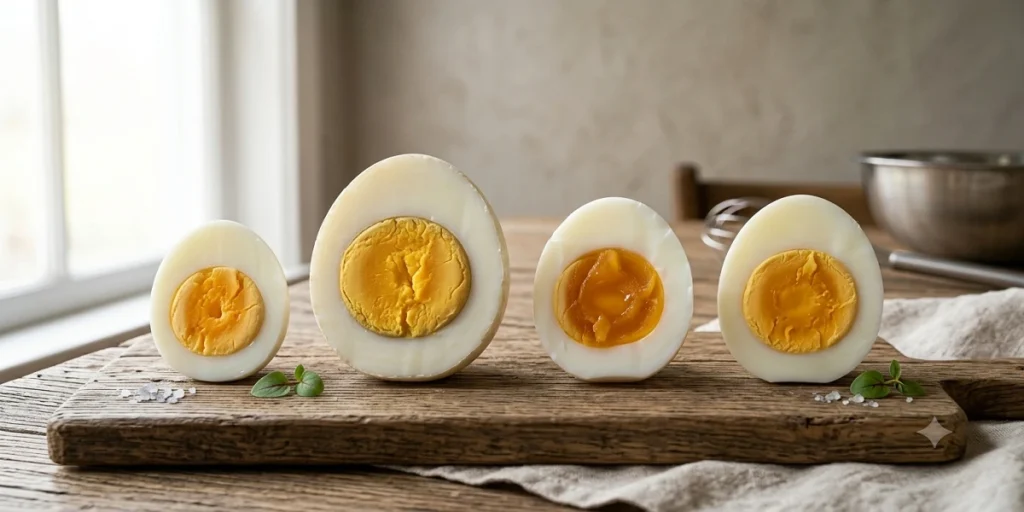
Image: 1- Chicken Egg, 2- Ostrich Egg, 3- Duck Egg, 4- Goose Egg
If you’re trying an ostrich egg for the first time, it helps to know where it fits among other commonly eaten eggs.
Rather than tasting completely unique, it sits somewhere between a chicken egg and the richer waterfowl eggs. The flavor remains familiar, but the richness gradually increases as you move from chicken to duck to goose.
| Egg Type | Flavor | Texture | Richness |
|---|---|---|---|
| Chicken | Mild and neutral | Light and fluffy | Moderate |
| Ostrich | Rich, buttery, occasionally mildly earthy | Dense, smooth | High |
| Duck | Rich, creamy, slightly mineral | Creamy and velvety | High |
| Goose | Very rich and fatty | Dense and heavy | Very High |
Although ostrich eggs are often grouped with duck and goose eggs because of their richness, many people find their overall flavor surprisingly closer to a chicken egg.
The biggest difference is texture.
Duck eggs usually feel creamier because of their higher fat content, while goose eggs have a noticeably heavier richness. Ostrich eggs, by contrast, stand out because of their firmer white and thicker mouthfeel rather than an overwhelmingly different flavor.
If someone served all four eggs side by side, most people would likely identify the ostrich egg by its texture before its taste.
Which Egg Is Most Similar to an Ostrich Egg?
If you’ve never tasted one before, the easiest comparison is this:
Imagine a high-quality chicken egg with a richer yolk and a firmer texture.
That description is closer to reality than comparing it to duck or goose eggs.
While duck and goose eggs are generally richer overall, they also have stronger characteristic flavors. Ostrich eggs remain surprisingly mild, making them approachable even for people who usually prefer chicken eggs.
For most first-time tasters, the experience is far less adventurous than they expect.
Does Cooking Method Change the Taste?
Absolutely.
The way you cook an ostrich egg can change not only its texture but also how rich or mild the flavor seems.
Because a single ostrich egg contains so much egg white and yolk, different cooking methods emphasize different characteristics.
| Cooking Method | Flavor | Texture | Best for First-Time Tasters |
|---|---|---|---|
| Scrambled | Mild, buttery | Soft and tender | ⭐⭐⭐⭐⭐ |
| Omelet | Rich and creamy | Smooth | ⭐⭐⭐⭐☆ |
| Fried | Rich yolk, firmer white | Slightly chewy white | ⭐⭐⭐☆☆ |
| Hard-boiled | Deepest egg flavor | Dense and firm | ⭐⭐☆☆☆ |
Scrambled
Scrambling is the easiest way to enjoy an ostrich egg. If you’re wondering whether ostrich eggs are actually worth cooking at home, understanding their nutritional value and culinary uses can help you decide.
Breaking the egg into small curds softens the naturally firm texture of the white while allowing the rich yolk to blend evenly throughout the dish. The result tastes very familiar, making it an excellent introduction for first-time eaters.
Omelets
Omelets highlight the creamy character of the yolk while giving you plenty of opportunities to balance the richness with vegetables, herbs, mushrooms, or cheese.
Because the flavor remains relatively mild, ostrich eggs pair well with the same ingredients that work with chicken eggs.
Fried
A fried ostrich egg showcases the contrast between the yolk and the white better than almost any other preparation.
The yolk stays thick and rich, while the white develops its characteristic firm bite. This method makes the texture difference especially noticeable.
Hard-Boiled
Boiling produces the most concentrated egg flavor.
It also creates the firmest texture because both the white and the yolk fully set during cooking. Since an ostrich egg can take around 90 minutes to hard-boil, this preparation is usually chosen for special occasions rather than everyday meals.
What First-Time Tasters Usually Notice
People often expect an ostrich egg to taste completely different simply because it is so much larger than a chicken egg.
Instead, most are surprised by how ordinary the flavor seems.
The first bite usually confirms that it is unmistakably an egg. Only after a few more bites do the subtle differences become clear.
Many notice that the yolk feels richer and creamier.
Others pay more attention to the firmer white.
Some describe a faint buttery finish, while a few detect a mild earthy note.
Interestingly, very few people say the flavor is overwhelming or difficult to enjoy. The most common reaction is actually one of surprise.
“That’s it? It tastes a lot like a chicken egg.”
Once that expectation disappears, people begin appreciating the small differences that make ostrich eggs unique rather than completely different.
That is perhaps the best way to describe the experience.
An ostrich egg is not memorable because it tastes exotic.
It is memorable because it takes a flavor everyone already knows and presents it with a richer yolk, a denser texture, and a completely different scale.
Is Ostrich Egg Worth Trying?
If you’re expecting an entirely new flavor, an ostrich egg may surprise you for the opposite reason.
It tastes much closer to a chicken egg than most people imagine.
What makes the experience worthwhile is everything surrounding the flavor. Cracking open the largest egg produced by any living bird, cooking a meal that can feed an entire family, and noticing the richer yolk and firmer texture all make it something you are unlikely to forget.
For curious food lovers, it offers a familiar taste in an unforgettable format.
If you’re interested in learning more, you can also explore how ostrich eggs compare to chicken eggs, how large they really are, and whether they’re worth eating regularly. Those factors often matter just as much as flavor when deciding whether to try one for yourself.
FAQ
Do ostrich eggs taste like chicken eggs?
Yes, very much. Most people say an ostrich egg tastes surprisingly similar to a chicken egg, but with a richer, butterier yolk and a firmer texture. The flavor itself is familiar, while the texture is usually the biggest difference people notice.
Do ostrich eggs taste good?
Most people who try ostrich eggs enjoy them, especially when they are freshly cooked. Their mild flavor makes them approachable, while the richer yolk adds depth without becoming overpowering. If you already like chicken eggs, there’s a good chance you’ll enjoy ostrich eggs as well.
What does an ostrich egg smell like?
A fresh ostrich egg smells much like a fresh chicken egg. It has a clean, mild aroma with no unusual odor. As with any egg, freshness matters. An older egg may develop a stronger smell, but a fresh ostrich egg should never have an unpleasant or overpowering odor.
Can one person eat an entire ostrich egg?
Technically, yes, but it’s rarely practical.
A single ostrich egg contains roughly the same amount of egg as 20 to 24 chicken eggs and can easily serve 6 to 10 people, depending on the meal. For most people, it’s better suited for sharing than eating alone.
Are ostrich eggs healthier than chicken eggs?
Both are highly nutritious and provide high-quality protein, vitamins, and minerals.
Per serving, the nutritional differences are smaller than many people expect. Ostrich eggs are often reported to contain less cholesterol per gram than chicken eggs, but because one ostrich egg is so large, the total nutritional intake depends entirely on how much you eat.
If nutrition is your main concern, portion size matters far more than the type of egg.
Can you use an ostrich egg in baking?
Yes.
Ostrich eggs can be used in cakes, bread, quiches, custards, and many other recipes that call for eggs. Because one ostrich egg equals approximately 20 to 24 chicken eggs, recipes usually need to be scaled accordingly.
Most bakers find that the flavor remains very similar to chicken eggs, making ostrich eggs more of a novelty ingredient than a dramatic flavor change.
Does an ostrich egg taste better than a chicken egg?
That depends on personal preference.
If you enjoy rich, creamy eggs, you may prefer an ostrich egg because of its buttery yolk and fuller mouthfeel. If you prefer lighter, fluffier eggs, a chicken egg may still be your favorite.
Neither is objectively better. They simply offer slightly different eating experiences.
For something that looks so extraordinary, an ostrich egg delivers a surprisingly familiar flavor.
That is perhaps the biggest surprise for first-time tasters.
Despite being the largest egg laid by any living bird, it doesn’t taste dramatically different from a chicken egg. Instead, it builds on a flavor most people already know, adding a richer yolk, a denser texture, and a more substantial mouthfeel.
The texture, more than the taste itself, is what makes the experience memorable.
That’s also why opinions vary. Someone focusing on flavor may describe it as almost identical to a chicken egg, while another person remembers the firmer white or the buttery richness of the yolk. Both impressions are valid because they highlight different aspects of the same food.
If you’ve never tried an ostrich egg before, don’t expect something exotic or unfamiliar.
Expect an egg.
Just a bigger, richer, and slightly more indulgent version of one.