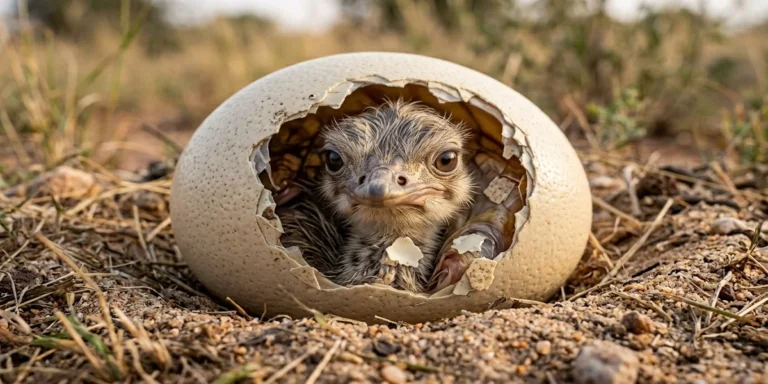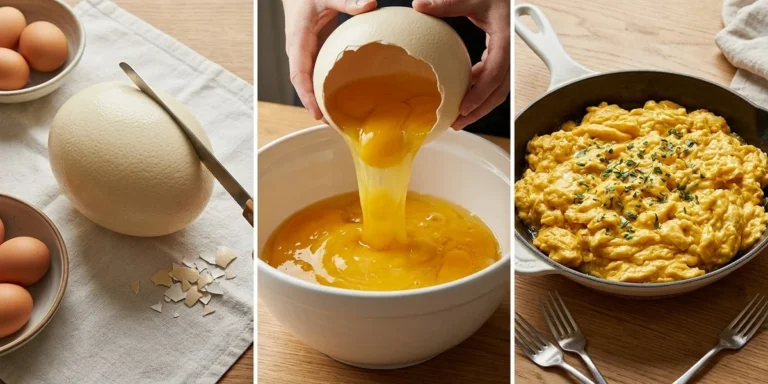
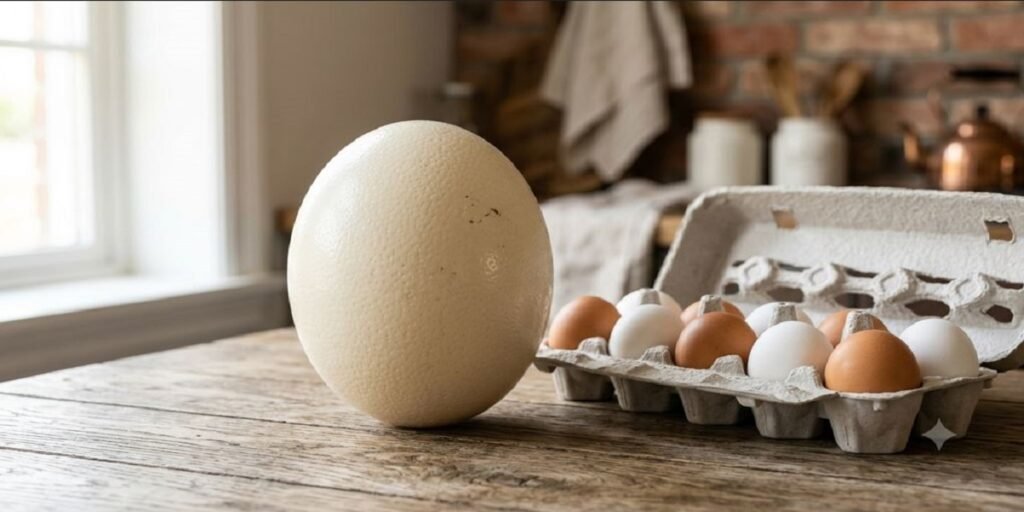
Quick Answer: A single ostrich egg usually costs between $30 and $100, depending on whether it is sold for eating, decoration, or hatching. Edible ostrich eggs typically cost around $30 to $60, while fertile hatching eggs and handcrafted decorative eggs can reach $100 or more.
Ostrich eggs are the largest eggs produced by any living bird, so it is no surprise that they come with a much bigger price tag than a typical chicken egg.
These giant eggs are not produced on the same industrial scale as chicken eggs, which makes them a specialty product rather than an everyday grocery item. Their final price depends on several factors, including whether the egg is purchased for eating, hatching, or decoration.
Unlike chicken eggs, ostrich eggs are not something you will usually find at your local supermarket. They are mostly sold through ostrich farms, specialty food suppliers, and breeders, which makes availability and shipping an important part of the total cost.
The OstrichPro team has researched current market prices, breeder information, and buying options to give you a realistic picture of what ostrich eggs actually cost and what you should know before purchasing one.
Table of Contents
How Much Does an Ostrich Egg Cost?
An ostrich egg typically costs between $30 and $100, depending on its purpose, quality, and where you buy it. The price can vary significantly because ostrich eggs are sold for several different uses, including food, hatching, and crafting.
An edible ostrich egg from a farm usually costs around $30 to $60, while fertile hatching eggs are often more expensive because they include breeding value and require careful handling. Decorative ostrich eggs can also command higher prices, especially when they are cleaned, painted, carved, or turned into collectible artwork.
Here is a typical price breakdown:
| Ostrich Egg Type | Average Price Range | Common Use |
|---|---|---|
| Fresh edible ostrich egg | $30 – $60 | Cooking, special meals, events |
| Fertile hatching egg | $50 – $150+ | Breeding, ostrich farming |
| Cleaned decorative egg | $40 – $80 | Crafts, home decoration |
| Hand-painted or carved egg | $80 – $300+ | Collectors, artwork |
Prices are based on typical U.S. retail listings and may vary depending on season, location, and availability.
Why Are Ostrich Eggs So Expensive?
Ostrich eggs are not expensive simply because of their impressive size. In reality, their price is influenced by a combination of factors, including ostrich farming economics, limited availability, and how the eggs are used.
1. Ostrich Eggs Are a Specialty Product
Despite chicken eggs, which are produced on a massive industrial scale, ostrich eggs come from a much smaller farming industry. Most ostrich farms produce eggs for breeding, meat production, or specialty markets rather than everyday grocery sales.
This limited supply means ostrich eggs do not benefit from the same large-scale production systems that make chicken eggs inexpensive.
2. Handling and Shipping Costs
An ostrich egg weighs around 3 pounds (1.4 kg) and has a thick shell that is surprisingly strong but still vulnerable to damage if handled incorrectly.
Because of their size and fragility, shipping ostrich eggs often requires protective packaging. For online purchases, shipping costs can add $15 to $40 or more to the final price depending on distance and packaging requirements.
For many buyers, the shipping cost is a significant part of the total expense.
3. The Egg’s Purpose Changes the Price
A key point many buyers miss is that ostrich eggs are not all valued in the same way. The final price depends heavily on what the egg is intended for, because an edible egg, a breeding egg, and a decorative shell serve completely different markets.
For a restaurant or home cook, an ostrich egg is primarily a specialty food product. The value comes from its size, novelty, and the experience of preparing a meal that can feed a large group.
A farmer purchasing a fertile ostrich egg is making a very different investment. In this case, the price reflects factors such as fertility, breeding potential, genetics, and the reputation of the breeder supplying the egg.
For collectors and artists, the shell itself becomes the valuable part. Because ostrich eggs have an exceptionally thick and durable shell, they are often used for carving, engraving, and handcrafted decorative pieces.
The same ostrich egg can therefore have very different prices depending on whether it is viewed as food, future livestock, or a piece of artwork.
4. Seasonal Availability
Unlike chickens, which can produce eggs throughout the year under commercial farming systems, ostriches are seasonal breeders. Female ostriches typically lay eggs mainly during the warmer spring and summer months, which means fresh ostrich eggs are not always available in the same way as regular grocery-store eggs.
This natural breeding cycle creates noticeable changes in supply throughout the year. During peak laying periods, farms may have more eggs available, which can make prices more stable. However, when the breeding season ends and fresh supply becomes limited, prices may increase due to lower availability.
For buyers, this means the cost of an ostrich egg can depend not only on where it is purchased, but also on the time of year, local climate conditions, and the individual farm’s current inventory.
Quick Reality Check: Is an Ostrich Egg Actually Expensive?
At first glance, spending $30 to $60 on a single egg may seem expensive compared with a regular carton of chicken eggs. However, the comparison changes once you consider the sheer size and serving capacity of an ostrich egg.
One ostrich egg contains roughly the equivalent of 24 standard chicken eggs, which significantly changes the cost calculation.
Based on the typical edible price range of $30 to $60, the cost works out to roughly $1.25 to $2.50 per chicken-egg equivalent.
When viewed as the centerpiece of a family breakfast, holiday brunch, or special gathering, the price feels much more reasonable than it first appears.
For most buyers, the biggest challenge is not necessarily the cost per serving. It is finding a fresh ostrich egg, handling a shell strong enough to require special preparation, and deciding how to cook an ingredient large enough to feed a dozen people at once.
Where Can You Buy Ostrich Eggs in the US?
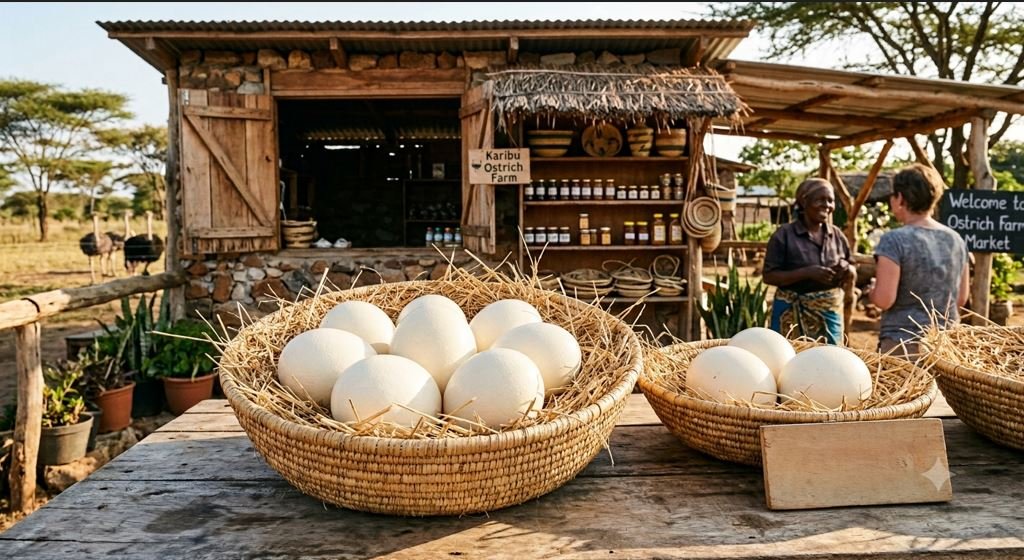
Fresh ostrich eggs are available in the United States, but they are usually sold through ostrich farms, breeders, and specialty food suppliers rather than ordinary supermarkets. Because ostrich farming is a relatively small industry, availability is more limited than it is for chicken eggs, and many buyers purchase directly from farms during the laying season.
If you’re looking to buy an ostrich egg, these are the most common options.
Local Ostrich Farms (Best for Freshness)
For most buyers, purchasing directly from an ostrich farm is the best option.
Many farms sell fresh edible eggs, fertile hatching eggs, or both during the laying season. Buying directly often means fresher eggs, better prices, and the opportunity to ask questions about the egg’s age, storage, and intended use.
Some farms offer nationwide shipping, while others prefer local pickup because of the challenges involved in transporting such a large and fragile product.
Specialty & Exotic Food Retailers (Best for Convenience)
Some online retailers specialize in exotic meats, game products, and specialty foods, occasionally offering edible ostrich eggs when they are in season.
Availability is often limited, and inventory may sell out quickly during peak demand, especially around holidays such as Easter when large decorative eggs become more popular. Because supply depends on individual farms, availability can change from week to week.
Reputable Ostrich Breeders (Best for Hatching Eggs)
If your goal is to start an ostrich farm or expand an existing flock, purchasing directly from a breeder is usually the preferred route.
Fertile hatching eggs are typically sold by breeders who carefully manage fertility, incubation practices, and breeding stock. These eggs are generally more expensive than edible eggs because buyers are investing in potential livestock rather than food.
Do Supermarkets Sell Ostrich Eggs?
In short: almost never.
Mainstream supermarkets rarely stock ostrich eggs because demand is relatively low and the eggs require more storage space, careful handling, and specialized distribution than ordinary chicken eggs.
Unlike chicken eggs, which are produced year-round and distributed through highly efficient commercial supply chains, ostrich eggs are seasonal and produced in much smaller numbers. For large grocery retailers, the logistics simply do not justify carrying them as a regular product.
As a result, most people who buy ostrich eggs purchase them directly from farms or specialty suppliers instead of traditional supermarkets.
Before You Order Online
Before purchasing an ostrich egg, it is worth checking a few practical details with the seller:
- Egg Purpose: Verify whether the egg is intended for eating or hatching.
- Shipping Availability: Confirm that the seller ships to your location and offers insured delivery for such a fragile item.
- Packaging Quality: Ask how the seller protects the heavy, fragile shell during transport.
- Freshness & Laying Date: Ensure you know approximately when the egg was laid.
- Storage Requirements: Check if immediate refrigeration is required upon arrival.
Spending a few minutes confirming these details can make the difference between receiving a fresh, intact ostrich egg and dealing with an expensive disappointment.
Are Ostrich Eggs Worth the Price?
Whether an ostrich egg is worth buying depends entirely on what you expect from it. If you’re looking for the cheapest way to buy eggs, the answer is obviously no. But if you’re buying one for a special occasion, to feed a large group, or simply for the experience, the value looks very different.
One ostrich egg contains roughly the equivalent of 24 chicken eggs, making it far more practical than its price might initially suggest. When purchased as a fresh edible egg, the cost per serving is often comparable to buying premium free-range or specialty chicken eggs.
The experience is also part of what you’re paying for. Cracking open the world’s largest egg, cooking it for family or friends, and serving a breakfast that becomes a conversation piece is something ordinary eggs simply cannot offer.
Value Depends on How You Plan to Use It
Rather than asking whether ostrich eggs are expensive, it is often more useful to ask whether they are expensive for their intended purpose.
| Purpose | Are They Worth It? | Why |
|---|---|---|
| Family breakfast or brunch | ✅ Yes | Feeds 10–12 people and creates a memorable experience. |
| Holiday gatherings | ✅ Yes | A unique centerpiece that doubles as entertainment. |
| Restaurants & chefs | ✅ Yes | Offers novelty and a premium dining experience. |
| Everyday cooking | ❌ Usually not | Chicken eggs remain far more practical and convenient. |
| Hatching | ⚠️Depends | Value depends on fertility, genetics, and breeding goals. |
| Arts & crafts | ✅ Often yes | The shell is durable and highly valued for carving and decorating. |
Looking Beyond the Price Tag
At the end of the day, buying an ostrich egg is rarely about saving money on grocery shopping. It’s about creating a shared experience.
Whether it becomes the centerpiece of a weekend brunch, a memorable holiday meal, or the beginning of an ostrich farming project, its value often comes from the experience it creates rather than the price printed on the invoice.
For that reason, most people who buy an ostrich egg are not comparing it with a carton of chicken eggs. They are paying for something genuinely unusual that few foods can offer.
Can You Eat Ostrich Eggs? What Do They Taste Like?
Yes. Ostrich eggs are completely edible and have been enjoyed for centuries in regions where ostriches are farmed. Their flavor is remarkably similar to chicken eggs, although many people describe them as slightly richer and creamier.
The biggest difference isn’t the taste, it’s the size. With the equivalent of roughly 24 chicken eggs, a single ostrich egg is better suited for family breakfasts, holiday brunches, or special occasions than for everyday cooking.
If you’d like a deeper comparison, check out our guides on Ostrich Egg vs. Chicken Egg and Ostrich Egg Nutrition.
How Many People Can One Ostrich Egg Feed?

One ostrich egg contains about the same amount of egg as 24 chicken eggs, making it enough to feed 10 to 12 people, depending on the meal.
That’s why ostrich eggs are commonly used for large breakfasts, brunches, and family gatherings rather than everyday meals. While one person could technically eat an entire ostrich egg, it’s far more practical and enjoyable as a shared meal.
How Long Do Ostrich Eggs Last?
Thanks to their exceptionally thick shells, fresh unwashed ostrich eggs can remain usable for up to three months when stored properly in a cool environment. Once the egg has been cleaned or cracked, it should be refrigerated and used within a reasonable time, just like chicken eggs.
If you’re buying directly from a farm, it’s always a good idea to ask when the egg was laid and how it has been stored before shipping.
Who Actually Eats Ostrich Eggs?
Despite their impressive size and surprisingly reasonable cost per serving, ostrich eggs remain a niche product.
Today, they’re most commonly purchased by:
- Families hosting large breakfasts or holiday gatherings.
- Home cooks looking for a unique culinary experience.
- Restaurants featuring specialty or farm-to-table menus.
- Ostrich farmers and hobby breeders purchasing fertile eggs.
The question isn’t whether ostrich eggs are practical, in many situations, they are. The bigger challenge is that most people simply never encounter them in everyday life. Limited production, seasonal availability, and the small size of the ostrich farming industry mean they’re still far less accessible than chicken eggs.
If you’ve ever wondered why products from such a large and productive bird remain uncommon, many of the same factors also explain why ostrich meat has never become a mainstream food. We explore those reasons in Why Don’t We Eat Ostriches More Often?
Frequently Asked Questions
Which bird egg is the most expensive?
There isn’t a single “most expensive” bird egg, as prices vary depending on rarity, purpose, and the species. While ostrich eggs are among the most expensive edible bird eggs available to consumers, rare fertile eggs from specialized breeding programs or exotic species can sell for considerably more.
Can you freeze an ostrich egg?
Yes. Once removed from the shell, an ostrich egg can be frozen much like chicken eggs. For best results, whisk the contents thoroughly before freezing and store them in an airtight container. Freezing the egg inside its shell is not recommended.
How do you open an ostrich egg?
Because the shell is much thicker than a chicken egg’s, most people use a small drill to make one or two holes in the shell before draining the contents. Others carefully tap the shell with a hammer, although this method is harder to control and increases the chance of cracking the shell unevenly.
Are ostrich eggs healthier than chicken eggs?
Ostrich eggs are nutritionally similar to chicken eggs, but their exact nutrient profile differs slightly. They contain high-quality protein along with essential vitamins and minerals.
Can you buy ostrich eggs year-round?
Not always. Because ostriches are seasonal breeders, fresh edible eggs are generally easier to find during the laying season. Outside of those months, availability may be limited, and prices can be higher depending on supply and the farm you’re buying from.
An ostrich egg typically costs between $30 and $100, with the exact price depending on whether it’s sold for eating, hatching, or decoration.
While the upfront cost may seem high, one egg contains roughly the equivalent of 24 chicken eggs, making the price far more reasonable than it first appears. For many buyers, the real appeal isn’t saving money, it’s enjoying a memorable experience that few other foods can offer.
Whether you’re buying one for the table or the incubator, an ostrich egg offers something few foods can: a meal, a conversation, and an experience; all in a single shell.