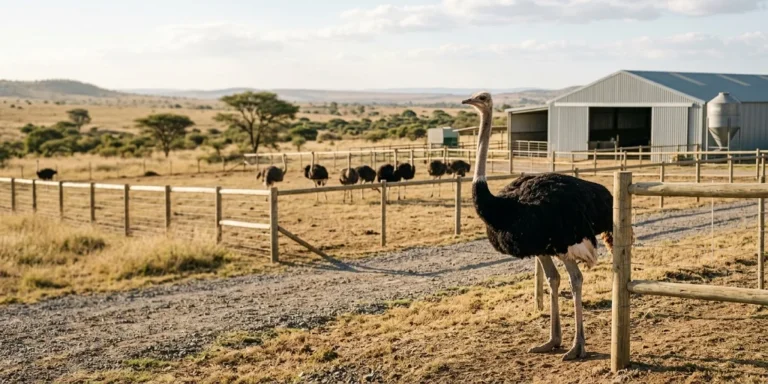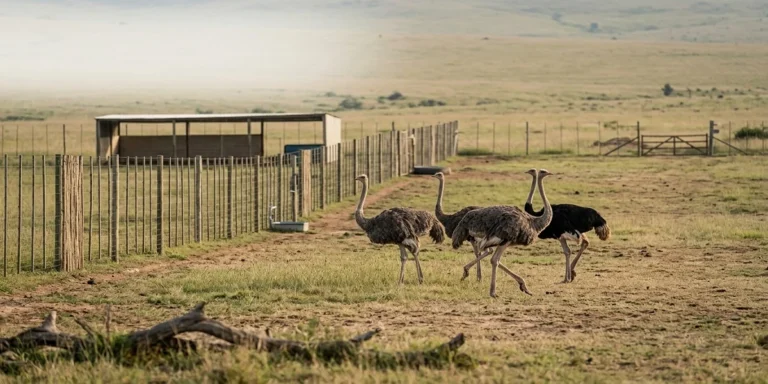

Quick Answer: South Africa is the world’s leading ostrich exporter, supplying ostrich meat, leather, feathers and live birds to international markets. Government and industry sources estimate its share of the global ostrich industry at approximately 65% to 85%, although the figures vary by source and year. The European Union is a major destination for South African ostrich meat, while leather and feathers serve different international markets.
Table of Contents
Ostrich farming exists in several countries, but South Africa remains the dominant force in commercial production and exports. Its established network of farms, processing facilities and tanneries gives it a significant advantage over smaller producers.
This guide examines the leading ostrich-exporting countries, the destinations for different ostrich products, and how animal disease outbreaks and trade restrictions have affected the industry.
Top Ostrich Exporting Countries
South Africa dominates the commercial ostrich trade, but it is not the only country involved. Namibia and Zimbabwe have established ostrich-farming histories, while other countries raise ostriches for domestic markets, breeding stock or more limited international trade. However, having an ostrich industry does not automatically make a country a major exporter.
The distinction matters because international trade data often groups products under different customs codes. Fresh or frozen meat, leather, feathers, live birds and hatching eggs may appear in separate datasets, making a single ranking of all ostrich-exporting countries difficult to establish.
| Country | Role in the ostrich industry | Export picture |
|---|---|---|
| South Africa | Leading commercial producer | Exports ostrich meat, leather, feathers and other ostrich products |
| Namibia | Smaller regional producer | Has an ostrich industry, but its current export volumes need to be assessed by product |
| Zimbabwe | Smaller producer | Has an established history of ostrich farming; current export scale is less clearly documented |
| Australia | Ostrich farming and breeding | Domestic production exists, but it should not be confused with a leading position in global exports |
| United States | Producer and specialist market | Raises ostriches for meat, breeding and other products, with trade varying by product and year |
The main takeaway is clear: South Africa’s position rests on more than the number of birds it raises. Its integrated production chain, specialist processing facilities and access to regulated export markets have helped it maintain a leading role in international ostrich trade.
For a broader look at how farming, processing and product sales fit together, see our guide to the ostrich industry.
Why South Africa Dominates Ostrich Exports
South Africa’s lead in ostrich export markets comes from a combination of climate, long farming experience and established processing infrastructure. The industry is particularly concentrated in the Western Cape, where the Klein Karoo region and the town of Oudtshoorn have become major centers of commercial ostrich production.
A Long History of Commercial Ostrich Farming
Commercial ostrich farming in South Africa dates back to the 19th century, when demand for ostrich feathers helped establish a major industry. Although the market has since expanded to include meat and leather, that early start gave South African producers decades to develop breeding expertise, processing facilities and international customer relationships.
The Klein Karoo Advantage
The Klein Karoo, particularly around Oudtshoorn, is closely associated with South African ostrich farming. Its relatively dry conditions suit ostrich production, while the concentration of farms and specialist businesses supports an established supply chain.
South Africa’s ostrich industry also extends beyond the Western Cape, with production in the Eastern Cape and several other provinces. This regional network supports a commercial sector built around multiple products rather than meat alone.
An Established Export Chain
South Africa benefits from having several stages of the business operating within the same industry: farms, slaughterhouses, meat processors and leather tanneries. This integrated structure helps producers supply international buyers with different ostrich products.
Exporting meat requires food-safety controls, traceability and access to approved processing facilities. Leather exports depend on specialist tanning and consistent quality, while feathers serve more specialized markets.
South Africa’s advantage is therefore not simply that it raises more ostriches than most competitors. It has a developed commercial chain capable of turning the birds into several marketable products.
What Ostrich Products Are Exported?
Ostrich exports extend beyond meat. South Africa’s commercial industry produces several products from the same bird, including leather, feathers and eggshells, while live birds and hatching eggs serve specialist breeding markets. Each product has its own buyers, processing requirements and trade conditions.
| Product | Main commercial uses | Export market |
|---|---|---|
| Ostrich meat | Restaurant dishes, retail cuts and processed meat | Primarily European markets when trade is permitted |
| Ostrich leather | Luxury handbags, footwear, clothing and accessories | International fashion and leather-goods manufacturers |
| Ostrich feathers | Feather dusters, fashion accessories, costumes and carnival products | Specialist cleaning, fashion and entertainment markets |
| Live ostriches | Breeding and development of farming operations | Specialist buyers, subject to animal health and import rules |
| Hatching eggs | Breeding and flock development | Limited specialist trade, subject to permits and veterinary requirements |
| Eggshells | Decorative crafts, ornaments and artistic carving | Craft, souvenir and decorative-product markets |
Meat and leather are major sources of commercial value in South Africa’s ostrich industry, while feathers remain an established product rather than mere waste. Eggs and eggshells can also generate additional income, although their export markets are different from those for meat and leather.
The key distinction is that ostrich production and ostrich exports are not the same thing. A country may raise ostriches without exporting substantial volumes, and a product’s popularity does not necessarily make its producer country a leading exporter. Actual trade rankings must be assessed separately for each product and year.
Where Does South Africa Export Ostrich Meat?
South Africa’s ostrich meat exports have historically depended heavily on European demand. The Netherlands, Belgium and France are important destinations, but the volumes shipped can change sharply when animal disease outbreaks or food-safety restrictions affect market access.
The European Union Is a Key Market
The Netherlands has repeatedly ranked among South Africa’s leading destinations for fresh, chilled and frozen ostrich meat. Belgium and France have also featured prominently in official trade figures.
The market is sensitive to more than consumer demand. Exporters must meet the destination country’s veterinary and food-safety requirements, and restrictions can interrupt trade even when buyers remain interested in the product.
South Africa’s 2022 Ostrich Meat Export Destinations
South Africa’s 2023 government market profile reports approximately 80 tonnes of fresh, chilled and frozen ostrich meat exports in 2022. The three leading destinations accounted for most of the reported trade.
| Destination | Share of reported exports |
|---|---|
| Netherlands | 50% |
| Belgium | 29.4% |
| France | 9.2% |
These figures cover a specific product category and year. They should not be interpreted as total ostrich meat exports, because processed or heat-treated meat may be recorded separately.
Other Markets Beyond Europe
South African ostrich products also reach markets outside Europe. Hong Kong has featured in trade involving meat and edible offal, while Mauritius and other African destinations provide additional outlets for certain products.
The important point is that export destinations vary by product and reporting period. A country that buys processed ostrich meat may not appear among the leading buyers of fresh or frozen cuts.
For producers, reaching these markets requires more than finding a buyer. They must confirm that the product is permitted, that the processing facility meets the destination’s requirements, and that the necessary veterinary and export documentation is in place.
Ostrich Leather and Feather Export Markets
Ostrich leather and feathers serve very different industries. Leather is valued in luxury fashion, while feathers are used in cleaning products, costumes and decorative applications. South Africa supplies both markets through its established ostrich-processing industry.
Where Is Ostrich Leather Exported?
South African ostrich leather serves international fashion and leather-goods manufacturers, including buyers in France, Italy, the United States and Mexico. Its distinctive texture makes it particularly attractive for luxury handbags, footwear and accessories.
Leather also adds value to the ostrich industry beyond meat production. However, the value of exports must be distinguished from the value of the entire leather trade, as broader customs categories can include hides from other animal species.
Where Are Ostrich Feathers Exported?
Ostrich feathers are used in feather dusters, fashion accessories, costumes and decorative products. Hong Kong, China and the United Kingdom have been associated with South African feather exports, although leading destinations can vary depending on the product category and year.
Raw feathers and finished feather products may be recorded separately in international trade statistics. This makes it difficult to establish a reliable ranking of destinations without specifying exactly which products are being counted.
For South African producers, leather and feathers provide additional revenue beyond meat. Their commercial value depends on product quality, processing and demand from specialized international buyers.
Live Ostrich and Hatching Egg Exports
Live ostriches and hatching eggs serve a more specialized market than ostrich meat or leather. Buyers typically include breeders, farms establishing new flocks and businesses looking to improve their breeding stock. International trade exists, but it is subject to strict animal health and import requirements.
Exporting Live Ostriches
Live ostriches may be exported for breeding or to establish commercial farming operations. Unlike processed products, live birds require suitable transport, veterinary certification and compliance with the importing country’s animal health regulations.
Requirements vary by destination and can include import permits, health certificates, disease testing and quarantine. Exporters must confirm the rules before arranging a shipment, as approval for one destination does not guarantee access to another.
Can You Export Ostrich Eggs?
Hatching eggs can be traded internationally for breeding purposes, but they are not treated like ordinary decorative or food eggs. Importing countries may require permits, veterinary documentation and proof that the eggs meet specific animal health conditions.
The rules also differ between hatching eggs and eggs intended for consumption or decoration. Anyone considering this trade should identify the correct product category and check the current requirements with the relevant veterinary authorities.
Although live birds and hatching eggs offer opportunities for specialist businesses, their export markets are narrower than those for established ostrich products. Careful planning is essential because transport costs, permits and health restrictions can make international shipments complicated.
Why Ostrich Exports Are So Volatile
Ostrich exports can change dramatically from one year to the next, even when international demand remains strong. In South Africa, outbreaks of avian influenza and restrictions linked to food-safety testing have repeatedly disrupted access to export markets.
Avian Influenza and Export Restrictions
Avian influenza outbreaks can trigger movement controls, additional veterinary checks and temporary import restrictions. For an export-oriented industry, losing access to a major market can affect farms, processors and workers throughout the supply chain.
South Africa experienced significant disruptions following outbreaks in 2011 and 2017. The European market was affected by restrictions, and the industry’s recovery depended partly on restoring access and meeting the required animal health conditions.
Residue Testing and Food Safety
Animal health is not the only challenge. Export markets also impose food-safety requirements, including controls on veterinary drug residues and other substances.
South African ostrich meat exports faced further disruption when testing and compliance issues affected access to the European Union market in 2018 and again in 2022. These events show why a country can have export-ready production capacity but still struggle to ship meat when regulatory requirements are not met.
Why Processed Meat Matters
Heat-treated ostrich meat can provide an alternative market channel when fresh or frozen meat faces restrictions, provided the product and processing facility are approved for the destination.
However, processed meat is not automatically exempt from import controls. Its eligibility depends on the importing market’s rules and the relevant product approvals.
For exporters, the lesson is clear: long-term success depends not only on raising ostriches efficiently, but also on disease prevention, traceability, food safety and continued compliance with international trade requirements.
EU Export Requirements for Ostrich Meat
The European Union is an important market for South African ostrich meat, but access depends on meeting strict animal health and food-safety requirements. Having a farm or processing business is not enough; exporters must also ensure that the relevant country, establishment and product are approved for trade.
Key requirements can include:
- Approved establishments: Meat must come from slaughterhouses and processing facilities authorized for the relevant export market.
- Veterinary certification: Shipments require the appropriate official health certificates.
- Residue monitoring: Products must comply with applicable limits for veterinary medicines and other regulated substances.
- Animal identification and traceability: Records must allow animals and meat products to be traced through the supply chain.
- Disease controls: Export eligibility depends on the applicable animal health rules and any restrictions in force.
- Quarantine and movement controls: Additional measures may apply depending on the exporting country’s status and the destination’s requirements.
Specific conditions, including quarantine periods, vaccination requirements and farm residency rules, can change with animal health status and regulatory decisions. They should not be treated as universal requirements for every shipment.
For anyone planning to export ostrich meat, the practical first step is to confirm the current requirements with the competent veterinary authority and verify that the destination market accepts the product from the proposed country and establishment.
Can You Start an Ostrich Export Business?
Starting an ostrich export business requires more than access to birds. Exporters need a reliable supply chain, suitable processing facilities, knowledge of international regulations and buyers willing to purchase their products.
The main challenges include:
- Production costs: Raising ostriches requires land, suitable fencing, feed, veterinary care and time before birds reach marketable age.
- Processing and quality control: Meat, leather and feathers require different handling and processing methods.
- Market access: Each destination has its own import rules, certification requirements and restrictions.
- Reliable supply: International buyers need consistent product quality, quantities and delivery schedules.
- Price and currency risks: Export earnings can fluctuate with exchange rates, shipping costs and changes in demand.
For new businesses, entering an established export market can be difficult without industry experience or reliable commercial partners. Starting with a clearly defined product and target market is more practical than attempting to export every ostrich product at once.
If you are considering entering the industry, start with our guides to ostrich farming profitability and ostrich farming business plans to understand the investment and operational challenges.
The Future of the Ostrich Export Industry
The global ostrich export industry offers opportunities, but its growth depends on more than consumer demand. South Africa remains the dominant commercial player because it has an established production and processing network, international buyers and experience supplying multiple ostrich products.
Meat and leather remain important commercial products, while feathers, breeding birds and hatching eggs serve more specialized markets. However, disease outbreaks, regulatory restrictions and changing trade conditions can quickly affect export volumes and profitability.
For countries looking to expand ostrich production, building a reliable supply chain and meeting international standards are essential. The industry has room to develop, but long-term success will depend on consistent quality, responsible farming practices and dependable access to export markets.
Frequently Asked Questions About Ostrich Exports
Which country exports the most ostrich products?
South Africa is the leading country in the commercial ostrich industry and a major exporter of ostrich meat, leather and feathers. Rankings for individual products may differ depending on the year and trade category.
Which country produces the most ostriches?
South Africa is widely recognized as the world’s leading commercial ostrich producer. Its established farming regions, processing facilities and export infrastructure give it a substantial advantage over other producing countries.
Where does South Africa export ostrich meat?
European markets have historically been important destinations, particularly the Netherlands, Belgium and France. Actual destinations and export volumes vary by year, product category and market-access restrictions.
Where does ostrich leather come from?
Commercial ostrich leather comes primarily from farmed ostriches. South Africa is a major supplier, and the leather is used in luxury handbags, footwear, clothing and accessories sold in international markets.
Which countries import ostrich meat?
Importing countries vary according to demand, product type and current trade permissions. European countries have historically been important buyers of South African ostrich meat, but restrictions can change which markets are accessible.
Why has South African ostrich meat faced EU import restrictions?
Restrictions have been linked to animal health concerns, including avian influenza, as well as food-safety and compliance issues. The precise conditions depend on the outbreak or regulatory issue and the rules in force at the time.
Can you export live ostriches or hatching eggs?
Yes, international trade in live ostriches and hatching eggs is possible when the exporting and importing countries permit it. Shipments may require import permits, veterinary certification, health testing and compliance with applicable animal health rules.
How much ostrich meat does South Africa export?
The reported volume depends on the year and the product category being measured. For example, a South African government market profile reported approximately 80 tonnes of fresh, chilled and frozen ostrich meat exports in 2022. This figure should not be treated as the total for every type of ostrich meat product.
What ostrich products are exported besides meat?
Other products include ostrich leather, feathers, live birds, hatching eggs and eggshells. Their markets and export requirements differ, and some products account for much smaller trade volumes than meat and leather.
Does the United States import ostrich meat?
Import eligibility depends on the exporting country, product type and current US animal health and food-safety requirements. Businesses should verify the latest requirements with the relevant US authorities before arranging a shipment.
Is ostrich farming profitable?
Ostrich farming can be profitable, but results depend on startup costs, feed, land, veterinary care, production performance and access to buyers. Exporting adds further costs and regulatory challenges, so a realistic business plan should account for both production and market access.