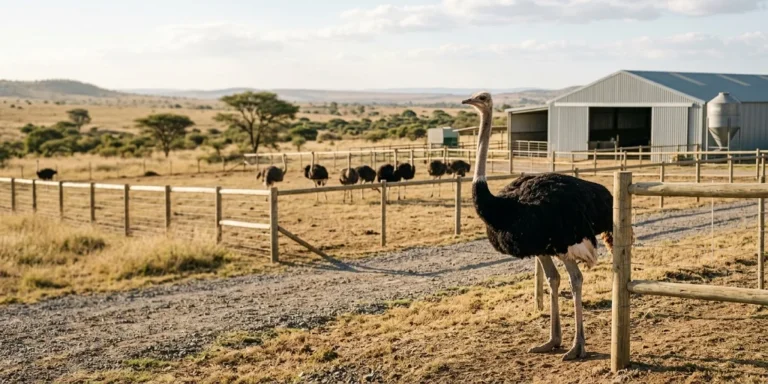

Quick Answer: South Africa remains the world’s primary producer of ostrich meat, historically driving roughly 75% of global output based on South African government industry profiles. Because ostrich meat functions as a specialized niche market rather than a main-stream commodity, a single, universally accepted global market value does not exist. Tracking live slaughter counts, regional yields, and export flows provides the most accurate assessment of this export-focused sector.
Table of Contents
| Metric / Feature | Detail |
|---|---|
| Primary Global Leader | South Africa (~75% historical market share) |
| Market Classification | High-value specialty protein / niche export |
| Key Data Indicators | Annual slaughter counts & trade flow statistics |
| Primary Market Drivers | Health awareness, premium dining, lean red meat |
Searching for the overall dollar value of the global ostrich meat market often yields high-level financial estimates that lack clear methodology. Standard agriculture reports group livestock production around beef, pork, and poultry, leaving niche ratite farming outside traditional tracking frameworks.
Evaluating this commercial landscape requires looking beyond generic headliner numbers. Global supply rests within a small network of producing nations, where international trade relies heavily on biosecurity status and sanitary market clearance. Sudden animal disease disruptions can halt trade channels almost instantly.
Below, the OstrichPro team breaks down verifiable production volumes, leading export hubs, key trade corridors, and the structural risks defining the future of commercial ostrich farming.
How Big Is the Global Ostrich Meat Market?
Evaluating the total value of the global ostrich meat sector requires looking beyond surface-level financial reports. Because ratite farming remains a high-value niche segment rather than a mass commodity, official agricultural tracking often omits direct global revenue metrics.
Why There Is No Single Reliable Market Size Figure
Ostrich meat is rarely tracked as a distinct category across standard international trade statistics. While commercial research entities occasionally publish global market valuations, their underlying definitions, geographical boundaries, and mathematical models lack transparency.
Promotional figures claiming a global ostrich meat valuation of $1.1 trillion lack empirical backing. Projecting such an inflated number onto a specialized livestock category distorts the true scope of the sector. A precise number does not equal an accurate one unless supported by verifiable trade data.
The OstrichPro team focuses instead on tangible market metrics: live bird slaughter counts, carcass yield volumes, export tonnages, and international sanitary clearances.
The Indicators That Help Explain Market Size
While a unified global valuation remains unavailable, government trade statistics and industry releases provide concrete operational markers. Because these indicators reflect different production cycles, they should be evaluated individually rather than as a single snapshot.
| Indicator | Reported Figure | Year and Context |
|---|---|---|
| Ostriches slaughtered worldwide | Approximately 227,000 | 2021/22 production season |
| Ostriches slaughtered in South Africa | 127,234 | 2021/22 production season |
| South Africa share of global slaughter | Approximately 56% | Calculated from reported slaughter totals |
| South African ostrich meat exports | 413 tonnes | 2021 fresh, chilled, and frozen meat records |
| Global ostrich meat market value | No verified total | No consistent global estimate established |
These baseline figures originate from South African agricultural reports and market value chain profiles. Processing metrics track live slaughter volume, whereas trade stats register specialized meat shipments. Neither metric reflects total end-consumer retail value.
Market share varies depending on whether production volume, raw export tonnage, or total revenue is measured. Understanding this distinction leads directly to analyzing the primary country driving commercial supply.
Which Country Produces the Most Ostrich Meat?
While commercial ratite farming exists across multiple continents, international supply relies heavily on a central processing hub. South Africa has maintained market dominance through an integrated value chain spanning decades.
South Africa’s Dominant Position
South Africa’s commercial farming operations concentrate within the Western Cape, particularly throughout the Klein Karoo and Southern Cape regions. Oudtshoorn serves as the global center for ostrich processing, leather tanning, and meat export clearance.
Unlike livestock production models reliant solely on meat yields, commercial ostrich farming generates diversified revenue streams from meat, high-grade leather, and feathers. South Africa’s processing facilities support all three streams, providing a strong economic foundation for international export operations.
Government industry profiles historically attributed roughly 75% of the global ostrich market to South Africa. While this figure illustrates the country’s historical role, it should not be confused with current annual meat revenue.
Why Do Sources Report Different Market Shares?
Varying publications report conflicting percentage figures because their calculations track different supply chain stages, timeframes, or baseline definitions.
| Source or Data Type | What Is Being Measured | Reported Figure |
|---|---|---|
| Government Industry Profile | Historical share of the global ostrich market | About 75% |
| Agricultural Sector Statistics | Share of reported global slaughter in 2021/22 | About 56% |
| Older Industry Publications | Historical slaughter or export shares | Varies by year and definition |
The 56% metric derives directly from reported 2021/22 slaughter numbers (127,234 birds in South Africa against 227,000 globally). By contrast, the 75% figure reflects broader historical market influence across all byproduct sectors.
While South Africa remains the global market anchor, annual yields fluctuate based on regional droughts, feed price spikes, avian influenza protocols, and international market closures.
Other Ostrich Meat-Producing Countries
Commercial ostrich production also exists across Namibia, Zimbabwe, Australia, and the United States. However, standardized, publicly accessible reporting frameworks remain limited in these regions.
These secondary production hubs operate primarily as regional suppliers. Production concentration in South Africa means localized sanitary restrictions or export bans can rapidly impact global availability across all international trade routes.
Where Does Ostrich Meat Go? Major Export Markets
Understanding international trade corridors reveals why commercial ostrich production functions as an export-driven sector. Because domestic consumption remains limited in producing nations, long-term commercial stability depends on continuous access to key foreign buyer markets.
The European Union as the Anchor Market
The European Union has historically served as the primary destination for South African ostrich meat. Premium restaurant demand and specialist food retailers across European countries have sustained processing infrastructure, providing a consistent outlet for high-value cuts.
Industry trade archives indicate that up to 98% of South African ostrich meat exports were historically directed to European buyers, with roughly 2% reaching East Asian markets. These proportions reflect long-standing trade relationships rather than static yearly quotas.
Heavy reliance on a single region introduces severe commercial exposure. When importing authorities impose sanitary suspensions due to avian health risks, exporters cannot easily redirect fresh or chilled inventory. Alternative destinations require pre-approved veterinary agreements and specialized cold-chain logistics.
Asian Demand and Market Diversification
While Asian countries present growing opportunities for alternative proteins, trade volumes fluctuate based on national import regulations and consumer familiarity.
| Export Region / Market | Historical Share & Role | Key Trade Drivers & Hurdles |
|---|---|---|
| European Union | ~98% historical export share | Established dining channels; high vulnerability to sanitary bans |
| East Asia & Emerging Destinations | ~2% historical export share | Premium retail potential; strict biosecurity protocols and tariffs |
Expanding into new regions involves overcoming complex market barriers. Success requires establishing sanitary clearance protocols, building cold-chain distribution networks, and positioning ostrich meat at price points local buyers accept.
What Drives the Ostrich Meat Market?
Unlike mass-market meats produced through industrial scale, ostrich meat occupies a distinct culinary category. Growth depends on health positioning, specialty distribution, and active consumer education.
Lean Red Meat Positioning
Despite coming from a bird, ostrich meat is officially classified as red meat under USDA inspection guidelines. Its deep color, high myoglobin content, and texture match premium beef fillet while maintaining a significantly leaner nutritional profile.
The meat combines high protein content with low total fat and minimal cholesterol. These characteristics appeal strongly to health-conscious consumers looking for lean alternatives to traditional beef cuts.
For a comprehensive nutritional analysis, read our complete guide on Ostrich Meat Health Benefits.
Market Dynamics: Positioning, Distribution, and Awareness
| Market Factor | Industry Impact | Commercial Challenge |
|---|---|---|
| Specialty Retail Channels | Sells primarily via boutique butchers, online stores, and upscale dining | Absence from mainstream supermarket shelves limits everyday trial |
| Premium Pricing Model | Reflects specialized processing, low yields, and international shipping costs | High retail cost deters regular repeat purchases among mainstream shoppers |
| Consumer Familiarity | Low awareness regarding culinary techniques and cut selection | Risk of overcooking lean meat deters first-time home cooks |
To explore the factors driving production expenses and retail pricing, view our detailed breakdown on Why Ostrich Meat Is Expensive.
Expanding market adoption requires clear cooking guidance, reliable store availability, and broader consumer opportunities to sample properly prepared ostrich dishes.
What Holds the Ostrich Meat Market Back?
Despite its low-fat nutrition profile and well-established export operations, ostrich meat remains a specialized niche product rather than a mainstream grocery staple. Premium retail pricing, limited consumer awareness, and heavy dependence on a concentrated export trade route present distinct growth challenges for producers and retailers alike.
High Prices and Limited Domestic Demand
Commercial ostrich farming demands specialized husbandry expertise, biosecure paddock management, and licensed slaughterhouses equipped specifically for ratites. Converting live birds into high-value cuts requires a balanced sales channel for hides and feathers to offset baseline farming overhead.
Within South Africa, domestic consumer demand absorbs only a fraction of total production, making international buyers essential for commercial profitability. When foreign trade corridors close due to sanitary regulations, producers face immediate inventory backlogs.
In destination import markets, specialty distribution channels further constrain regular consumption. Because ostrich meat sells primarily through boutique butchers, high-end online retailers, and specialty food distributors, mainstream shoppers rarely encounter it during routine grocery visits.
Avian Influenza and Export Bans
Animal health risks represent the primary operational threat facing commercial ostrich production. Highly Pathogenic Avian Influenza (HPAI) triggers severe quarantine measures, mandatory culling, and immediate export suspensions, halting meat shipments with little advance notice.
| Period | Event & Outbreak Details | Industry Impact & Consequences |
|---|---|---|
| 2004, 2006, 2011 | Repeated H5N2 outbreaks recorded across South African ostrich populations | Highlighted long-term vulnerability to viral disease transmission |
| 2011–2012 | Major Oudtshoorn regional outbreak resulting in over 50,000 birds culled | Triggered immediate EU export bans and severe financial losses for processors |
| 2023 Onward | H5N1 strain detected across South African commercial operations | Prompted heightened biosecurity controls and renewed market access restrictions |
| March 2026 | H5 detections reported across Western Cape farms, including Hessequa and Oudtshoorn | Maintained strict veterinary surveillance and ongoing trade clearance limits |
Sanitary restrictions vary across different market segments. Importing authorities often differentiate between fresh, chilled, frozen, and heat-treated meat products. While heat treatment allows processed items to bypass certain bans, fresh cut shipments remain suspended until full regional disease clearance is achieved.
Environmental pressures like recurring droughts across the Southern Cape and Klein Karoo exacerbate farm stress. Combining water scarcity with trade suspensions places severe financial strain on growers, processing facilities, and regional rural employment.
Dependence on One Major Producer
Supply concentration in South Africa exposes the global ostrich trade to systemic vulnerability. When a single country accounts for the majority of commercial export volume, localized disease outbreaks or climate events disrupt supply chains globally.
While secondary producing nations can capture small market shares during South African export suspensions, scaling production requires substantial time. Developing breeding herds, establishing licensed slaughterhouses, and securing veterinary clearance from importing nations cannot happen overnight.
Long-term stability requires expanding international farming capacity and diversifying consumer buyer markets to mitigate supply shock risks.
The Value of a Whole Bird: Meat, Leather, and Feathers
Commercial ostrich production does not rely on meat sales alone. Profitability rests on an integrated multi-product model where meat, premium leather, and feathers each contribute distinct revenue shares to total bird valuation.
Revenue Breakdown Across Product Channels
Industry estimates vary regarding the precise revenue split per processed bird because calculations measure either individual carcass yield value or broad sector income.
| Source / Evaluation Framework | Meat Revenue Share | Leather / Skin Share | Feather Revenue Share |
|---|---|---|---|
| Historical SA Industry Baseline | About 45% | About 45% | About 10% |
| University of Pretoria Income Model | About 62% | About 32% | About 6% |
| SA Government Value Chain Reports | About 65% | Unspecified secondary share | Unspecified secondary share |
These variations reflect shifting market prices across global luxury leather trade, feather demand cycles, and regional meat values.
What Multi-Product Valuations Mean for Farmers
Relying exclusively on meat income increases operational risk for commercial producers. High-grade leather serves luxury leather goods manufacturers, while feathers serve fashion, costume, and industrial dusting markets.
Integrated Ostrich Value Chain
Overall farm profitability depends heavily on tanning quality, hide preservation, slaughter efficiency, and maintaining access to buyers across all three product streams.
To analyze commercial financial planning, explore our guide on Ostrich Farming Profitability
The US Ostrich Meat Market
Examining the United States provides clear insight into how ostrich meat performs outside primary producing regions. While federal food safety frameworks fully permit commercial sales, ostrich meat operates as a specialized alternative protein rather than a mainstream grocery staple.
Is Ostrich Meat Legal to Sell in the United States?
Yes, ostrich meat is completely legal to sell and consume across the United States, provided producers comply with mandatory federal food safety guidelines.
Under the USDA inspection framework, ostriches belong to the ratite family alongside emus and rheas. Commercial ratite slaughter and meat processing fall under mandatory federal inspection requirements, ensuring sanitary standards match conventional livestock operations.
| Regulatory Area | USDA Requirement | Consumer & Farmer Impact |
|---|---|---|
| Slaughter & Processing Inspection | Mandatory ratite inspection under federal oversight | Ensures food safety compliance before commercial retail sale |
| Packaging & Labeling | Official mark of inspection required on packaging | Guarantees product traceability from licensed facilities |
Where Is Ostrich Meat Sold in the US?
American consumers can purchase ostrich meat through boutique butcher shops, specialized online meat distributors, and select upscale restaurants. Everyday supermarket chains rarely stock ratite cuts on standard display shelves.
Specialty distribution restricts mainstream market growth. Shoppers who do not encounter ostrich steaks during regular supermarket visits rarely consider it for daily meal planning.
Online retailers bridge regional supply gaps by shipping frozen vacuum-sealed cuts nationwide. However, mandatory cold-chain logistics, dry ice packaging, and minimum order requirements increase total consumer purchase costs.
Market Outlook: What to Watch
Future commercial trajectory depends on broader structural factors across international trade channels, animal health protocols, and production economics.
| Industry Catalyst | Core Strategic Focus | Long-Term Commercial Impact |
|---|---|---|
| Disease Control & Biosecurity | Preventing avian influenza outbreaks on commercial farms | Protects export clearance and prevents trade suspensions |
| European Union Access | Maintaining compliance with EU food safety standards | Sustains primary export cash flow for leading producers |
| Geographic Diversification | Expanding farming infrastructure outside South Africa | Reduces global supply chain vulnerability to regional shocks |
| Retail Education & Awareness | Providing clear culinary instructions and cooking guidance | Converts first-time curious buyers into repeat consumers |
Will the Ostrich Meat Market Grow?
While commercial opportunities exist, long-term expansion hinges on maintaining reliable supply chains and expanding store availability. Ostrich meat functions as an established, highly concentrated specialty market, where future growth depends on active biosecurity management and broader consumer adoption.
Official trade perspectives, export logistics, and regional supply chain breakdowns are published in the South African Department of Agriculture’s Profile of the South African Ostrich Market Value Chain.
Frequently Asked Questions about Ostrich Meat Market
Which country produces the most ostrich meat?
South Africa is the world’s leading commercial ostrich meat producer. Historical South African government profiles attribute approximately 75% of global market share to the country, though exact percentages vary by year, slaughter counts, and export metrics.
How big is the global ostrich meat market?
A single, universally accepted dollar valuation for the global ostrich meat market does not exist. Because ostrich meat is a specialized niche category, live slaughter counts and export tonnages provide a far more accurate picture of industry scale than unverified financial projections.
Where is ostrich meat exported?
The European Union historically serves as the primary export market for South African ostrich meat. Secondary trade corridors include select Asian markets, though export volumes shift based on sanitary clearances and trade agreements.
Is it legal to eat ostrich meat in the US?
Yes. Ostrich meat is legal to produce, sell, and consume in the United States. Commercial operations fall under USDA ratite inspection frameworks, ensuring all meat sold meets federal food safety requirements.
Why is ostrich meat expensive?
Ostrich meat commands premium prices due to specialized farming requirements, smaller total production yields, dedicated slaughter infrastructure, and cold-chain shipping expenses associated with specialty distribution.
Can I buy ostrich meat in the US?
Yes. Ostrich meat is available through specialty butcher shops, select dining establishments, and online meat distributors offering frozen nationwide shipping.
Why don’t we eat ostrich meat more often?
High retail costs, sparse supermarket availability, and limited consumer familiarity with cooking methods keep ostrich meat in a niche category compared to beef, pork, and chicken. .
Is ostrich healthier than beef?
Ostrich meat is exceptionally lean, offering high protein content with lower fat and cholesterol levels than typical beef cuts. However, overall nutritional benefits depend on the specific cut and cooking method used. See our guide to ostrich meat versus beef for a closer comparison.
How does bird flu affect the ostrich meat market?
Outbreaks of Highly Pathogenic Avian Influenza (HPAI) trigger farm quarantines, bird culling, and immediate export bans. Because South Africa drives global supply, local disease outbreaks temporarily restrict meat availability worldwide.
What share of an ostrich’s value comes from meat?
Historical trade estimates indicate meat accounts for roughly 45% to 65% of a bird’s total commercial value. Leather hides and feathers generate the remaining revenue share, making multi-product processing essential for farm profitability.